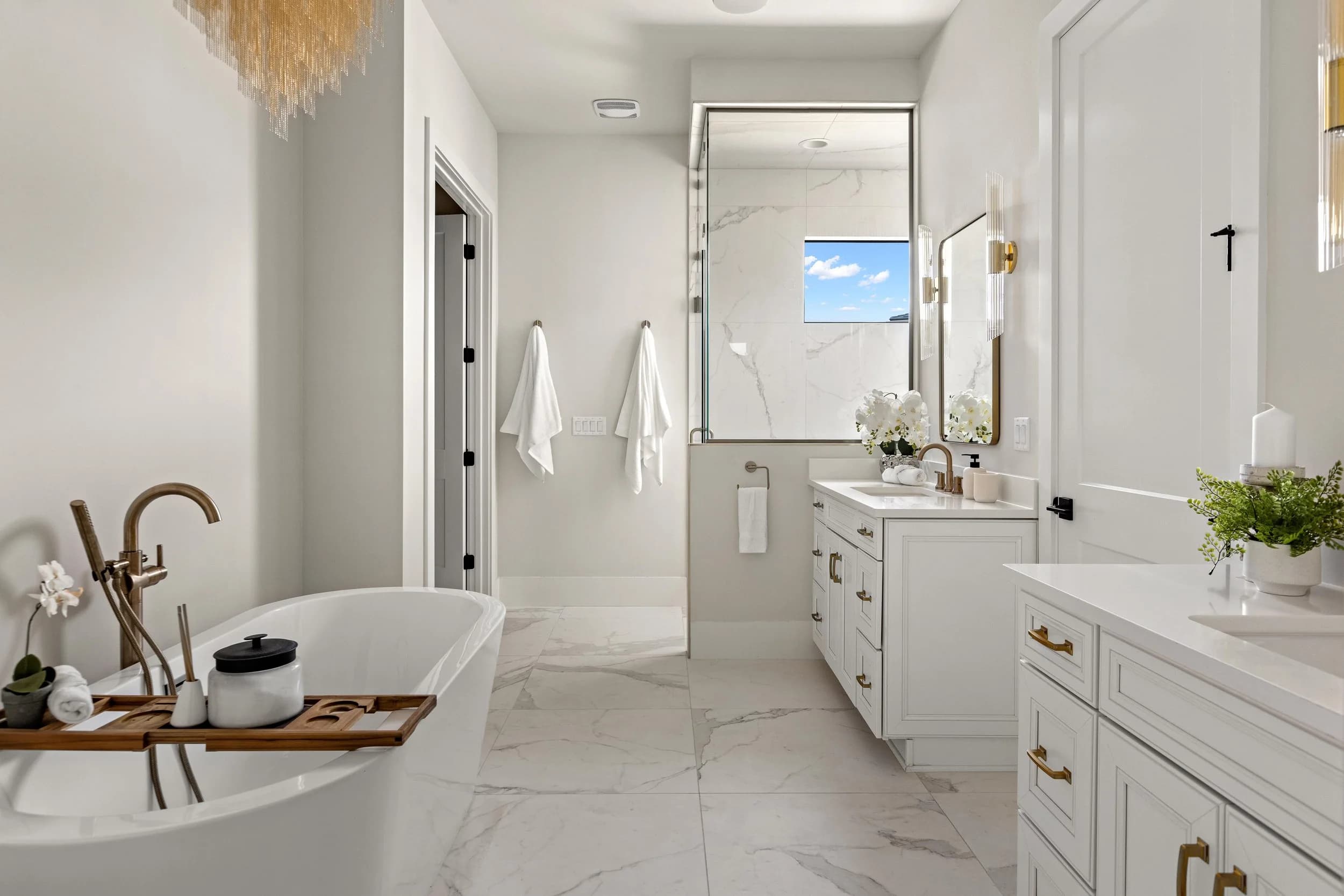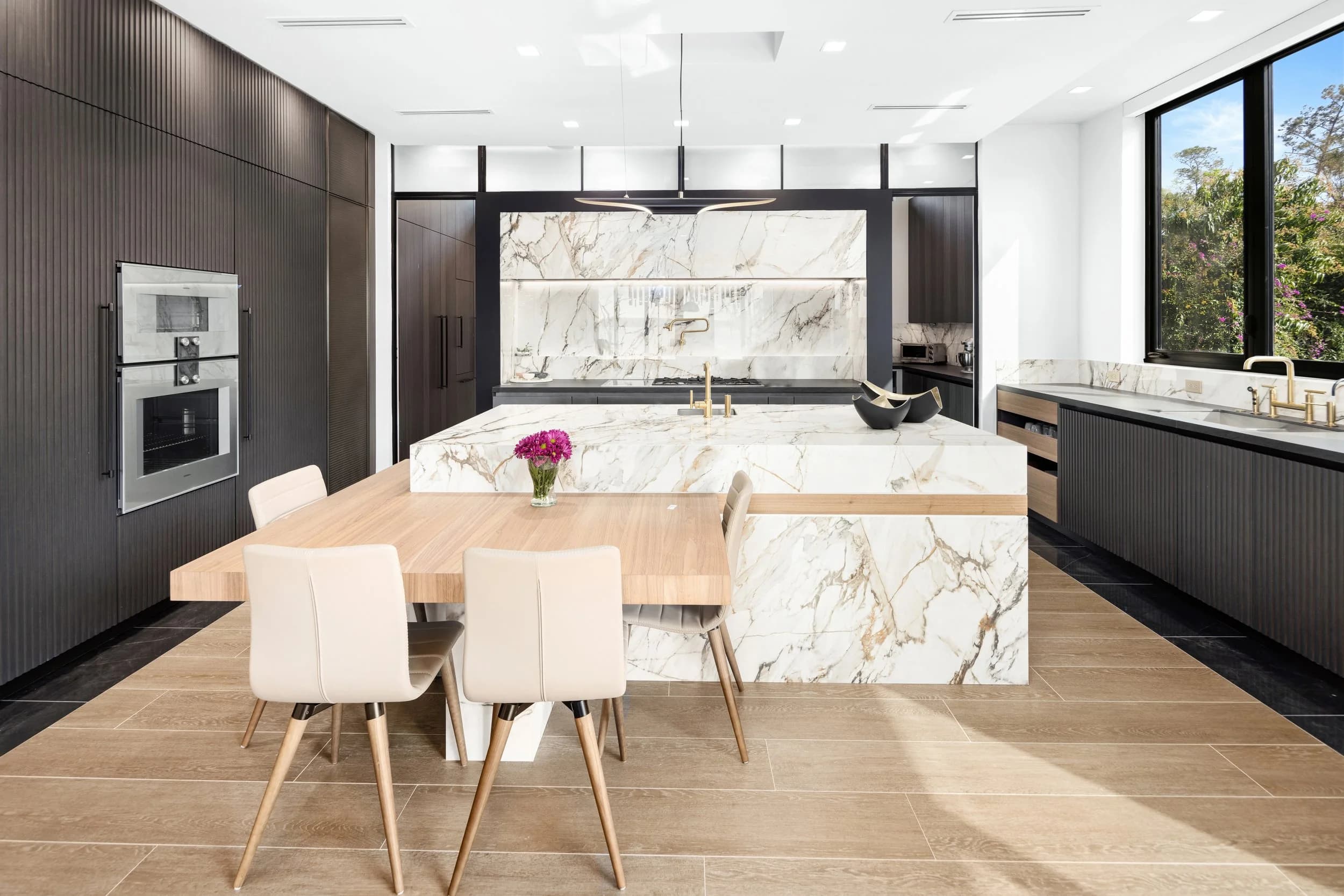
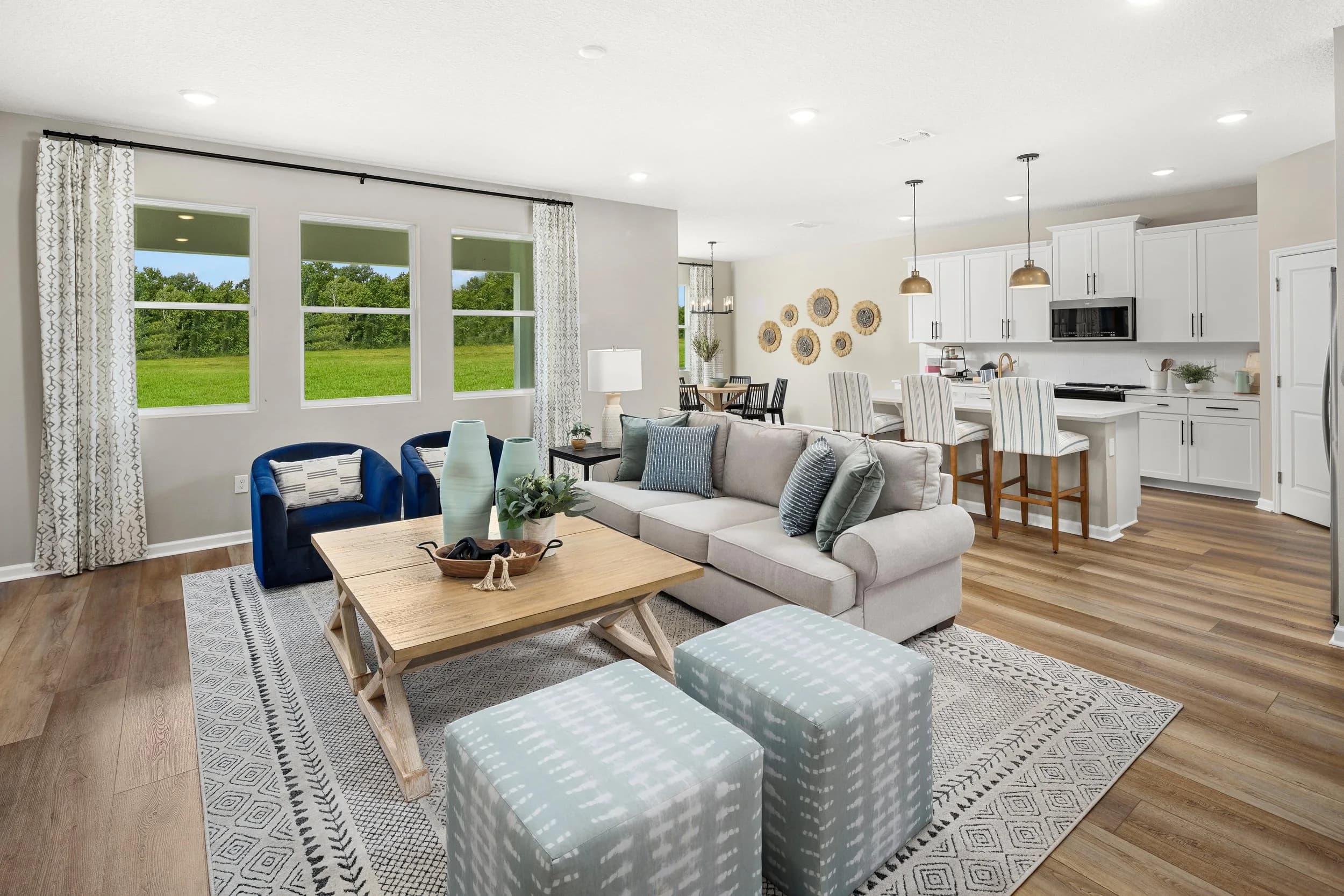
A seller picks a warm greige for the living room, and the photos come back looking faintly blue. A builder's design team specs a white oak floor, and online it reads orange. Nobody is imagining it, and nobody did anything wrong at the shoot.
Color accuracy is the quietest problem in real estate photography. It rarely costs a sale on its own, but it is the single most common reason a designer, builder, or particular seller looks at a finished gallery and says the room "doesn't look like that."
Why the Color Shifts in the First Place
Cameras do not see color the way eyes do. Your eye adapts continuously — walk from daylight into a lamp-lit room and within seconds white still looks white. A camera has to be told, once, what white is.
That setting is white balance, and in a real house it is almost never a single answer:
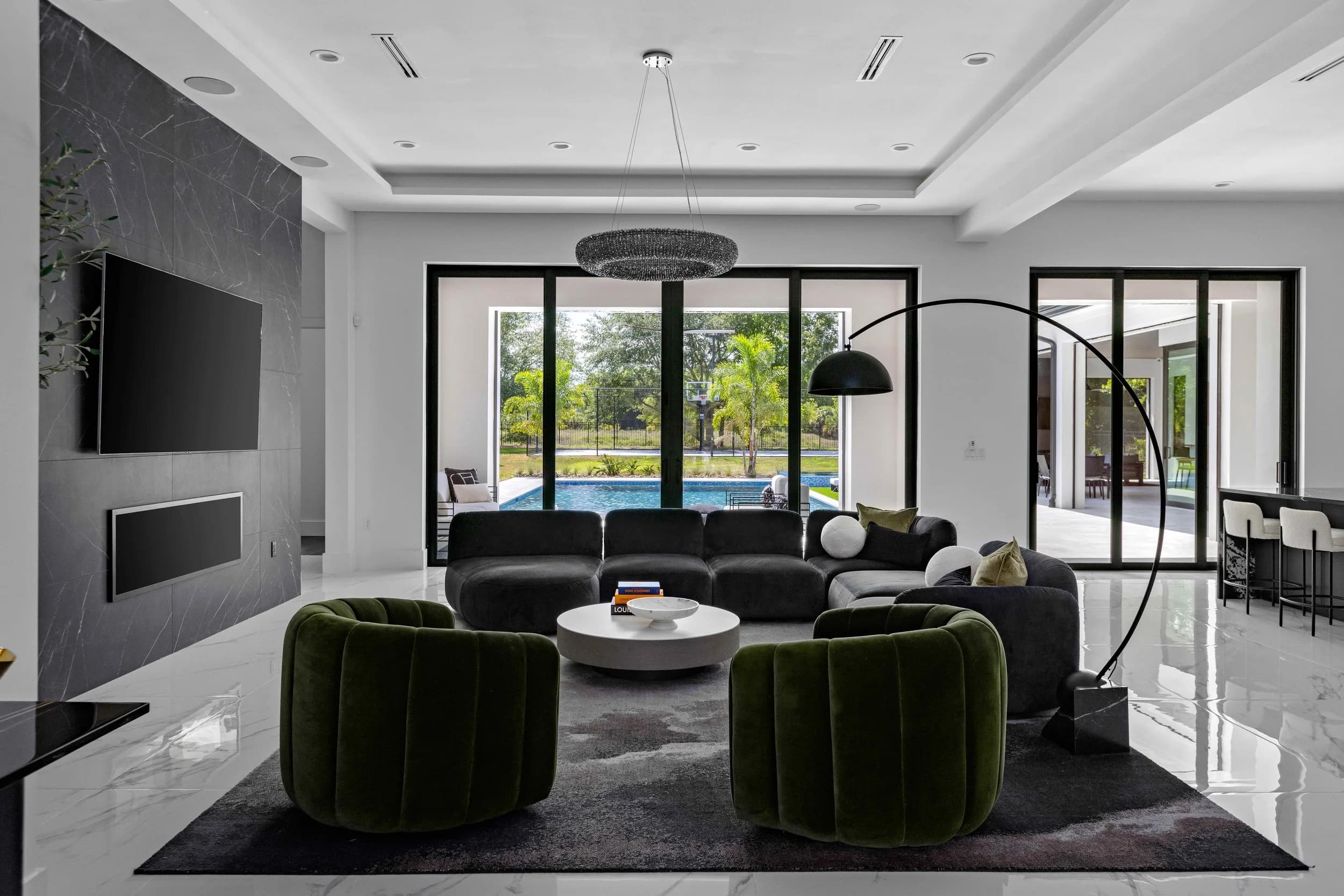
- Mixed light sources. A Central Florida living room at 2 p.m. typically has cool daylight coming through the sliders, warm LED cans overhead, and a lamp at a third color temperature entirely. One white balance setting cannot be correct for all three.
- Bounce from outside. Florida's landscaping is aggressive. A lawn, palms, or a screened lanai throw green into every room facing the backyard. A terracotta paver patio throws orange.
- Pool light. A pool a few feet from the slider bounces genuine blue onto interior walls and floors — the strongest color cast in most Florida homes and the one sellers notice first.
- The paint itself. Greiges, greens, and anything with a gray base are unstable by design. They are formulated to shift with the light, which is exactly what makes them hard to reproduce.
What a Photographer Actually Does About It
Most of the fix happens at the shoot, not in editing. A few approaches, in rough order of how much they help:
- Kill the mixed sources. Turning off lamps and overheads and shooting a daylight-balanced frame removes the conflict entirely. That is often the right call — though not always, and the lights-on or lights-off decision involves more than color.
- Flash the room. Adding a controlled, known-temperature light source overpowers the ambient mess. This is the core argument for flash over straight HDR on color-critical work.
- Shoot a reference. A gray card or color checker in one frame gives the editor a hard, measurable neutral to correct the whole room against, instead of a judgment call.
- Correct selectively. Where a green cast falls only on the wall nearest the window, a global correction makes the rest of the room wrong. Masked, local correction is slower but it is the only honest fix.
When It Matters Most — and When It Doesn't
Be realistic about this. For a standard residential listing, close is genuinely fine. Buyers are looking at layout, light, and condition, not matching a swatch.
Color accuracy becomes a real requirement in four situations:
- Interior design portfolios. The finishes are the product. A designer whose sage green reads gray has nothing to show. This is a large part of why design portfolio work is shot differently from listing work.
- Builder and model home photography. Those images sell a specific, purchasable finish package. A buyer who picks a floor from a photo and receives something visibly different has a legitimate complaint.
- Flooring, cabinetry, and paint contractors. Same logic, narrower subject.
- High-end listings where the finishes are the story. A $2M Winter Park renovation is being marketed on its materials.
If you are in one of those four groups, say so when you book. It changes how the shoot is lit and how long it takes, and it is much cheaper to plan for than to fix afterward.
Set Expectations With the Seller Before the Shoot
A short conversation prevents most of the complaints:
- Ask whether any finish is color-critical to them. If the seller just repainted, they have a number in their head and they will compare.
- Warn them that a screen is not a print. Their phone, your laptop, and the buyer's desktop will all render the same file slightly differently — that variation is a separate problem and no amount of care at the shoot eliminates it.
- Agree on what "right" means. "Matches the paint chip under daylight" is a target. "Looks like it does to me when I'm standing there" is not, because their eye is adapting and the camera cannot.
For the shoot itself, open the blinds, and if the seller can swap mismatched bulbs in a key room for matching ones, that one change does more for color than anything done in post.
The Short Version
Color drifts because real rooms have three or four light sources at different temperatures and the camera has to pick one. It is controllable — by simplifying the light, adding a known one, and correcting against a physical reference — but that work is deliberate, and it is worth paying for only when the finishes are part of what is being sold.
For most listings, the sensible approach is a photographer who gets close without being asked and flags the rooms where the light is fighting itself. For design, builder, and finish-driven work, ask for it explicitly and expect the shoot to take longer.
Ready to book? Get in touch or call us — we serve Orlando, Tampa Bay, and Central Texas.