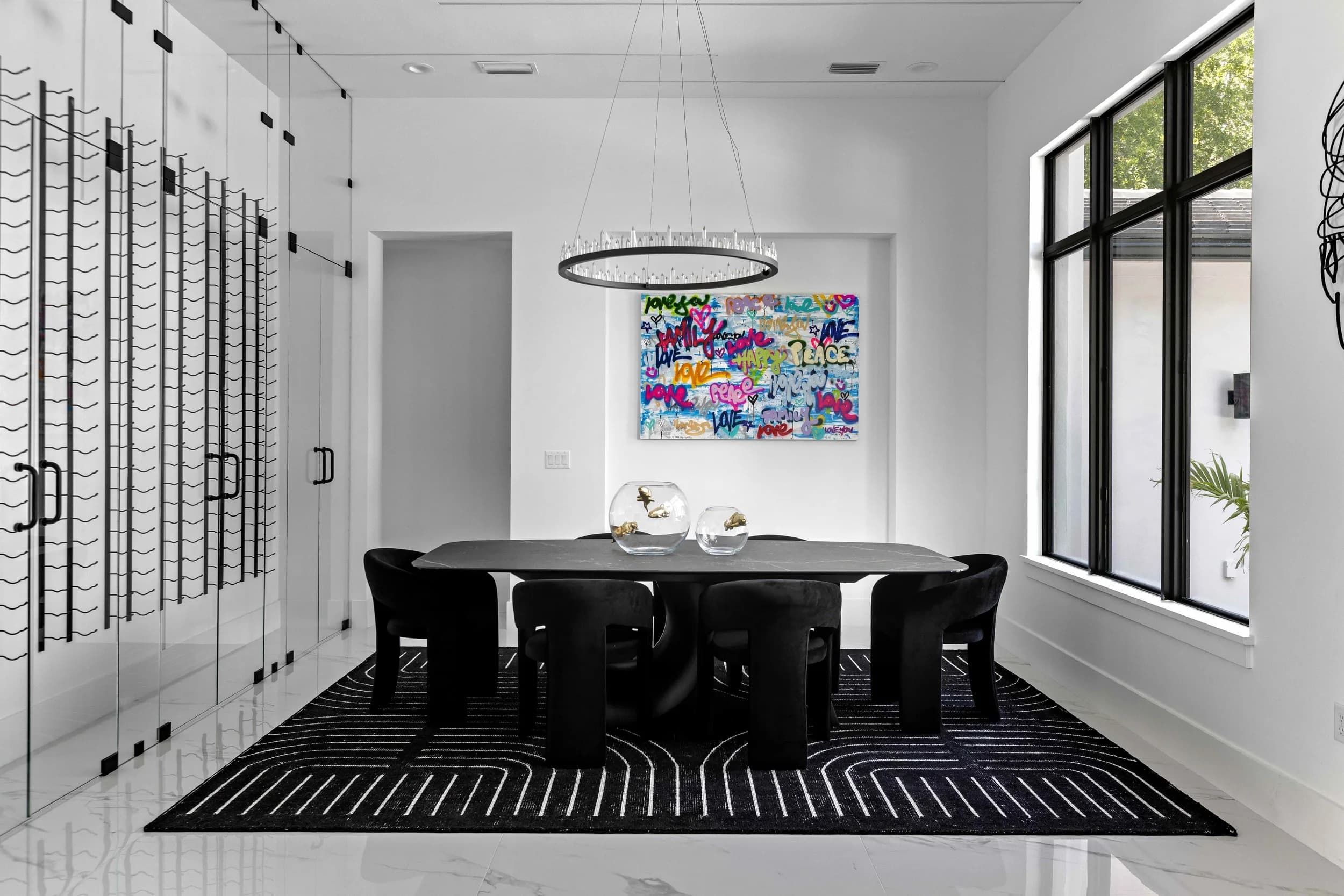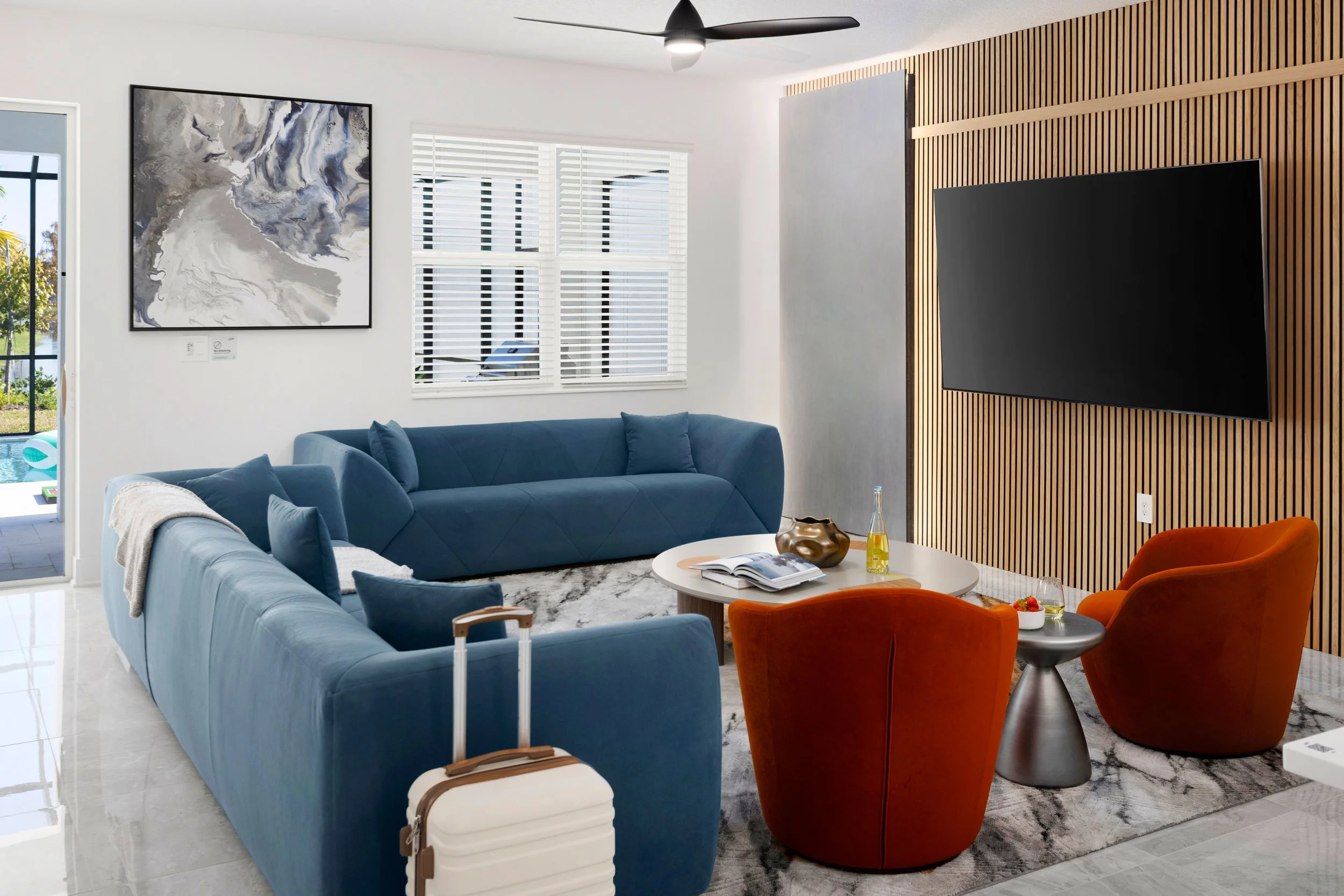
A gallery that looks perfect on your laptop can look yellow on your seller's iPhone and washed out on a client's tablet. That is not an editing problem, and understanding why saves everyone a round of unnecessary revisions.
No Two Screens Show the Same Image
A photograph is a set of numbers. A screen is a device that guesses what those numbers should look like. Every screen guesses differently.
Consumer laptops and monitors leave the factory with wildly different color, and they drift as they age. Brightness settings, ambient room light, the color of the wall behind the monitor, and whether the panel is IPS, TN, or OLED all change what you see. Two agents in the same brokerage looking at the same MLS gallery on their own machines are genuinely seeing different pictures.
Photographers deal with this by calibrating. A hardware colorimeter measures the display's actual output and builds a correction profile, typically targeting a 6500K white point, gamma 2.2, and a moderate luminance in the 100 to 120 cd/m² range rather than the default most monitors ship with. What calibration does not do is reach out and fix your screen. It only guarantees the file leaving the studio is correct against a known standard.
What Your Phone Is Doing Before You Ever See the Photo
Phones are the most common viewing device for listing photos and the most heavily processed. Several things are happening at once:
True Tone and equivalent features measure ambient light and shift the display's white balance to match the room. Under warm evening lamps, your screen goes warm. The photo did not change.
Night Shift or blue light filters push the display strongly amber on a schedule. Anyone reviewing a gallery at 10 p.m. with this on is looking at a yellow version of the world.
Auto-brightness changes contrast perception dramatically. The same image outdoors at full brightness and indoors at 30 percent looks like two different edits.
Vivid or saturated display modes, which many Android phones ship as the default, expand color well past what the file specifies. Reds get louder and wood tones shift.
OLED behavior renders blacks as true black and boosts perceived contrast, which can make a moody interior look crushed compared to an LCD.
HDR handling. Modern phones and TVs may map standard images into a high dynamic range pipeline, lifting highlights beyond what the photographer set.
None of this is a defect. It is the device doing its job for general use. It just means a phone is a poor place to make a final judgment about color.
Color Spaces, and the Quiet Way Files Get Wrong
A color space defines what the numbers in a file actually mean. sRGB is the long-standing web and MLS standard. Adobe RGB and Display P3 are wider, holding more saturated greens and reds, and are useful for print and high-end video work.
The failure mode is predictable. If a file is exported in a wide color space and then stripped of its embedded profile somewhere in the delivery chain, browsers and portals default to interpreting it as sRGB. Wide-gamut numbers read as sRGB come out flat and desaturated. That is why a photo can look rich in one viewer and lifeless in another with no editing difference at all.
For that reason, listing deliverables are exported in sRGB with the profile embedded. It is the least sophisticated option and the correct one, because it is the only space every downstream system agrees on.
What Happens After You Upload
Once a gallery leaves the photographer, it goes through systems nobody in the transaction controls.
MLS platforms resize and recompress on ingest, often to a fixed maximum dimension with their own JPEG quality setting.
Portals recompress again and generate their own thumbnails and mobile variants, each a separate encode.
Social platforms are the most aggressive of all, re-encoding uploads and sometimes converting color.
Every cycle can introduce color shifts, banding in smooth gradients like a blue sky or a painted wall, and softening in fine detail such as grout lines and screen enclosures.
This is also why a photo can look sharp in the delivered files and mushy on a listing site. The photographer delivered a clean file. Four systems in a row re-encoded it.
What the Photographer Controls and What They Do Not
Worth being clear about the split.
Controlled by the photographer: white balance and neutrality, exposure, color consistency across the set, correct output color space, appropriate file dimensions and compression for the intended destination, and matching between stills, video frames, and 3D tour imagery.
Not controlled by the photographer: your monitor's calibration, your phone's display mode, the room you are viewing in, how the MLS compresses files, how a portal generates thumbnails, and what any given buyer's device does with the result.
The useful boundary is that a photographer is responsible for the file being right, not for the file being displayed identically everywhere. That is not achievable by anyone.
How to Judge a Gallery, and How to Ask for a Fix
A short protocol prevents most wasted revision cycles:
Look at the images on at least two devices before forming an opinion, ideally a computer and a phone. If they disagree, the difference is display, not file.
Turn off night shift and vivid modes while reviewing, and view in a room with reasonably neutral light rather than under warm lamps or in direct sun.
Compare within the set, not against memory. If the kitchen and the living room in the same gallery are consistent with each other, the set is internally correct.
Describe the problem, not the fix. "The white cabinets read slightly green" is actionable. "Make it warmer" is a guess that may make it worse.
Say what you looked at. Telling the photographer which device, which app, and what the room lighting was often resolves the question in one message.
Flag real issues confidently. A mixed color cast between rooms, a green tint from lawn light bouncing through windows, or blown-out window views are genuine corrections. Ask for those.
Across Orlando, Tampa Bay, Austin, and Dallas, the same conversation comes up several times a month. Almost always, the file is fine and the screen is the variable. Checking on a second device first turns a revision request into a thirty-second confirmation.
Ready to book? Get in touch or call us — we serve Orlando, Tampa Bay, and Central Texas.