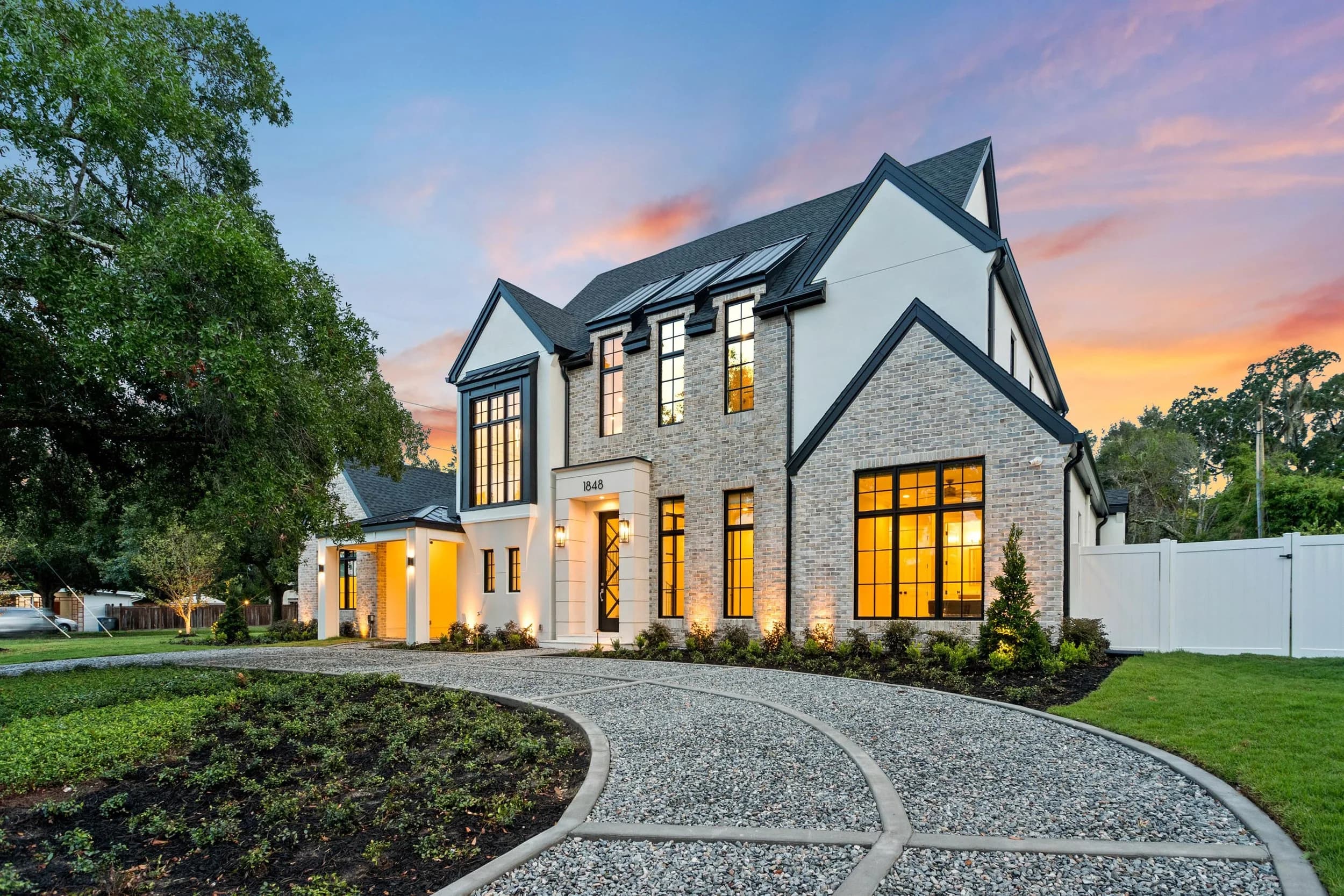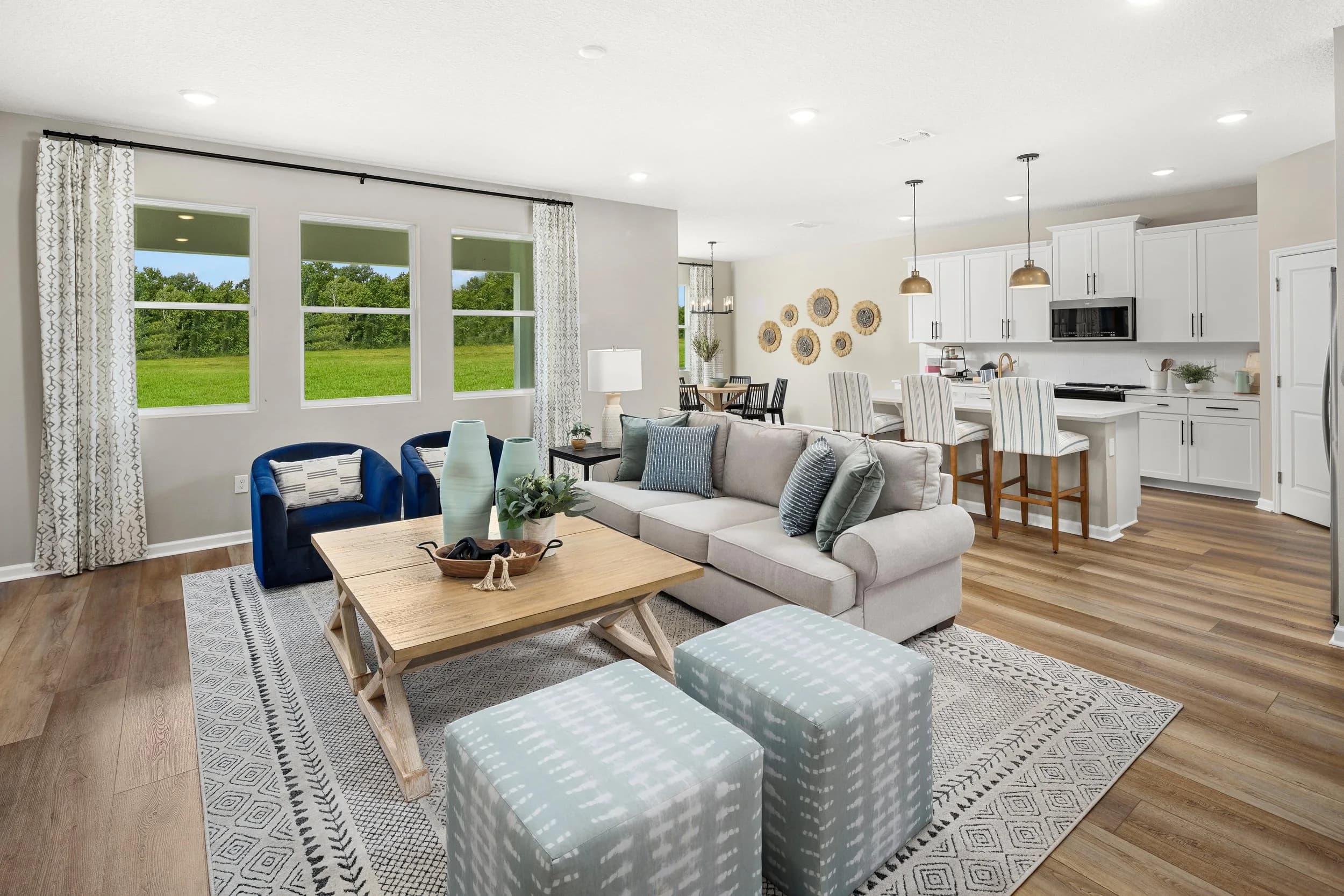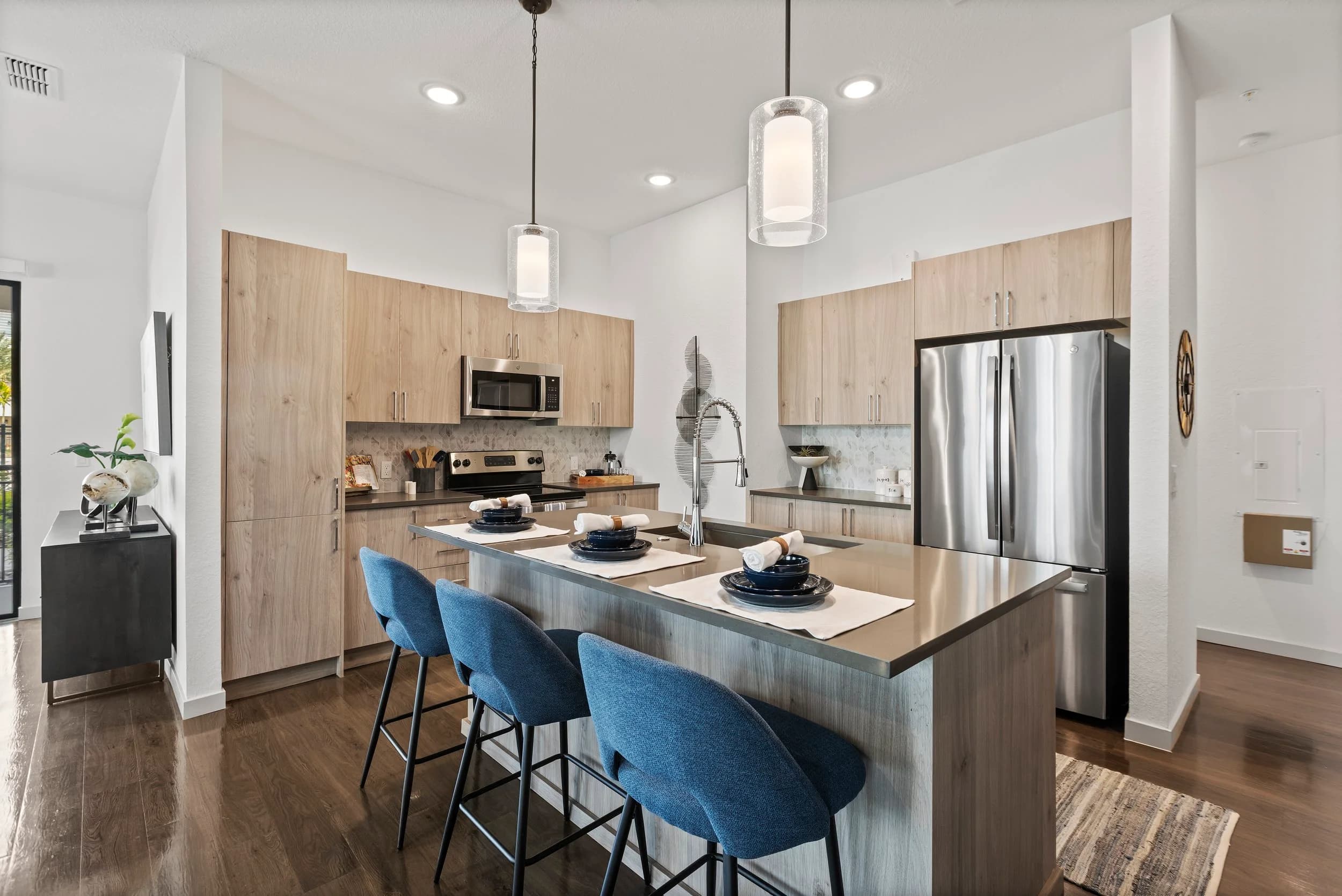
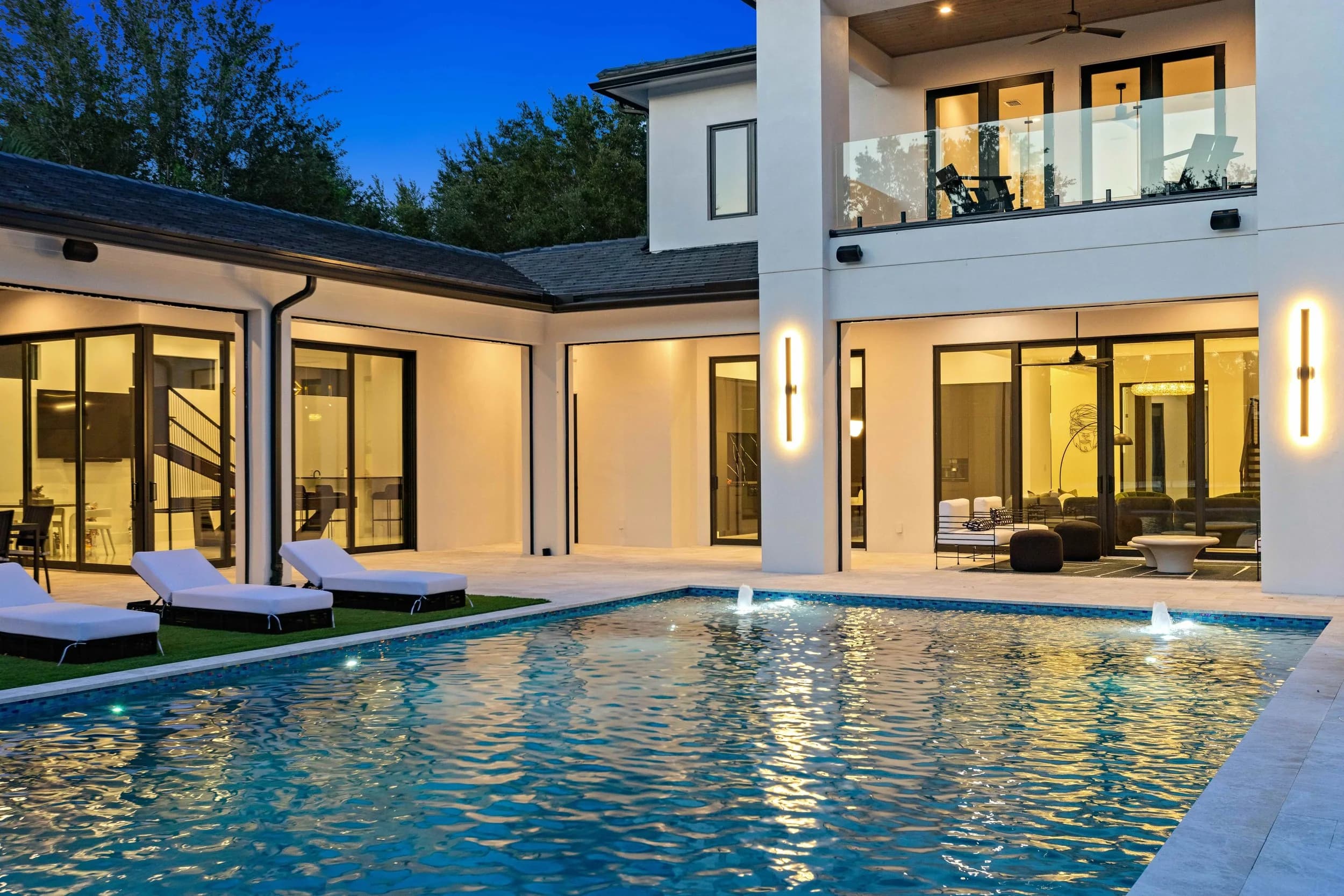
Twilight photography has a settled reputation in real estate marketing, and it is almost entirely about the outside of the house. Warm windows, a deep blue sky, a lit pool cage. What gets far less attention is the other half of that session: what the inside of the home looks like once the sun is actually gone, and whether it is worth photographing at all.
For most listings, the honest answer is no. Daylight interiors are what buyers browse, portals crop, and the MLS expects. But there is a specific set of homes where the interior at night is the point — and shooting those well is a genuinely different craft problem from shooting the same rooms at noon.
When an interior is worth shooting after dark
Four situations make the case, and they tend to overlap.
- The lighting design is a feature. Cove lighting, integrated LED under cabinetry and stair treads, backlit onyx, lit niches, a statement chandelier. All of it is invisible in daylight and most of it was expensive.
- The view is a night view. A high-rise condo over a lit skyline or a home facing a lit waterfront reverses the usual logic — the window is more valuable dark than bright.
- Indoor-outdoor continuity. When a great room opens to a lit lanai and pool, a night interior is the only frame that shows the two spaces as one. That is common in Central Florida and rarely photographed.
- Entertaining is the selling story. Theater rooms, wine rooms, bars, and game rooms read as intended after dark and read as windowless boxes in the afternoon.
Outside those cases, a night interior adds a gallery slot without adding information. If you are weighing the exterior version of this decision instead, our comparison of twilight versus virtual twilight photos covers which listings justify the add-on at all.
Why the interior gets harder, not easier
It is tempting to assume that a dark house is simpler — fewer variables, no sun to fight. The opposite is true, for three reasons.
The window goes from friend to problem, then to problem again. During the day, a window is a bright rectangle to be balanced. At true twilight it briefly matches the interior, which is the ideal state. Minutes later it is a black mirror that reflects the room, the lights, and sometimes the camera back at you. The usable range is short, and it is shorter than most people expect.
Every light source has a different color. A room lit by daylight is lit by one thing. A room lit by lamps, recessed cans, an under-cabinet strip, a pendant, and a television is lit by five things at five different color temperatures, and no single white balance makes all of them look right. This is the same underlying issue described in our post on why listing photos come out yellow, orange, or green, except that after dark there is no daylight to dilute the mismatch.
The dynamic range is wider, not narrower. A bare bulb against a shadowed ceiling is a bigger jump than a bright window against a lit room. Blown highlights on fixtures and blocked-up black corners are the two failure modes, and they happen in the same frame.
What actually makes a night interior work
The technical answers are less exotic than the problem suggests.
- Shoot at civil twilight, not after it. The frames that look like night but still have shape outside the glass are made in the short window when the sky still holds color. Once the sky is black, the windows die and the room feels sealed.
- Turn some lights off. Everything on is the most common mistake. A fully lit house at night is flat and hot; selective lighting creates the depth that makes the frame read as evening rather than as a power outage in reverse.
- Get the bulbs matched beforehand. Swapping mismatched bulbs in the rooms being shot is the single highest-value piece of prep, and it is something a seller or stager can do in advance.
- Blend rather than bracket blindly. The fixtures, the ambient room, and the view through the glass are three different exposures. Treating them as one and pulling a slider is where "muddy" comes from.
- Kill the screens. Televisions and monitors add a cold cast and an awkward rectangle. Off, and often unplugged.
The related question of whether interior lights should be on at all in a daylight shoot is a separate decision with a separate answer — our piece on how lighting decisions change your listing photos works through that one.
Where these photos belong
Night interiors are a supplement, never a substitute. A gallery led by dark frames looks like a home with no natural light, which is the opposite of what almost every buyer wants. Two or three placed deep in the sequence, after the daylight set has done its job, is the right dose.
They tend to earn their place in three channels. Social is the strongest — a lit great room stops a scroll better than a daylight version of the same room. Print and brochure work for luxury listings uses them well, since a full-page night frame has drama that a bright one does not. And single-property websites can carry a night hero above the fold where the MLS gallery cannot.
For homes in the price bands where this matters, it is usually worth pairing with the exterior twilight set from the same visit rather than treating it as its own session. Our overview of what sets a high-end shoot apart covers how the pieces of a luxury package fit together across Orlando, Tampa Bay, Austin, and San Antonio.
If you have a listing where the lighting design, the night view, or the entertaining spaces are doing the selling, it is worth discussing before the shoot is scheduled rather than after. Ready to book? Call or text (689) 600-2131 or get in touch.