Twilight photos are one of the most requested add-ons in real estate photography — but there are now two very different ways to get them. Knowing which one fits your listing (and your budget) can save you a reshoot.
What’s the Difference?
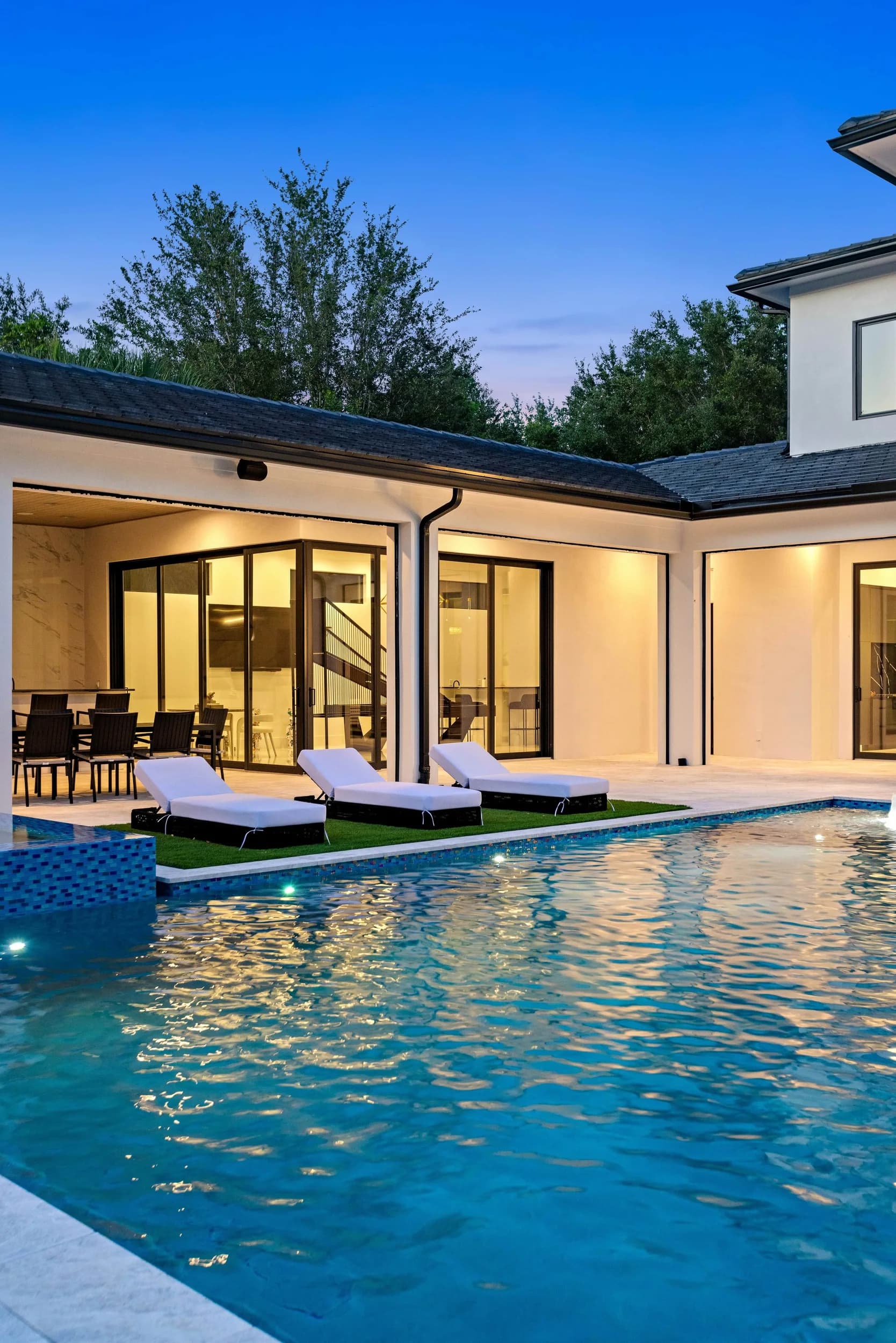
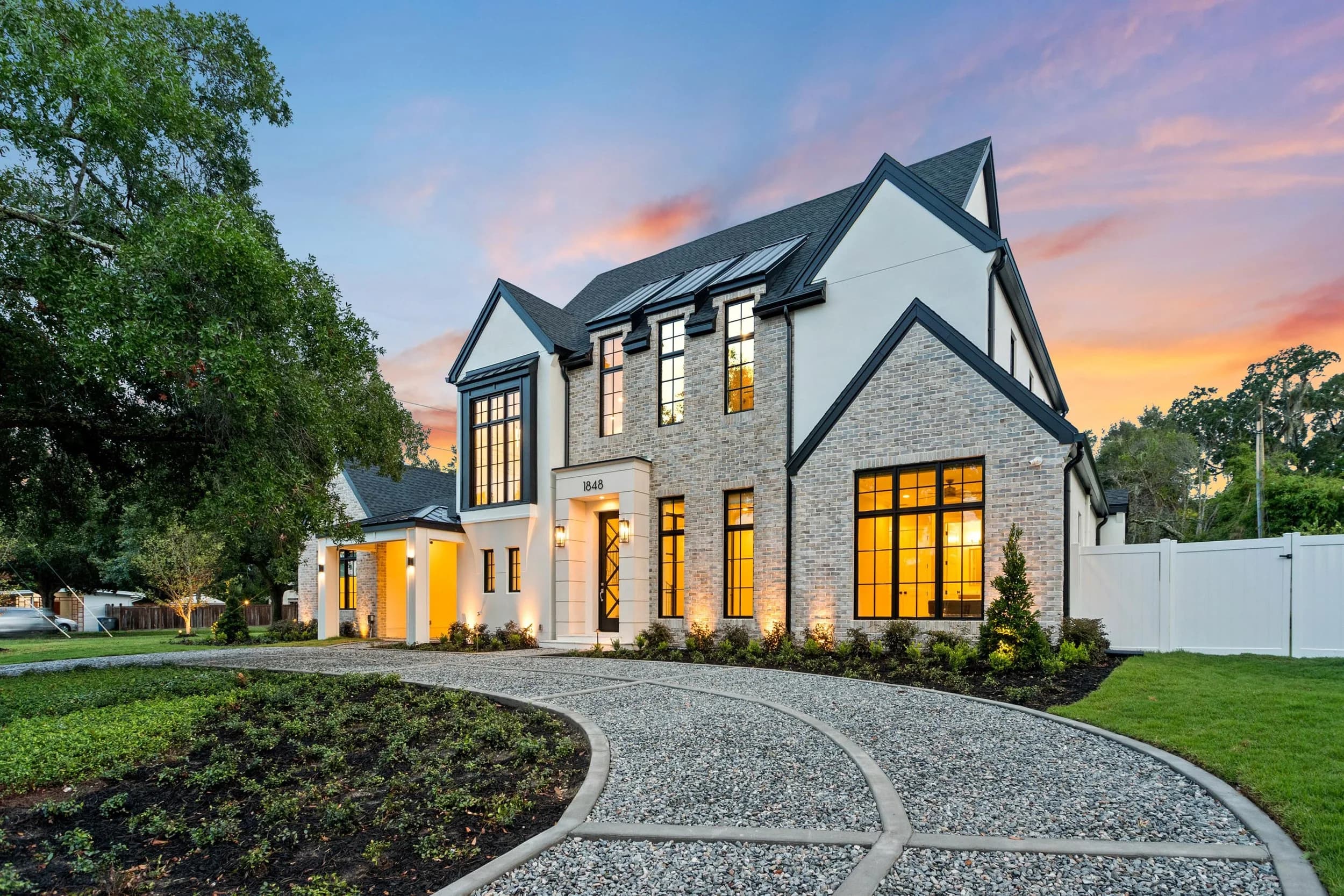
True twilight photography means the photographer returns to the property during the roughly 20–30 minute window after sunset when the sky still holds color and the home’s interior lights glow warmly through the windows. It’s a real capture: real sky, real light spill, real reflections on the pool water.
Virtual twilight is a post-production edit. The photographer shoots the exterior during the day, and an editor replaces the sky with a dusk sky, warms the windows, and adds a glow to exterior fixtures. No second visit required.
Both end up in the same slot in your MLS gallery. They do not, however, look the same — and they don’t cost the same.
When True Twilight Is Worth It
True twilight earns its keep on properties where the experience of the home at night is part of the value:
Luxury listings above roughly $750K in Orlando and Tampa Bay, where buyers expect a premium presentation
Pool homes and outdoor living spaces — real light reflecting off water and travertine is very hard to fake convincingly
Waterfront and golf-course properties, where the sky behind the home is a genuine selling point
Homes with architectural lighting — landscape uplighting, soffit lighting, a lit portico
Model homes and builder sales centers, where the image will live in brochures and paid ads for months
If the photo is going to be your primary MLS image or the hero of a paid campaign, real twilight is the safer investment.
When Virtual Twilight Makes More Sense
Virtual twilight is a legitimate, useful tool — it just has a narrower job:
Standard listings where you want one attention-grabbing image without adding a second shoot fee
Tight timelines — the listing goes live tomorrow and there’s no time for a return trip
Weather-compromised shoots, which happen constantly during Florida’s summer storm season
Homes with modest exterior lighting, where a true twilight shot wouldn’t have much to work with anyway
Rental and vacation-rental listings where the marketing budget is tighter
The catch: virtual twilight only looks convincing when the daytime exterior was shot with it in mind — even light, no harsh shadows across the facade, ideally overcast or shaded conditions. A harsh noon exterior with black shadows under the eaves will never edit into a believable dusk photo.
The Disclosure Question
This matters more than most agents realize. MLS rules and state real estate advertising standards generally require that photos not misrepresent the property. Sky replacement and virtual twilight are broadly accepted as cosmetic enhancements — the same category as color correction — because they don’t change the property itself.
Where photographers and agents get into trouble is when an edit alters what’s actually there: removing a neighboring building, erasing power lines, editing out a cracked driveway, or adding landscaping that doesn’t exist. Those cross the line.
A practical rule: if the edit changes the sky or the light, you’re fine. If it changes the property, disclose it or don’t do it. Many agents add a simple “virtually enhanced” note in the listing remarks for virtual twilight images. It costs nothing and protects you.
Cost and Turnaround: A Realistic Comparison
Pricing varies by market and photographer, but the general shape holds across Orlando, Tampa Bay, and Central Texas.
True twilight costs more because it reflects a second site visit. It has to be scheduled into a fixed 25-minute window after sunset, usually delivers the next business day, and carries real weather risk — a storm cancels the window entirely. When it works, the result is genuinely striking and unmistakably real.
Virtual twilight is a per-image editing fee with no separate scheduling. It’s delivered alongside your main gallery, carries essentially no weather risk, and looks very good on the right home.
For a portfolio of listings, many agents settle on a sensible split: true twilight on the top 10 to 20 percent of their inventory, virtual twilight everywhere else.
How to Decide in 30 Seconds
Ask three questions:
Does the home look meaningfully better at night? Lit pool, uplighting, big glass. If yes, lean true twilight.
Is this a flagship listing? Luxury price point, builder campaign, or a listing you’re using to win future business. If yes, true twilight.
Is the shoot day forecast clean? Florida afternoons in July and August are unpredictable. If the forecast is shaky and the listing must go live, virtual twilight removes the risk.
If you answered no to the first two, virtual twilight will almost certainly do the job.
One Last Tip
Whichever you choose, don’t bury it. Twilight images consistently perform as the lead photo — they stop the scroll on Zillow and Realtor.com in a feed of daytime exteriors. If you paid for it, make it the first thing a buyer sees.
Ready to book? Get in touch or call us — we serve Orlando, Tampa Bay, and Central Texas.