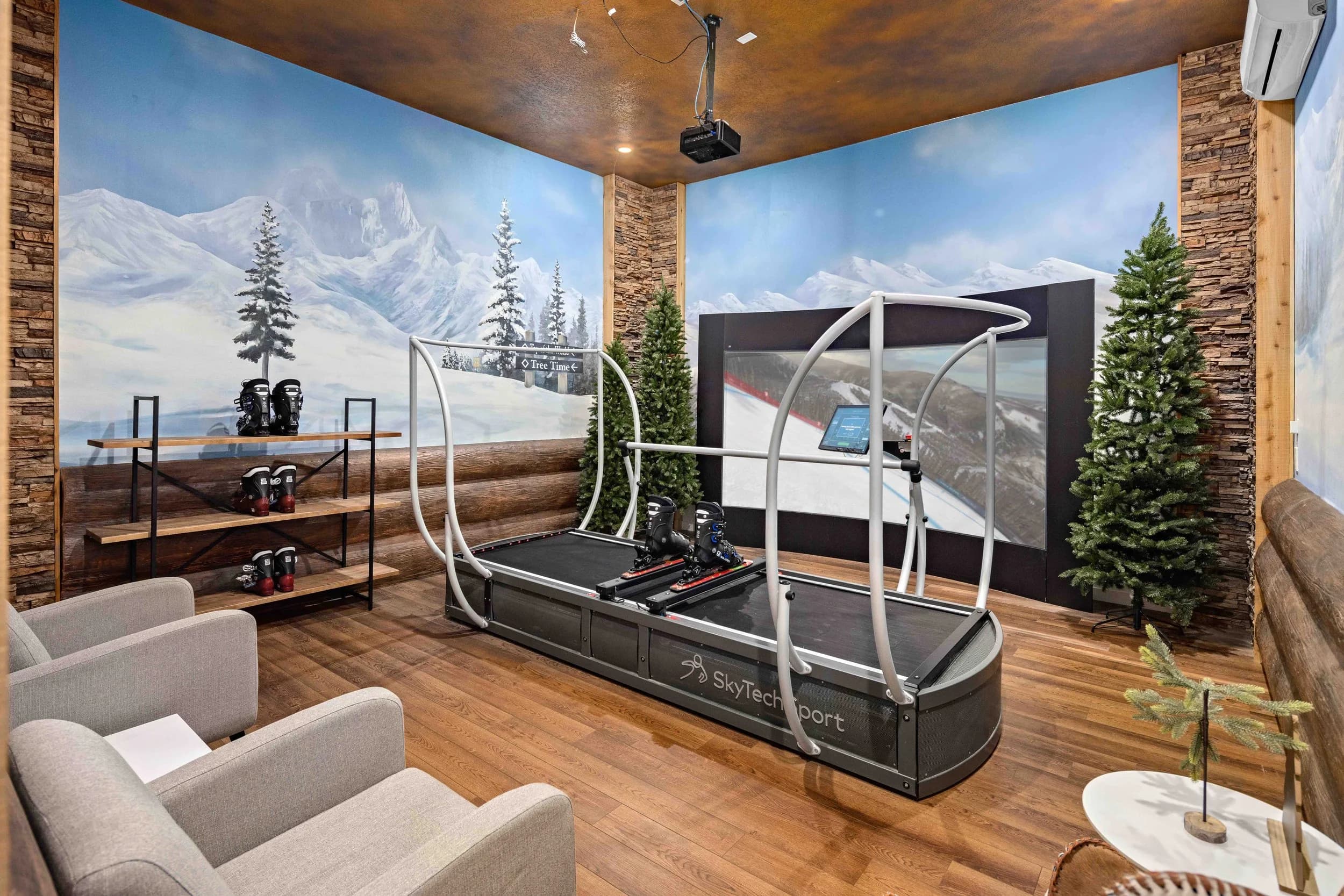
Home theaters, game rooms, wine rooms, and bonus spaces carved out of the middle of a floor plan have one thing in common that makes them harder to photograph than anything else in the house: no window. Not a small window, not a north-facing window — none. Every photon in the frame is one somebody put there.
These rooms are also often the most expensive spaces in a luxury Orlando or Tampa Bay home. A theater that photographs badly does not just fail to sell itself; it makes a buyer wonder what else is buried in the middle of the house.
A dark room and a windowless room are different problems
It is easy to lump these together, but the distinction matters. A dark room with a window has a light source to balance against — the job is reconciling a bright window with a dim interior, which is a dynamic-range problem. A windowless room has no reference at all. Nothing is fighting the photographer, and nothing is helping.
That sounds easier and is not. Without daylight, the room's own fixtures set the color and direction of every shadow, and those fixtures were chosen for atmosphere, not for accuracy. Recessed cans throw hard pools on the floor. Sconces and LED coves put colored light on the walls. Left alone, the room photographs as a series of hot spots separated by black. The fix is added light that reads as though it belongs — not a flat wash that erases the mood the designer built.
If the room in question has a window and is simply dim, our post on photographing homes with dark interiors is the right one; this one assumes the window does not exist.
The screen is the problem, not the light
The biggest single decision in a theater frame is what the screen is doing, and there are three options. Each is defensible and they should not be mixed within one gallery.
- Screen off, dark. Honest and simple. It also reads as a large blank rectangle that pulls the eye, and it tells the buyer nothing about what the room is for.
- Screen on, with content. Immediately legible as a theater. It introduces a licensing question — a recognizable film or logo on the screen is somebody else's material — so neutral or abstract content is the safer choice.
- Screen on, dimmed and neutral. Usually the best of the three. Enough glow to read as live, not enough to blow out or to compete with the seating.
Whichever is chosen, the projector itself needs handling. A running projector throws light straight back at the camera position and puts a bright cone through the frame; a bank of recessed lights above the screen washes the screen out. The room almost always needs to be lit in layers and combined, rather than captured in one exposure with everything blazing.
Glare deserves its own pass. Acoustic panels, glass cabinet fronts, framed posters, and the glossy face of a media console all mirror whatever light is added — moving a light two feet on site beats fixing a reflection later.
Keeping a black box from reading as a basement
Central Florida homes do not have basements, which is exactly why a poorly lit interior room reads so oddly to local buyers — they have no mental category for it. A few things separate "purpose-built room" from "windowless space":
- Show a doorway or an edge. A frame that includes the threshold, a hallway sliver, or the transition to the adjacent room tells the buyer where this space sits in the house.
- Keep the ceiling in. Coffers, star fields, soffit lighting, and acoustic treatment are what the money was spent on, and cropping them out flattens the room into a dark rectangle.
- Let the blacks be black. Lifting shadows to prove nothing is hiding makes the room look grey and cheap. A theater is supposed to be dark.
- Keep the seating legible. Count and arrangement is what a buyer is actually measuring — whether the family fits.
The choice about which fixtures stay on runs through this whole category, and it is the same judgment covered more broadly in lights on or off. Rooms like these are the case where the answer is almost never "all of them."
Game rooms, bars, and the reflective stuff
Game rooms bring their own set of surfaces. A pool table's felt reads as a flat colored slab unless there is directional light across it. Arcade cabinets and golf simulators are self-illuminated screens, each with its own color temperature, which is why a single global white balance rarely holds up across the room. Bar backsplashes, bottle glass, and mirrored shelving reflect the camera and whatever is behind it.
Wine rooms are the hardest of the group. Most are lit with warm strip lighting inside glass enclosures, so the photographer is shooting through one reflective plane at bottles behind another. The usable frames are generally from an angle rather than straight on, and closer than feels natural — a tight frame of racked bottles does more work than a wide shot of a glass box. That is the same argument made in detail shots in a listing gallery.
Where these frames belong in the gallery
These rooms are supporting cast. They belong after the primary living spaces, kitchen, and primary suite, grouped together so a buyer reads them as a run of entertainment space rather than encountering a dark frame between two bright ones. Two or three strong images beat six mediocre ones — a theater does not need coverage from every corner.
One exception: on a home where the theater or simulator genuinely is the headline feature, it can move up. That is a judgment about the buyer, not the room. Homes that turn on evening atmosphere more broadly are worth a look at twilight interiors, which deals with a whole house after dark rather than rooms that are dark all the time.
Ready to book? Call or text (689) 600-2131 or get in touch.