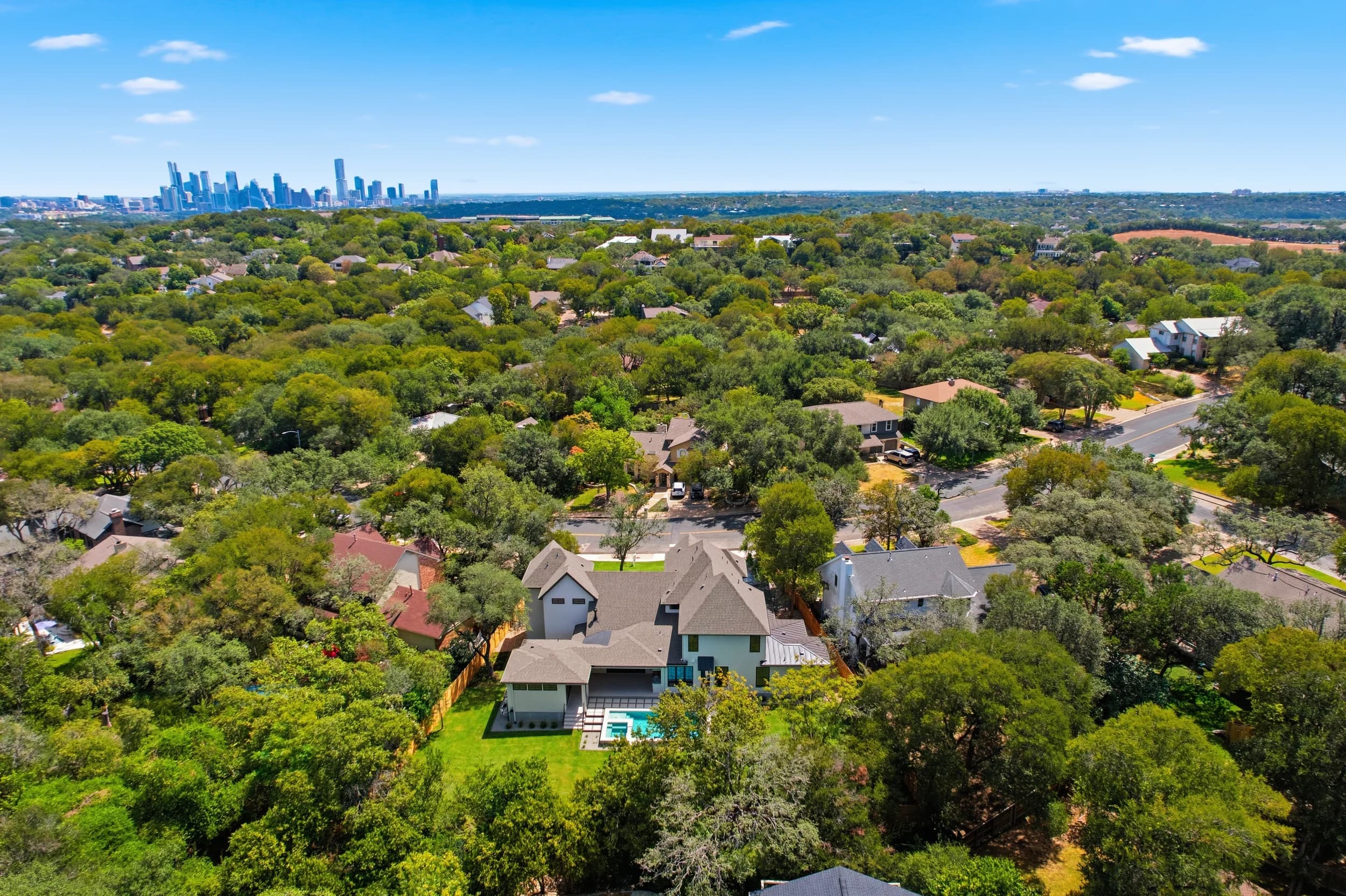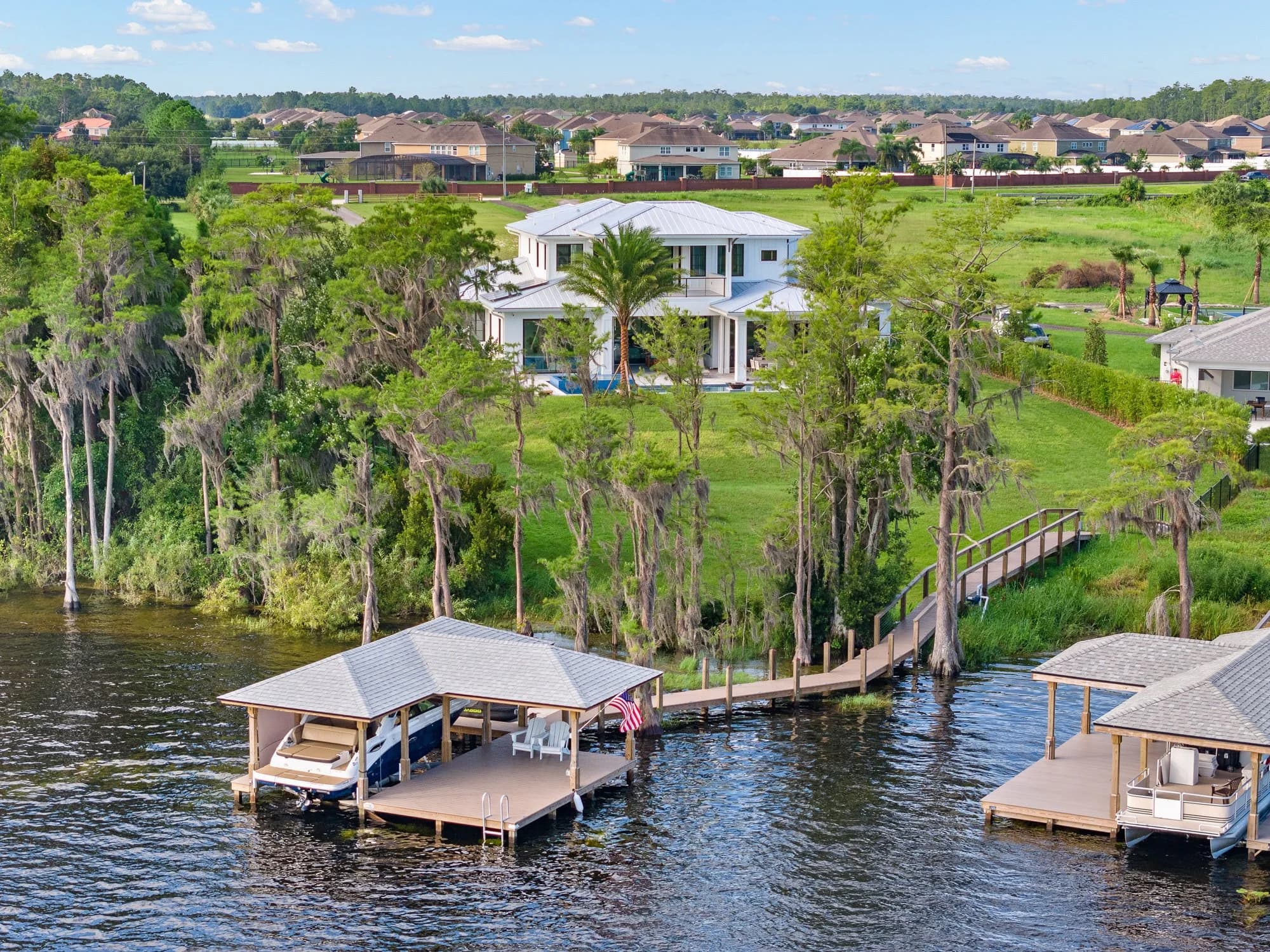
Drone photography in Tampa Bay comes with a planning step many agents and builders don't see coming. The region has three busy airports and a major military base close to some of its most valuable neighborhoods: Tampa International (TPA) near Westshore, MacDill Air Force Base at the southern tip of the South Tampa peninsula, and St. Pete-Clearwater International (PIE) on the bay side of Pinellas County. Smaller fields such as Peter O. Knight on Davis Islands and Albert Whitted in downtown St. Petersburg add to the picture.
None of this means aerials are off the table in Tampa Bay. It means the address matters, and a few listings each season need a different plan. This post explains how that works in plain terms. For the basics of who can legally fly, see our guide to FAA Part 107 for real estate agents. If you also work in Central Florida, our post on drone no-fly zones in Orlando covers the same questions there.
Why so much of Tampa Bay sits in controlled airspace
Airspace around airports is controlled so that drones and aircraft stay apart. In Tampa Bay, that controlled airspace overlaps neighborhoods agents list every week:
- Westshore, Town 'n' Country and parts of Carrollwood, close to TPA.
- South Tampa, Davis Islands and Harbour Island, close to MacDill and Peter O. Knight.
- Mid-Pinellas, including parts of Clearwater and Largo, close to PIE.
- Downtown St. Petersburg and the waterfront, close to Albert Whitted.
Homes farther out, in much of Pasco, eastern Hillsborough and North Manatee, are often outside these areas, though every address still gets checked before a flight.
How authorization works, in general terms
A licensed Part 107 pilot who wants to fly in controlled airspace needs FAA authorization first. For many locations this is requested through LAANC, the FAA's automated authorization system, which approves flights up to the altitude the FAA has set for that spot on its facility maps. In practice, a few things can happen:
- Approved at normal listing altitudes. Most common, and the shoot goes ahead as planned.
- Approved, but only at a low ceiling. Close to a runway, the allowed altitude can be quite low. Low aerials of the roof, pool and dock still work; high context frames may not.
- A further request is needed. Some locations need a manual request that takes longer to process, so they must be flagged well before the listing date.
- No flight. Some spots near MacDill and runway approaches are not available for routine listing flights.
Temporary flight restrictions add another layer. Large events at stadiums, official visits and emergencies can close airspace for a period, even in areas that are normally open. A professional pilot checks for these on the morning of the shoot.
What this means for a listing shoot
The practical steps are simple. Share the full address when you book, not on the shoot day. If the home is in one of the areas above, expect a short note back on what is possible. When the ceiling is low or a flight is not allowed, the listing can still carry its location story:
- Lower aerials that show the roof, pool cage, dock and lot lines.
- Ground-level location photos of the water view, the street and nearby parks.
- A neighborhood video clip shot from the ground, plus a map in the listing.
Waterfront homes in South Tampa and on Davis Islands are where this comes up most, because those are also the listings where aerials help the most. Planning early keeps the marketing on schedule and avoids promising a seller a shot that can't be flown.
Builders and construction programs near the airports
For builders and developers, airspace affects more than one flight. A construction progress program repeats the same vantage points every month, so the altitude and position for each point have to be workable for the life of the project. That is worth settling before the first flight, not after the third. Our post on construction progress drone programs for Tampa Bay builders covers cadence and vantage points; this post only adds the airspace check that comes first.
Frequently asked questions
Can you fly a drone for a listing in South Tampa?
Often, yes, but it depends on the exact address. Parts of South Tampa sit close to MacDill and Peter O. Knight, where altitudes can be limited or flights not allowed. Send the address when you book and we will tell you what is possible before the shoot.
Do I need to get drone permission myself?
No. JRP's pilots hold FAA Part 107 certificates and request any airspace authorization the flight needs. You may still need permission from an HOA or property owner for takeoff and landing, which is a separate question.
What happens if a flight is not approved?
We plan the shoot without aerials, or with lower ones, and cover the location with ground photos and video instead. You will know before the shoot day, so the listing plan does not change at the last minute.
Is drone photography near PIE or downtown St. Pete possible?
In many cases. Both areas are in controlled airspace, so each address is checked and authorized first. Some spots close to the runways will have low ceilings.
Do you have a drone pilot based in Tampa Bay?
Yes. JRP has a local crew in Tampa Bay that shoots photography, video, drone and 3D tours from Pasco to Manatee. You can see the service on our Tampa Bay drone photography page.
Ready to book? Call or text (689) 600-2131 or get in touch.