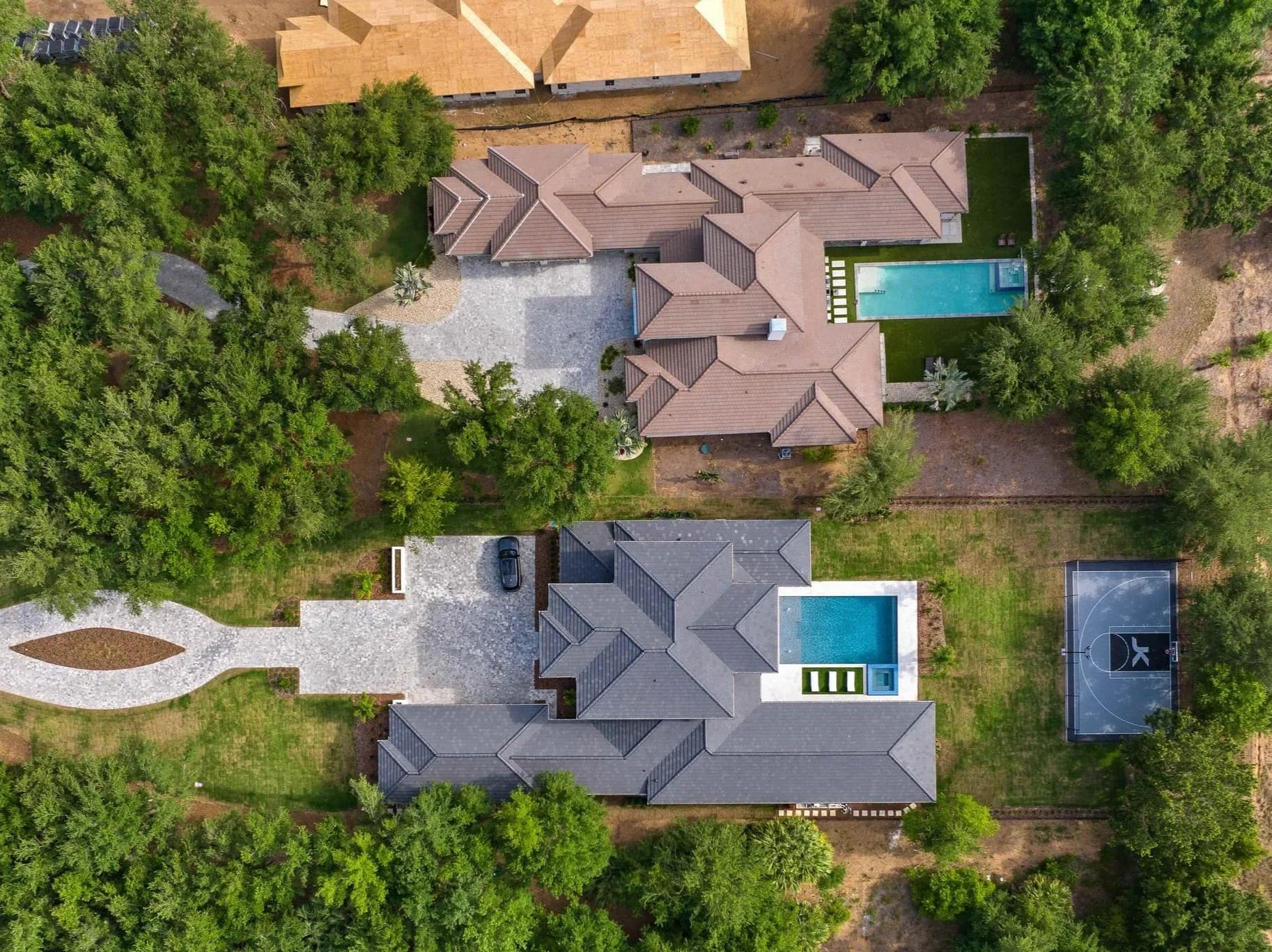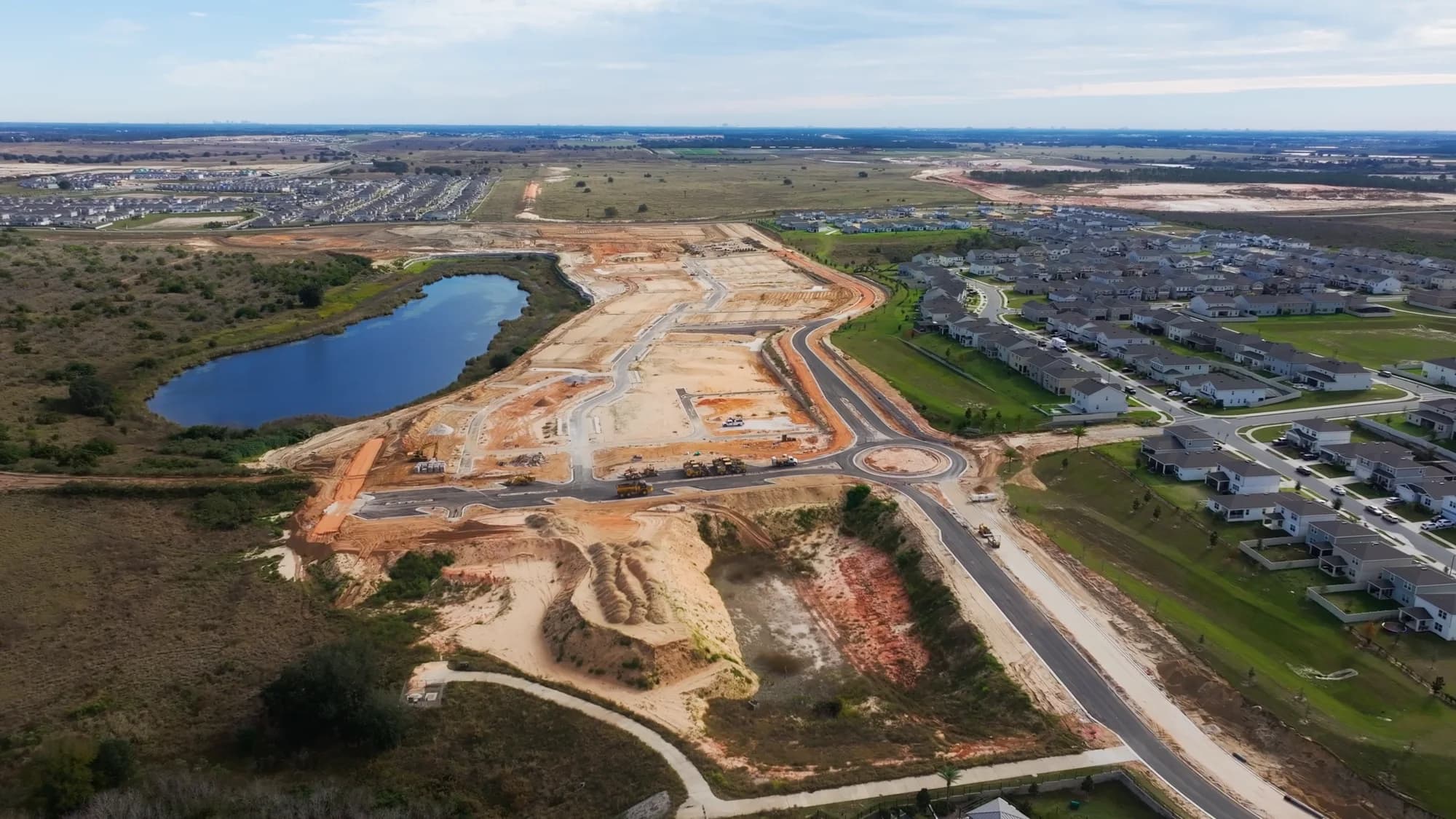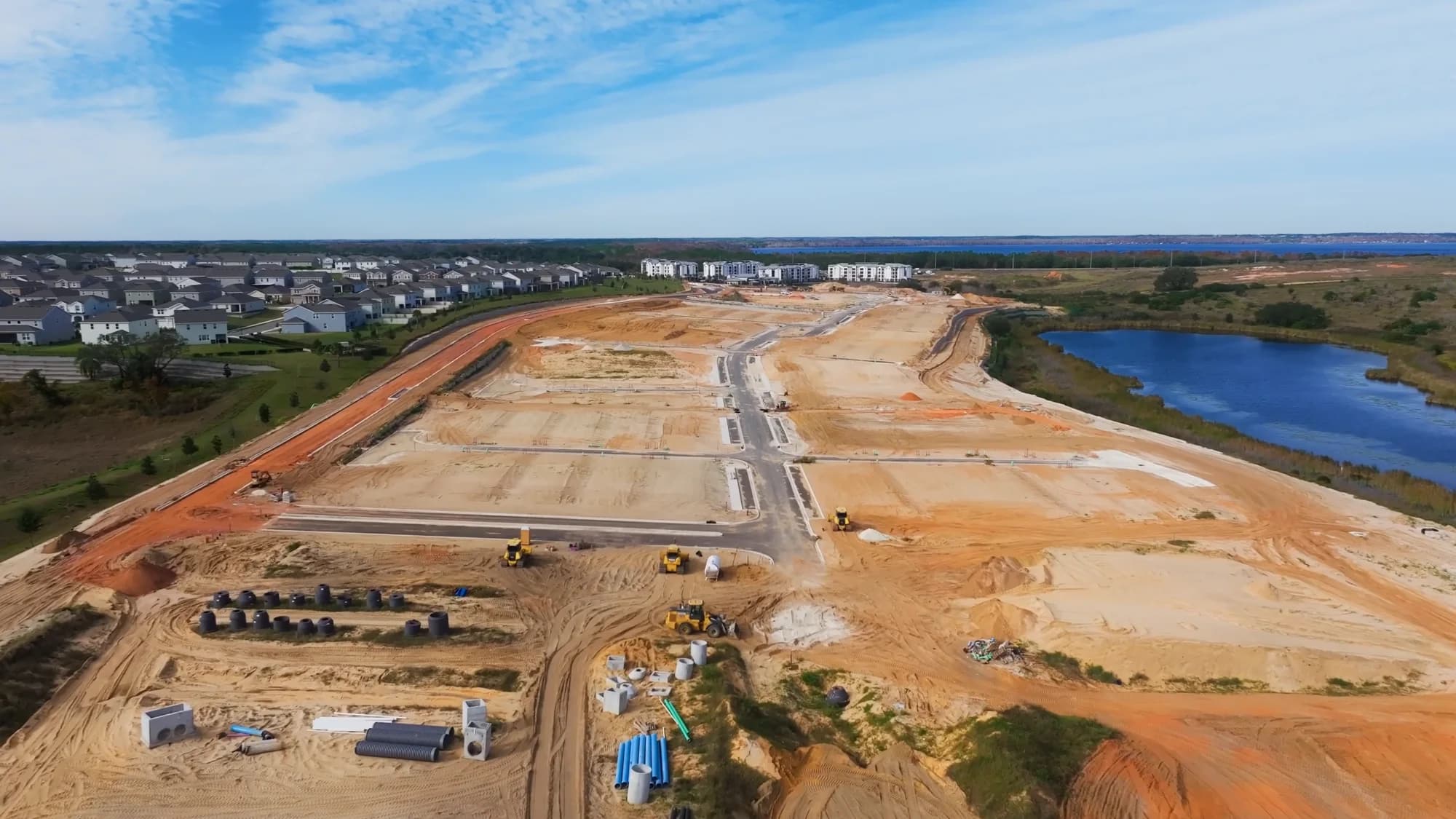
Tampa Bay builders are running more communities at once than ever, from Wesley Chapel and Zephyrhills in Pasco County down through Riverview and into Parrish in north Manatee. When a superintendent, a marketing director and a lender all want to see how a site is moving, a recurring construction progress drone program is usually the clearest way to show it. One flight, flown the same way each month, gives everyone the same picture.
This post is about running that program in Tampa Bay specifically: how to set it up so the images line up month to month, and how the region's weather and airspace shape the schedule. For the bigger question of how often to shoot at all, see our guide on how often you should take construction progress photos.
Why a program beats one-off flights
A single aerial shows a site on one day. A program shows change, and change is what owners, investors and sales teams actually want to see. That only works when every flight is repeatable.
- Fixed vantage points. Each flight returns to the same positions, altitudes and headings, so month three can sit next to month one without anyone guessing what moved.
- A consistent shot list. Typically an overall oblique of the community, a straight-down view of each active phase, the entrance and amenity site, and the model row once it exists.
- Consistent naming and delivery folders. Files labeled by date and vantage point are easy to drop into an owner report or a lender draw package.
- One point of contact. The site team knows who is coming and when, so gate access and safety check-ins are routine rather than a surprise.
If you also want orthomosaic maps or site models for engineering, that is a related but separate deliverable, covered in our post on drone mapping for land developers.
Tampa Bay weather and the flight calendar
The region's weather is the biggest scheduling factor for a progress program, and it changes with the season.
- Summer storms. From roughly late May through September, afternoon thunderstorms build most days. Progress flights are best planned for the morning, when skies are clearer and winds are calmer.
- Wind off the water. Communities near Tampa Bay, the Little Manatee River or the Gulf side can see steady breezes that limit how low and how long a drone can safely hold position. Inland Pasco sites tend to be easier.
- Haze and humidity. Summer haze softens distant detail. A morning slot keeps phase lines and road grading readable from altitude.
- Tropical systems. During hurricane season, a scheduled flight may need to move around a storm, and a post-storm flight is often useful on its own to document site conditions.
The practical answer is a flight window rather than a fixed date: for example, the first week of each month, with the exact morning chosen a few days out based on the forecast. That keeps the monthly rhythm without forcing a flight into bad conditions.
Airspace around TPA, MacDill and PIE
Tampa Bay has several airports and a major Air Force base, so airspace matters more here than in many suburban areas. Tampa International, St. Pete-Clearwater International, Peter O. Knight and Albert Whitted all sit inside or near controlled airspace, and MacDill Air Force Base on the southern tip of the Tampa peninsula has its own restrictions.
For most new communities in Pasco, eastern Hillsborough and Manatee, the site sits outside the busiest airspace and flights are straightforward. When a site is inside controlled airspace, a licensed Part 107 pilot requests authorization before flying, and the approved altitude may be lower than the shot list assumes. Some locations close to MacDill or an airport may not be flyable at all. The right step is to check each site address when the program is set up, not the morning of the first flight, so the vantage points are planned around whatever ceiling applies.
Setting up the program
A good kickoff covers a short list of decisions, and then the program runs on its own:
- Sites and phases. Which communities, which phases, and when each one starts and ends.
- Vantage points. Walk or map them once, record them, and fly them every time.
- Cadence. Monthly is common; active vertical construction or a lender schedule may call for more often.
- Audience. Construction, finance and marketing want different crops, so agree which views go to whom.
- Access and safety. Gate codes, site check-in, and any certificate of insurance the general contractor requires.
Delivery timing is confirmed at booking. Many builders also pull a few progress aerials into marketing once roads, ponds and amenities take shape, which pairs well with our post on model home and new community photography in Tampa Bay.
Frequently asked questions
Do you fly construction progress drones in Pasco, Hillsborough and Manatee counties?
Yes. JRP has a local crew in Tampa Bay and flies progress programs for communities across the region, including the Wesley Chapel, Riverview and Parrish growth areas. Each site's airspace is checked when the program is set up.
How often should a Tampa Bay builder schedule progress flights?
Monthly is the most common cadence because it matches typical owner and lender reporting. Sites in fast vertical construction sometimes move to every two weeks for a stretch, then return to monthly.
What happens when weather cancels a scheduled flight?
The flight moves to the next suitable morning inside the agreed window. Because the program uses a window rather than a fixed date, one stormy week rarely breaks the monthly sequence.
Can you fly near MacDill Air Force Base or Tampa International?
It depends on the exact location. Sites in controlled airspace need authorization before any flight, and some locations close to the base or an airport may have low ceilings or may not be flyable. We check this before the program starts.
Can progress aerials be used in community marketing?
Often, yes. Once roads, ponds and the amenity site are visible, progress aerials make useful social and website content showing a community is moving. Usage is confirmed as part of the agreement.
A progress program works best when it is planned once and flown the same way every time. Ready to book? Call or text (689) 600-2131 or get in touch.