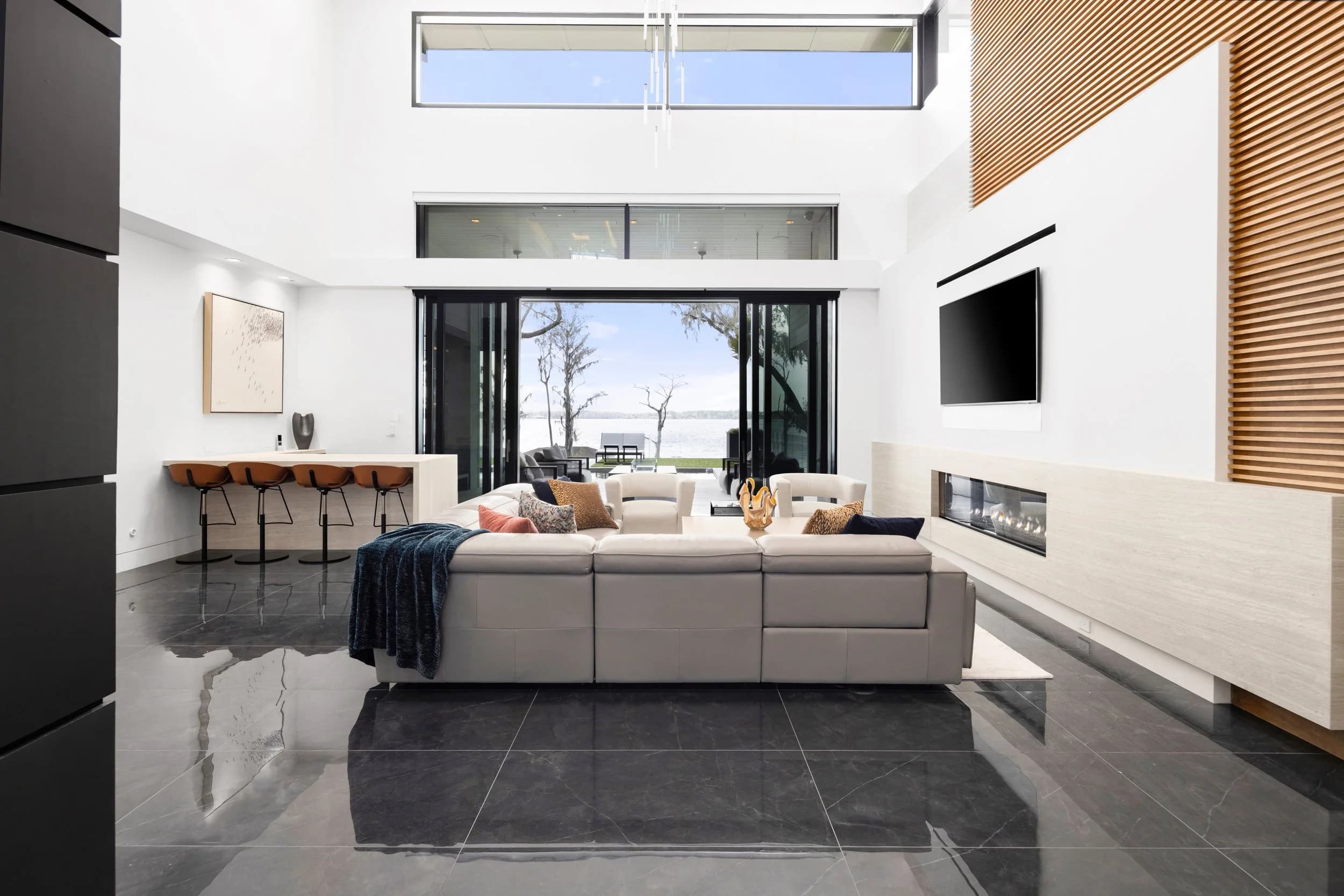
A two-story great room is one of the best selling features in a new or custom home, and one of the hardest to photograph. The volume that feels dramatic in person tends to flatten on camera, the catwalk turns into a railing, and the stairwell becomes a confusing stack of lines. A little planning fixes most of it.
This guide is for builders, agents and marketing teams who need these spaces to read as impressive rather than awkward. It focuses on multi-level volume, stairs and catwalks. Ceiling treatments such as beams and tall walls are covered separately in the guide to photographing high ceilings, beams and vertical features.
Why do two-story spaces look flat in photographs?
They look flat because a photograph compresses depth, and height is the first thing to go. In person, your eyes travel up the wall, feel the windows overhead and register the open air above you. A camera sees a single rectangle, so a room that is twenty feet tall can look barely taller than a standard one.
The fix is to give the viewer cues for scale. A frame that includes the floor, a clear piece of furniture, the full height of the window wall and the upper level together tells the story. Cropping out any of those parts removes the information the eye needs to read the volume.
Where should the camera go?
Start at a moderate height, near the middle of the room, and keep the camera level. Tilting up to catch the ceiling is the easiest way to make vertical lines lean, and the post on why walls lean in listing photos explains the cause. A level camera, a deliberate lens choice and a correction in editing keep the walls straight.
Corner positions usually work better than straight-on ones, because they show two walls of windows and a diagonal of floor, which increases the sense of depth. Lens choice matters here too, and wide-angle versus fisheye is worth a read if you have ever seen a great room that looks warped.
- Shoot from the main floor first to establish the full height and the window wall.
- Add a second frame from the landing or loft to show the room from above, which is a view buyers rarely get in a listing.
- Keep furniture to a few anchor pieces. Fewer objects make the height more visible.
How do you show a catwalk or open stairwell?
Show it from a position where the railing supports the picture rather than blocking it. A catwalk shot straight from below becomes a horizontal bar across the frame. Moving a few feet to the side and slightly back gives the catwalk a diagonal, which adds energy and shows where it leads.
For stairwells, look for a vantage point that shows both the lower and upper landing in one frame. Stair railings, balusters and open risers all create strong repeating lines, so check that they run parallel to the frame edges. A second picture from the top landing looking down can be a useful detail shot, as long as the floor below is tidy, since it will be visible.
What about light and prep in tall rooms?
Tall windows bring plenty of light and plenty of contrast. Schedule the shoot for a time when the window wall is not facing direct sun, and expect the crew to blend exposures so the windows hold detail without turning the room dark. Check the high windows too, since smudges, cobwebs and dust in the upper corners are easy to miss from the floor.
Turn on every fixture, including pendants and chandeliers that hang into the volume, and replace dead bulbs before the day. For builders getting a model or spec home ready, the builder's prep checklist for model and spec home photography lists the details to handle in advance.
Should you photograph the space at more than one time of day?
Often, yes. Great rooms change dramatically between morning and late afternoon, and a second set of frames at a different hour can show how the light moves through the window wall. For a model home or a signature floor plan, a twilight frame with the interior glowing against a deep blue sky is often the image that ends up on the website banner. Decide early which hero image you want, so the schedule can protect it.
Photographing these spaces well is a matter of scale cues, camera height and patience with the lines. When those three are right, the great room finally looks as big as it feels.
Ready to book? Call or text (689) 600-2131 or get in touch.