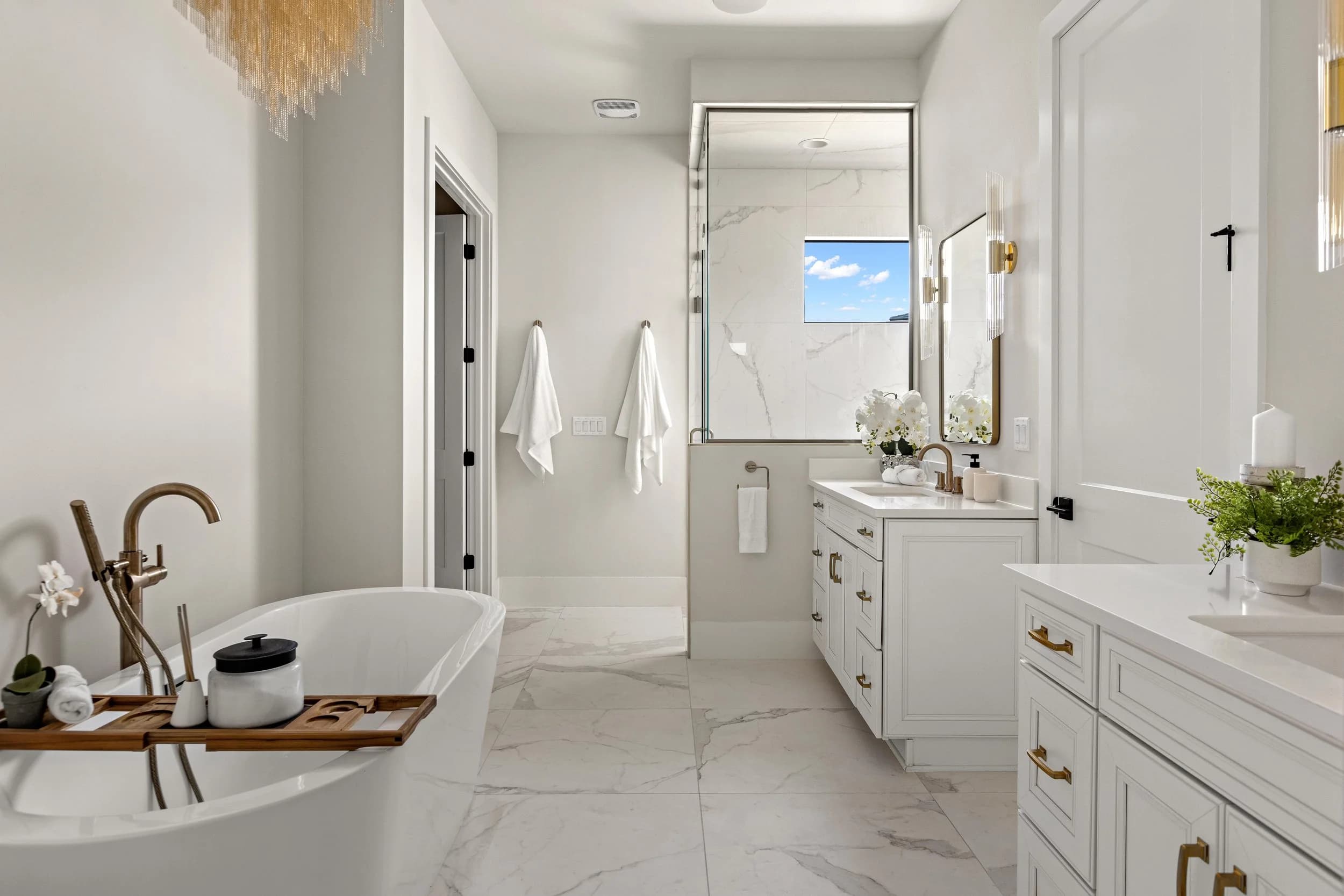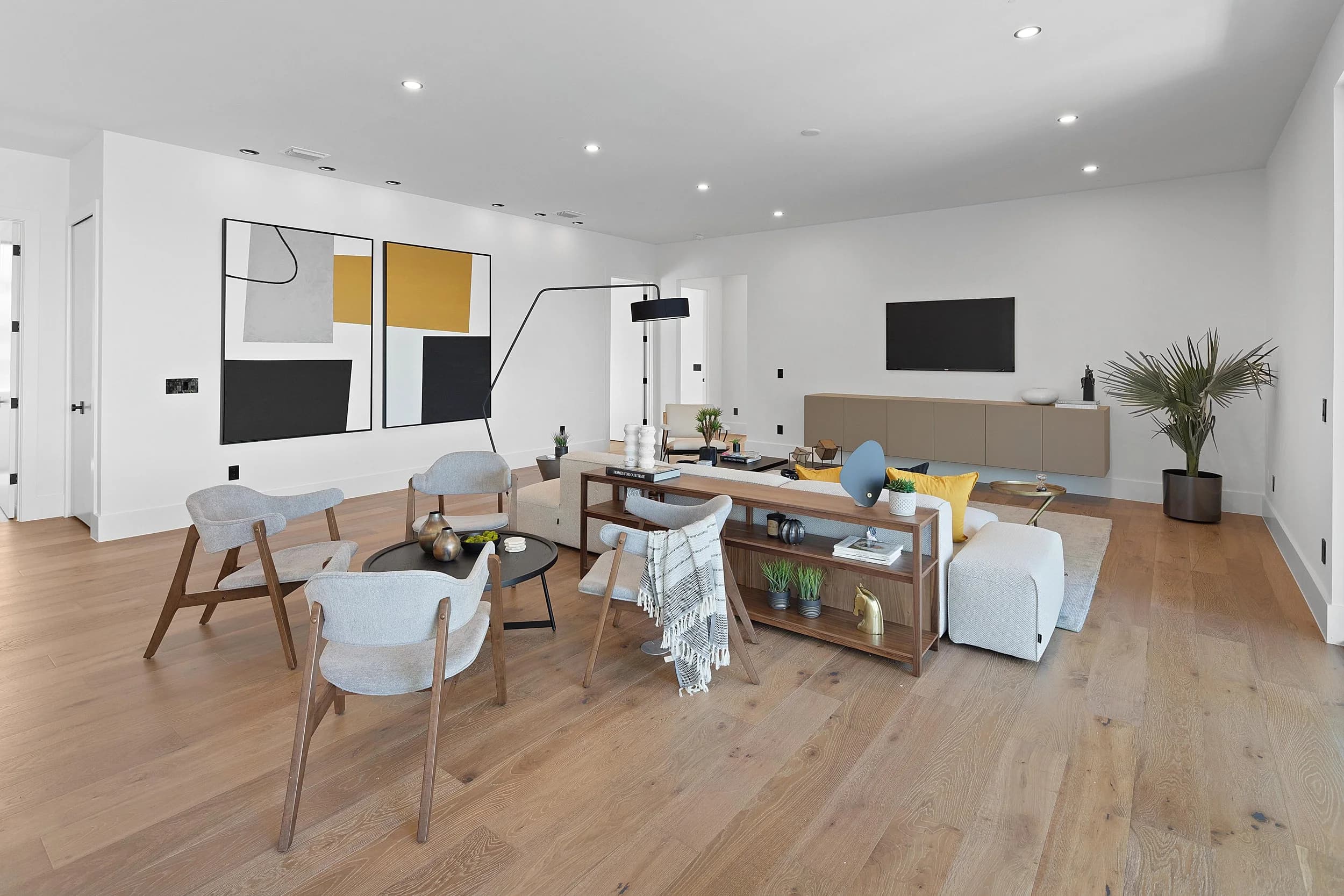
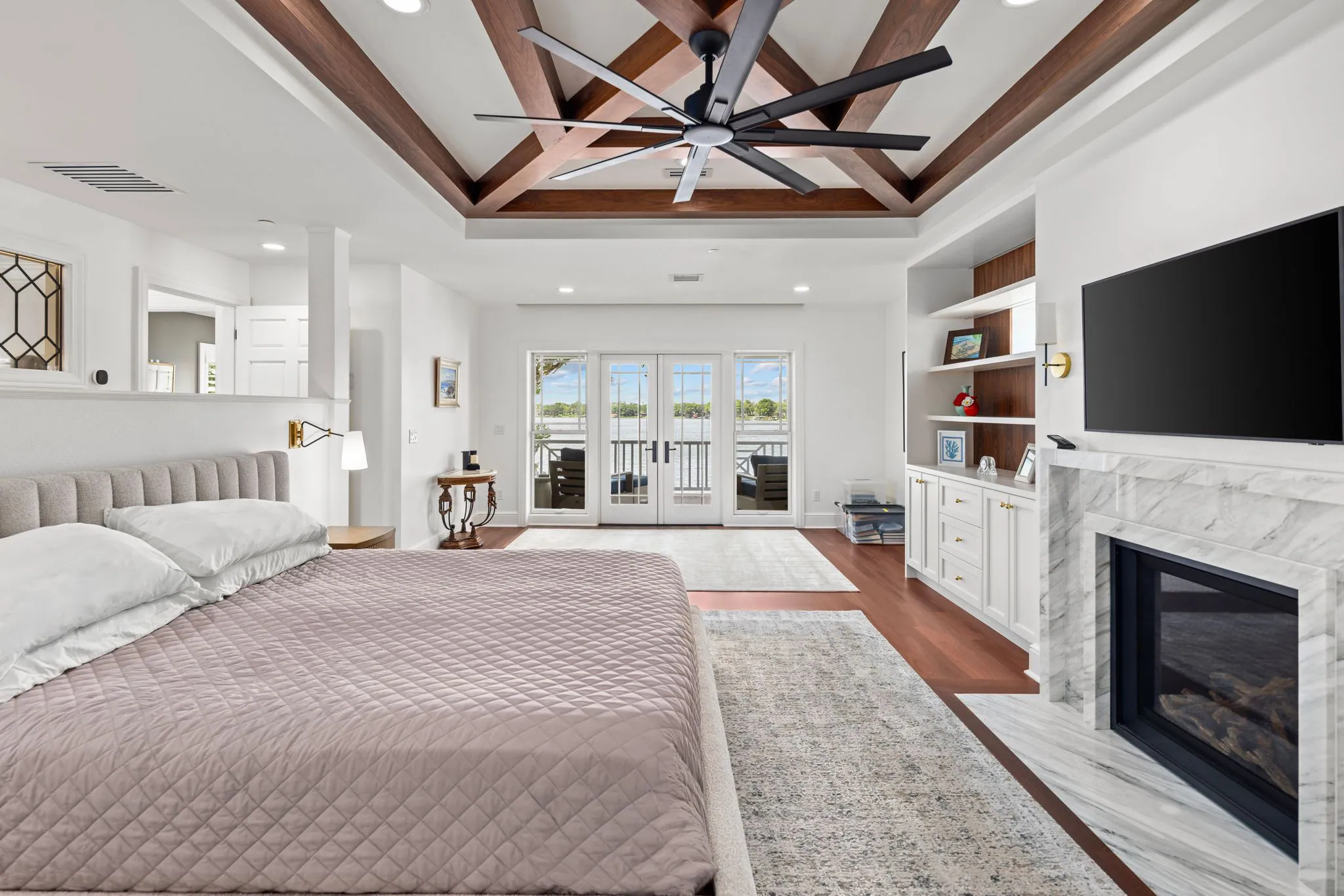
Walk into a two-story great room with a coffered ceiling and cypress beams and the space is the first thing you feel. Look at the listing photos and it is a normal room with a lot of empty wall.
Wide-angle lenses are extremely good at showing how much floor a house has. They are much worse at showing how much air it has — and in Central Florida, where volume ceilings are one of the most common upgrades a builder sells, that is a real marketing problem.
Why Height Disappears
Three things work against vertical features, and they compound.
- The lens spends its width horizontally. A 16–24mm frame shot in landscape orientation devotes most of its coverage left-to-right. Height gets whatever is left.
- Keystoning gets corrected away. Tilt a camera up and vertical lines converge. The standard fix — shoot level, correct the perspective in post — produces clean, straight walls and, in doing so, removes the visual cue the eye reads as "tall."
- There is nothing up there for scale. Floors have furniture. Ceilings usually have a fan. Without a reference object, a 20-foot ceiling and a 10-foot ceiling photograph nearly identically.
The result is a competent, undistorted image of an impressive room that does not feel impressive. It is the mirror image of the distortion problem in small homes — there, the lens exaggerates; here, it flattens.
What Actually Puts the Height Back
None of these are exotic. They are just deliberate, and they take a few extra minutes per room.
- Shoot vertical. A portrait-orientation frame is the single most effective tool for a tall space, and it is the one most often skipped because the MLS crops to landscape. Shoot both: landscape for the MLS, vertical for the brochure, the single-property site, and social.
- Raise the camera, but not too far. Moving from chest height to roughly six feet puts more ceiling in frame without making the floor read strangely. Going higher starts to look like a security camera.
- Include a doorway or staircase. A standard 80-inch door in the same frame as the ceiling gives the eye a known measurement. Staircases and two-story windows do the same job and look better doing it.
- Let one vertical converge on purpose. A single deliberately tilted-up frame — not corrected flat — reads as height in a way a perfectly level frame never will. One per room, as a supporting image, not the hero.
- Light the ceiling. A coffer or beam structure that is two stops darker than the room disappears. Bouncing light up separates the plane and makes the detail visible.
The Features Worth the Extra Frames
Not every tall room needs this treatment. These do:
- Coffered, tray, and beamed ceilings. The detail is the upgrade. If it is not legible in a photo, the buyer does not know it was paid for.
- Two-story great rooms and foyers. The volume is the selling point.
- Stone or tile fireplace surrounds running to the ceiling. A floor-to-ceiling surround is a different product from a mantel, and only a vertical frame shows the difference.
- Tall windows and transoms. These sell light as much as they sell view.
- Exposed trusses, shiplap, and wood ceilings. Texture reads at an angle and vanishes head-on.
- Custom millwork, built-ins, and floor-to-ceiling shelving. Same logic.
For builders and luxury listings, these are often the most expensive elements in the house. It is worth making sure they are the ones that are actually visible.
Talk About It Before the Shoot
A photographer walking a house for the first time will catch the obvious two-story spaces. What gets missed is the specific thing the seller or builder paid for — the reclaimed beams, the ceiling detail in one bedroom, the custom trim in the study.
Two minutes at the start of the shoot fixes this. Point it out, or note it when you book. If you send a shot list, put the vertical features on it explicitly; "great room" is not the same instruction as "great room ceiling."
On the seller's side, the normal prep checklist mostly ignores anything above eye level. Two additions help:
- Stop the ceiling fans. A blurred fan in a long exposure ruins the frame, and fans are on in every Florida house.
- Look up for cobwebs and dead bulbs in high fixtures. Nobody cleans at that height, and a wide-angle frame at six feet shows all of it.
The Practical Takeaway
Tall, detailed spaces need frames the standard room-by-room pass does not produce: vertical orientation, a slightly higher camera, a scale reference, and one honest tilt-up. That is a handful of extra images per house, not a different kind of shoot.
Ask for them by name on any listing where the ceiling is part of the pitch. The alternative is paying for the upgrade twice — once to the builder, and again in the showings it takes to explain what the photos did not show.
Ready to book? Get in touch or call us — we serve Orlando, Tampa Bay, and Central Texas.