Somewhere in Orlando right now there is a buyer scrolling listings with one non-negotiable: a step-free entry, or a shower they can roll into, or a bedroom and full bath on the ground floor. They are not browsing. They are filtering. And over and over they open a gallery for a home that has exactly what they need and cannot tell, because the photographer framed those features out.
That is not carelessness. It is training. Real estate photography teaches you to compose away from grab bars, ramps, and shower benches because they read as clinical, and the reflex is to keep the frame looking aspirational. The reflex is wrong here. For this buyer, those features are the reason to book a showing, and a gallery that hides them is a gallery that loses them.
The features buyers are actually looking for
Accessibility covers a wide range, and a listing rarely has all of it. What matters is showing clearly what the home does have. The items that come up most often:
- Entry. A zero-step or low-rise entry, a ramped path from the driveway or garage, a covered landing wide enough to maneuver on.
- Doorways and halls. Widened door openings, offset hinges, hallways with room to turn.
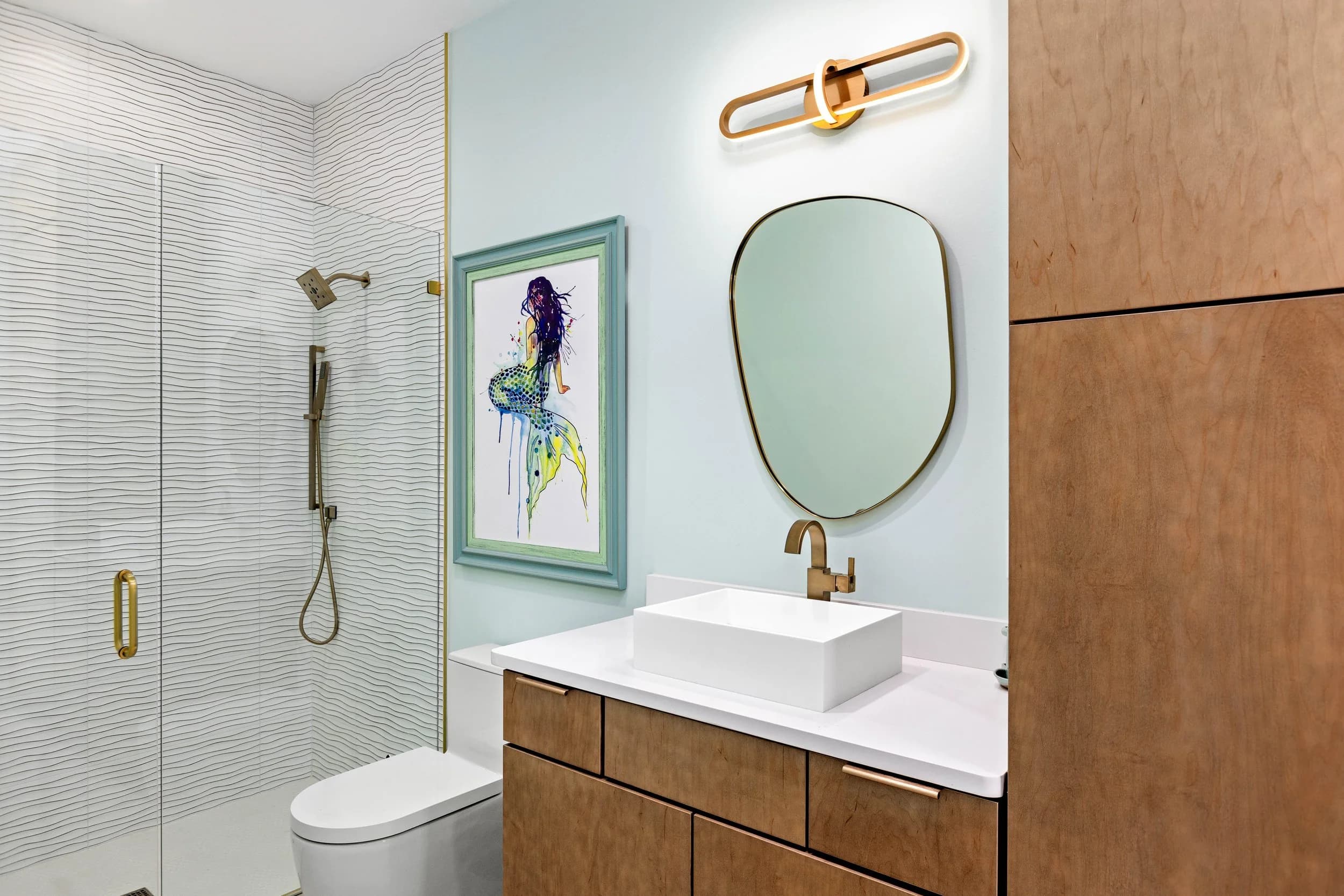
- Bathrooms. Curbless or low-threshold showers, built-in benches, handheld fixtures, grab bars, comfort-height fixtures, and open space beneath a vanity.
- Kitchen. Lowered or variable-height counter segments, pull-out shelving, side-opening ovens, front-mounted controls.
- Circulation. A ground-floor primary suite, a stair lift, an elevator, or an elevator shaft roughed in for later.
- Everything else. Lever handles, rocker switches, generous lighting, non-slip flooring, a garage with room to deploy a lift beside the vehicle.
Homes designed for multi-generational living often carry several of these at once, and that whole category has its own considerations, covered in the post on photographing multi-generational homes.
How to frame a feature that photographers are trained to hide
The goal is to make the feature legible without turning the frame into a medical-supply catalog. A few things that work:
Shoot the room normally first, then add the feature frame. The wide, flattering frame of the primary bath still belongs in the gallery. The additional frame — lower, closer, angled to show the curbless threshold and the bench together — is the one that answers the question. Two images, not one compromised one.
Give the eye something to scale against. A doorway that has been widened looks like a doorway in a photograph. Including the adjacent standard door in the same frame, or shooting down the hall so the widened opening reads against the trim line, makes the difference visible instead of asserted.
Shoot thresholds low and level. A zero-entry shower photographed from standing height disappears — the floor just looks like floor. Drop the camera to somewhere near knee height and keep it level, and the absence of a curb becomes the subject.
Light the feature rather than letting it fall into shadow. Grab bars and benches are usually on the darkest wall in the room. If they are in shadow, they read as clutter. If they are lit, they read as equipment that was installed on purpose.
Keep the finish quality visible. There is a real difference between a matte black grab bar matched to the fixtures and one that came from a hardware store aisle. If the sellers invested in doing it well, that investment should show.
This is detail-shot thinking applied to a specific purpose, and the general case is covered in the post on the small photos that do real work in a listing gallery.
Captions: describe the property, never the buyer
This is where agents get nervous, and reasonably so. The safe and simple principle is that you are describing the house, not describing who should live in it or who would find it suitable. "Curbless shower with built-in bench" is a description of a bathroom. Anything that characterizes an intended occupant heads somewhere you do not want to go.
Useful, property-focused phrasing looks like: step-free entry from garage, 36-inch door openings throughout main level, ground-floor primary suite with full bath, roll-under vanity, stair lift conveys. Each one is a fact about the structure, and each one is searchable.
Measurements deserve one caution. If you publish a door width or a turning radius, it needs to be real and measured, not estimated from a photograph — a buyer may be making a purchase decision on that number. When in doubt, show it clearly in the image and leave the figure out.
None of this is legal advice, and fair housing rules are an area where your broker and your board are the right authority rather than a blog post. The broader question of what belongs in a listing frame is covered in the post on fair housing and your listing photos, and for builders marketing to an older buyer at the community level, the post on photographing 55-plus and active adult communities takes it up a level from the individual home.
Tell your photographer before the shoot, not after
Almost all of this comes down to a two-minute conversation during scheduling. A photographer who does not know the shower is curbless will shoot the bathroom the normal way and the feature will vanish into a wide frame. A photographer who does know will build two extra frames into the plan and think about camera height in that room.
So when you book, say it: this home has a ground-floor suite, a ramped garage entry, and a renovated accessible bath, and those need to be unmistakable in the gallery. That single sentence is the whole difference between a listing the right buyer finds and one they scroll past. It applies equally in Tampa Bay, Austin, and San Antonio, where the same searches are running and the same galleries are quietly leaving the answer out.
Ready to book? Call or text (689) 600-2131 or get in touch.