Most fair housing conversations focus on the words in a listing. But photos and video are marketing too — and they carry the same obligations. Here's what agents and builders should think about before a gallery goes live.
Why Images Fall Under the Same Rules as Copy
The Fair Housing Act prohibits marketing that indicates a preference, limitation, or discrimination based on race, color, religion, sex, national origin, familial status, or disability. Nothing in that language limits it to text. A photograph, a video, or a community brand film communicates just as clearly as a headline — sometimes more clearly.
That doesn't mean listing photography is a minefield. In practice, the overwhelming majority of real estate galleries are entirely fine, because they show the property and nothing else. The risk shows up in two specific places: photos with people in them, and marketing that leans on the neighborhood rather than the home.
A quick note before we go further: we're photographers, not attorneys. Your broker, your builder's marketing counsel, and your state association are the right authorities on compliance. What follows is what we've learned works cleanly on shoot day.
People in Photos: The Highest-Risk Category
Lifestyle photography — real or model talent in a kitchen, at a pool, on a trail — is standard in apartment and new-home community marketing. It's also where the fair housing questions concentrate.
The general principle: imagery shouldn't signal who is or isn't welcome. Practically, that means:
Avoid casting that reads as exclusive. A full campaign in which every person shown belongs to one demographic group can imply a preference even if nobody intended it.
Be careful with familial status cues. Marketing that shows only couples without children, or that is captioned in ways that suggest a community isn't suited to families, is a recognized problem area. This comes up most often in 55+ and active adult marketing, which has its own exemption rules — worth confirming with counsel rather than assuming.
Get releases. Anyone recognizable in marketing imagery should sign a model release. This is a separate issue from fair housing, but the same shoot-day discipline covers both.
Watch incidental people. Neighbors in the yard, kids on bikes in the background of a drone shot, someone visible through a window. These are almost always removed or reframed in professional editing, and they should be.
For a standard residential listing, the simplest answer holds: no people in the frame. It keeps the focus on the property, avoids releases entirely, and sidesteps this whole category.
Neighborhood Marketing and Steering
The second area is subtler. Location aerials, community films, and "area highlights" content are genuinely useful — buyers want to understand where a home sits. But marketing that describes or depicts a neighborhood in terms that function as a proxy for protected characteristics can edge into steering.
Safer framing focuses on physical, verifiable features:
Proximity to specific named amenities, parks, trails, and commercial corridors
Drive times, road access, and geography
Community facilities that actually exist on site
Riskier framing relies on subjective social characterizations of who lives somewhere or what kind of people a neighborhood suits. Schools are a well-known gray area — many brokerages have specific internal policies about referencing them in marketing. Follow yours.
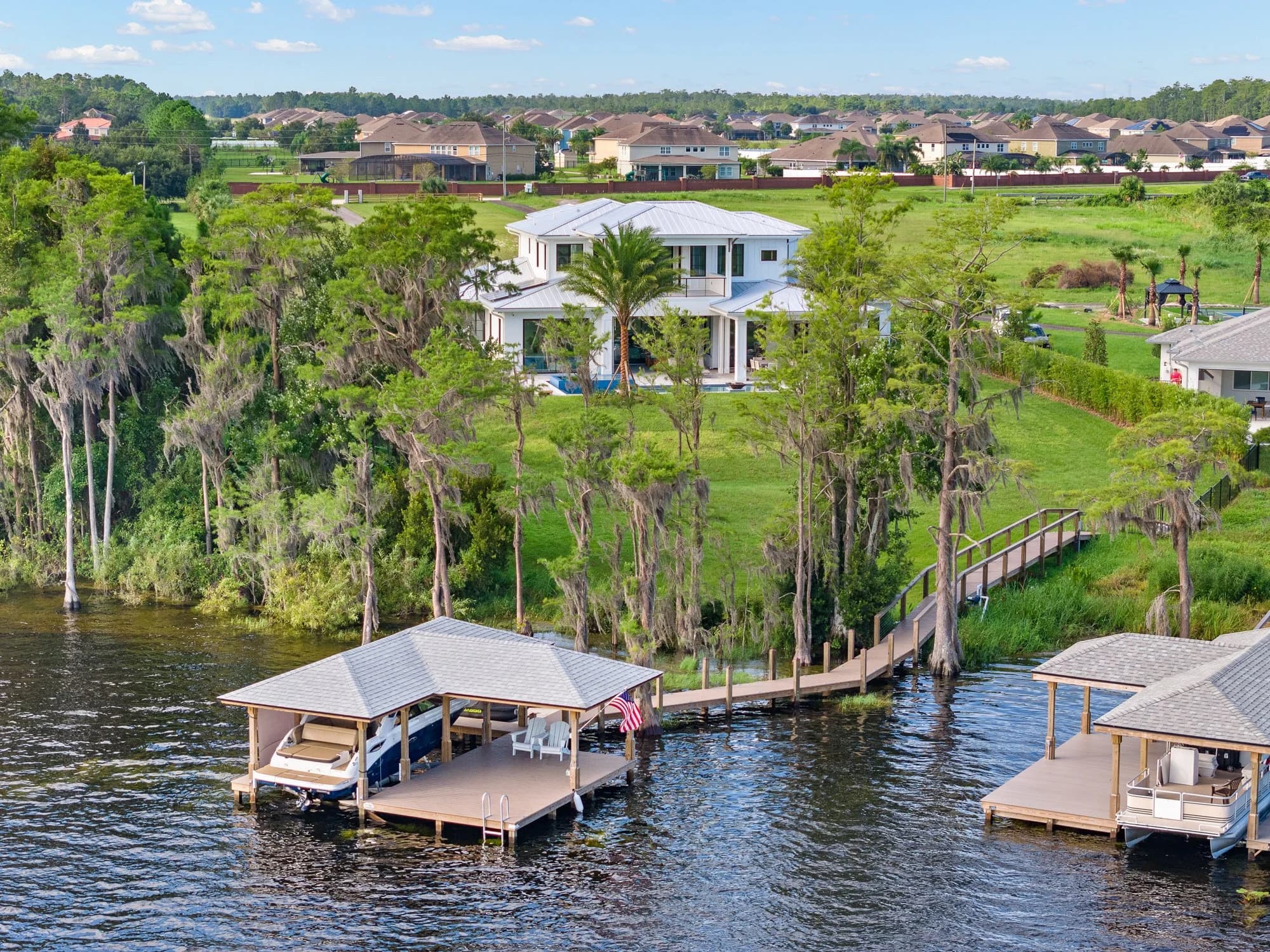
Aerials are a useful tool here precisely because they're factual. A wide shot showing the lot, the surrounding streets, and the distance to a lake or a highway lets buyers draw their own conclusions from real information.
Accessibility Features Deserve Coverage, Not Concealment
One of the more common practical mistakes goes the other direction. Homes with accessibility features — zero-step entries, wider doorways, roll-in showers, first-floor primary suites, ramps — are often photographed in a way that minimizes those features, on the theory that they look institutional.
That's backwards. Those features are a genuine selling point to a real segment of buyers, and Florida's demographics make that segment large. Photograph them clearly, include them in the shot list, and make sure they show up in the Matterport tour where a buyer can measure a doorway themselves. A 3D tour with accurate dimensions is one of the more genuinely useful accessibility tools in real estate marketing.
A Practical Shoot-Day Checklist
Before the gallery goes out:
No unreleased recognizable people in any still, video frame, or aerial.
No religious or personal identity items left prominently in frame — this is standard staging practice anyway, and applies evenhandedly to all such items.
Accessibility features photographed, not hidden.
Community and lifestyle imagery reviewed for balance across the whole campaign, not shot by shot.
Neighborhood content sticks to verifiable, physical facts.
Broker or builder marketing review on anything involving talent, community films, or 55+ positioning.
Where a Photographer Fits In
A good real estate photographer will catch most of this on the ground: reframing to exclude a neighbor, waiting for a passerby to clear, flagging a room that needs a quick declutter, and asking who's approving lifestyle casting before a community shoot rather than after. It costs nothing on shoot day and saves a reshoot later.
For builders and apartment communities running larger campaigns across Orlando, Tampa Bay, and Central Texas, the right move is to bring your marketing reviewer into the pre-production conversation — the shot list, not just the final gallery. Decisions about who appears in the frame are much cheaper to make before the crew shows up.
Ready to book? Get in touch or call us — we serve Orlando, Tampa Bay, and Central Texas.