A kitchen or bath remodeler sells the next job with pictures of the last one. Homeowners comparing contractors look at portfolios before they read a single review, and they are looking for two things: a room they would want, and proof that the company can build it properly. Phone photos taken on the last afternoon of the job, with tools still on the counter, show neither. This guide explains how remodelers in Orlando, Tampa Bay, Austin and San Antonio can plan professional photography so every finished project keeps working for the business.
What a remodeler's portfolio has to prove
A designer's portfolio sells taste. A remodeler's portfolio also has to sell execution. The photos should answer the questions a homeowner is quietly asking:
- How big a job can this company handle? Wide frames that show the whole room, including walls that moved and openings that were widened.
- Is the work clean? Tile lines, cabinet reveals, caulk joints and trim that hold up when seen close.
- Have they done a room like mine? A range of sizes and styles, from a hall bath to a full kitchen.
- What did it look like before? A matched before-and-after pair makes the scope plain.
Angles that show the scope of the work
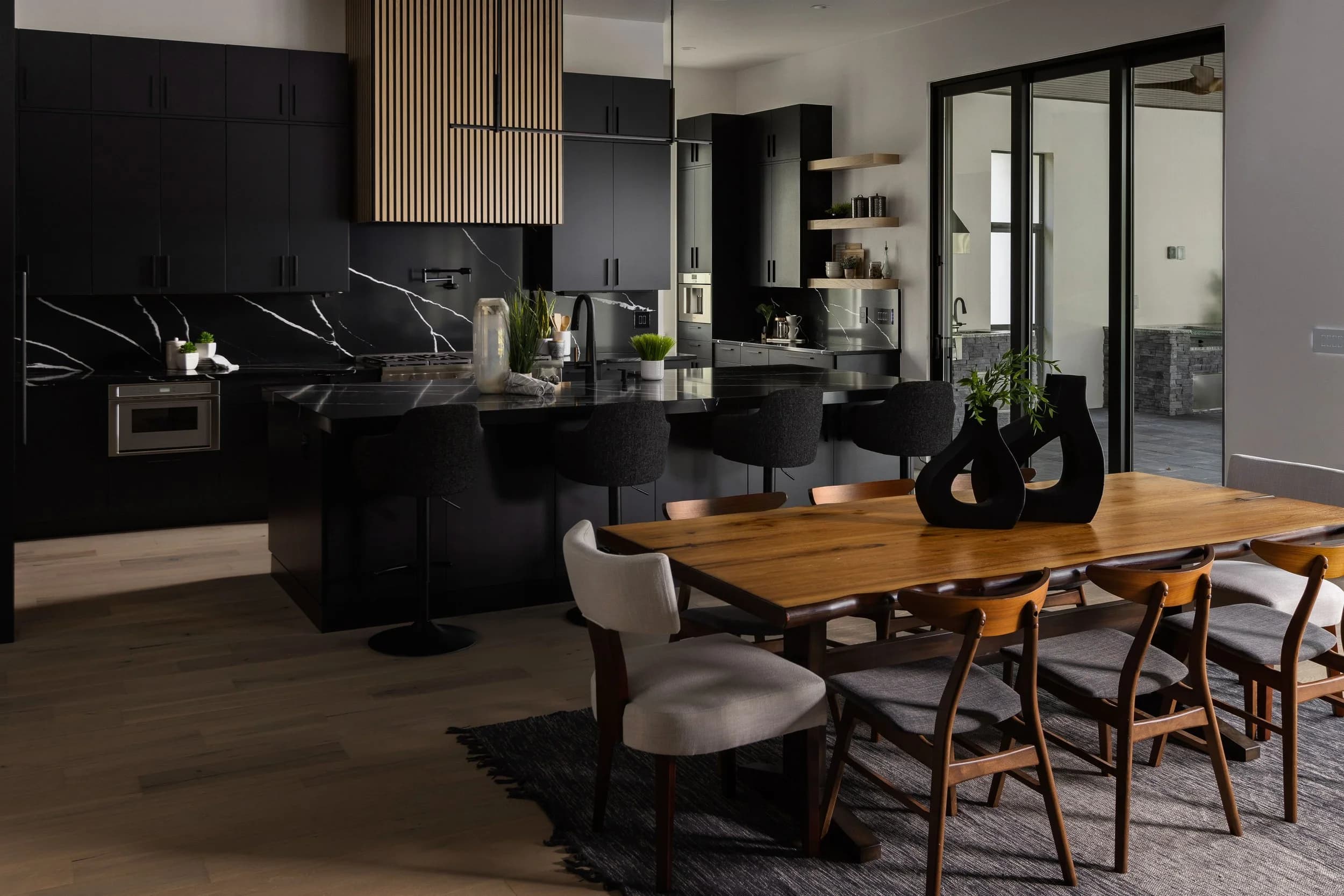
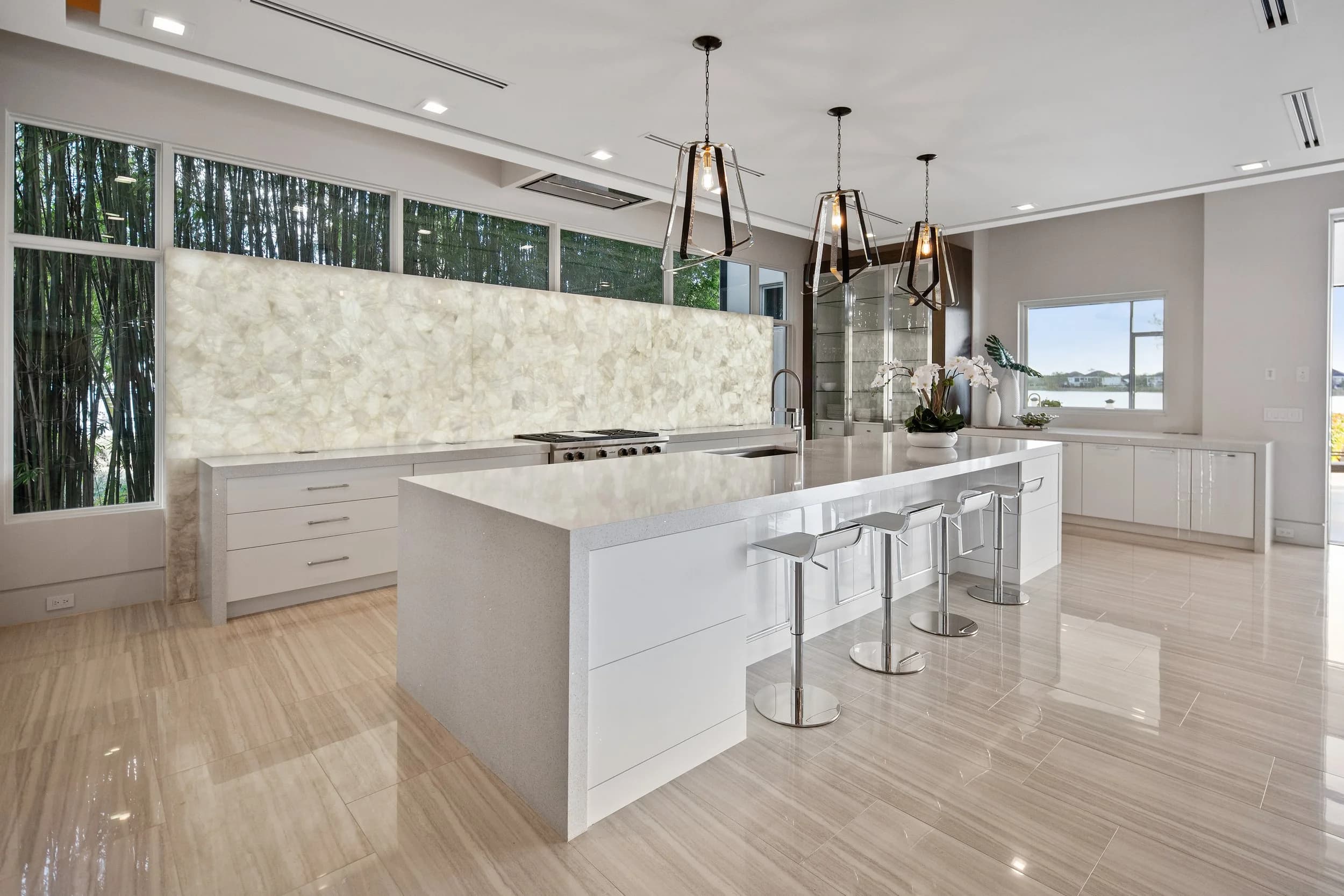
Start with two or three wide compositions per room. In a kitchen that usually means one view from the main entry, one along the longest run of cabinets, and one that includes the adjoining room so the new layout makes sense. In a bathroom, space is tight, so the camera often works from the doorway and from one corner, at a height that keeps the vanity and the shower in proportion.
Vertical lines are kept straight so cabinets and tile do not appear to lean. Lighting is balanced so under-cabinet lights, pendants and window light all read naturally, and so the true color of the cabinet finish and the countertop comes through. That last point matters: a homeowner may choose a finish from the photo.
Planning the before-and-after
The after photo is easy to schedule. The before photo is the one that gets forgotten, and it cannot be taken later. Build it into the start of every job:
- Photograph the room before demolition from the corners and the doorways, at about chest height, and note where you stood.
- Keep the before frames simple and level. A phone is fine for these as long as the position is recorded.
- Share those positions with the photographer so the finished room is captured from the same spots.
- Take one mid-construction frame if the job involves structural or plumbing changes. It shows work the finished room hides.
Longer projects that are documented in stages are covered in the post on photography across a multi-phase renovation.
Details that prove craftsmanship
After the wide frames, a set of close views does the persuading. Useful ones for kitchen and bath work include:
- The meeting point of countertop, backsplash and cabinet.
- Drawer interiors, pull-outs and soft-close hardware, shown open.
- Tile layout at corners, niches and the shower curb.
- Plumbing fixtures and the finish on the hardware.
- Panel-ready appliances, range hoods and custom end panels.
- Lighting details such as toe-kick or in-cabinet lights, switched on.
Cabinet makers have their own needs, and those are covered in the post on photographing custom cabinetry, millwork and built-ins. Interior designers documenting one room for a design portfolio should read the guide to photographing a single-room design project, which is written from the designer's side.
Getting the room ready and getting access
The best time to photograph is after the final clean and the punch list, and before the homeowner has fully moved back in. If the family is already using the room, a little preparation goes a long way:
- Clear the counters, then put back a few simple items: a bowl of fruit, a cutting board, a plant, fresh towels.
- Remove stickers from appliances and glass, and wipe stainless steel and mirrors.
- Take out trash cans, pet bowls, magnets and paperwork.
- Check that every bulb works and matches in color.
Ask for permission early. A line in the contract that allows the company to photograph the finished work, and to use the images in marketing without the address, avoids an awkward request at the end. Offering the homeowner a few of the images is a simple thank-you.
Agree on usage with the photographer as well. A remodeler typically needs the images for the website, social media, printed proposals and online profiles, and suppliers or designers on the project may want to license them too. Delivery timing is confirmed at booking.
A handful of well-photographed projects each year is enough to rebuild a portfolio. Choose the jobs that represent the work you want more of.
Ready to book? Call or text (689) 600-2131 or get in touch.