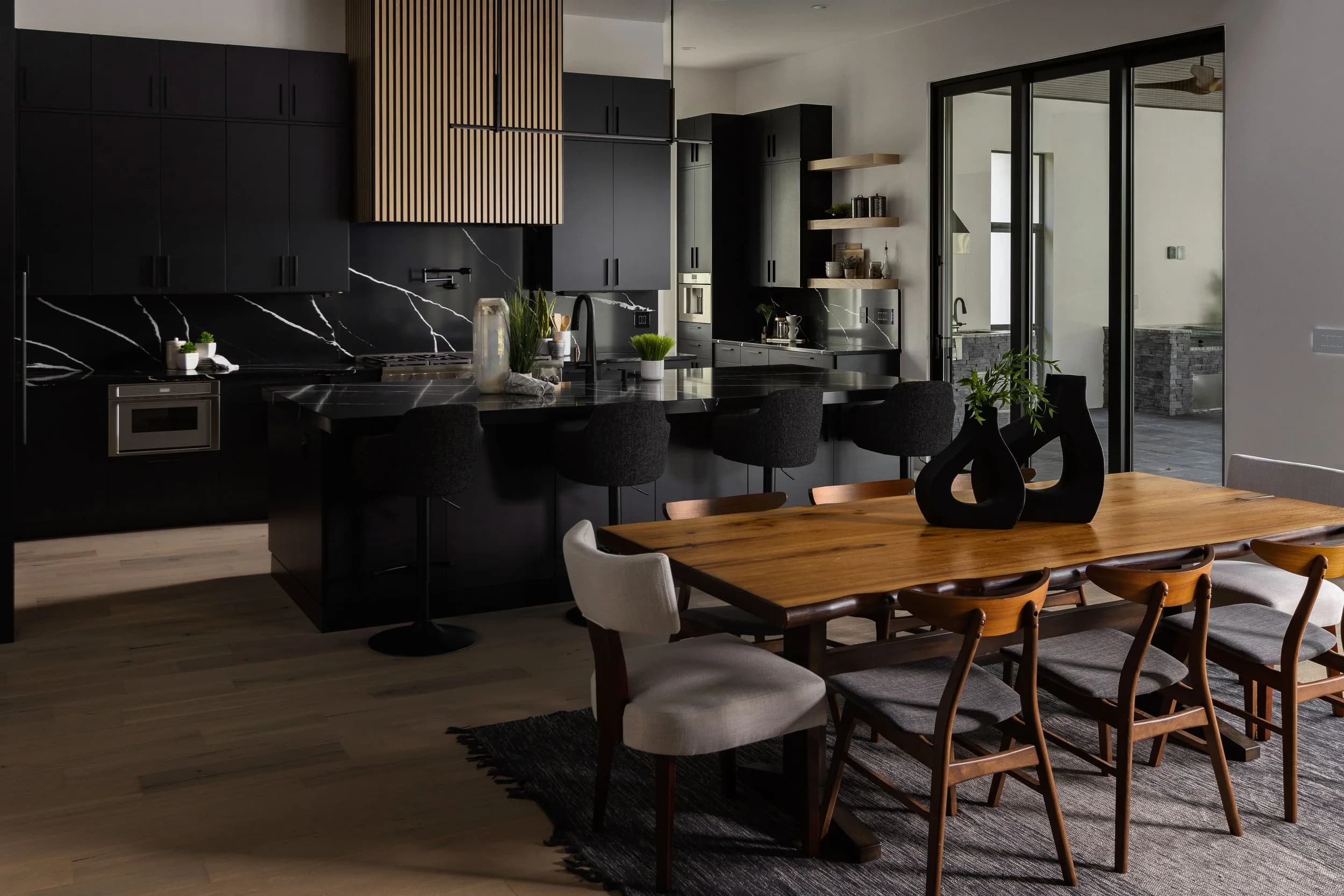
Custom cabinetry is where a lot of design budget quietly goes. A paneled library wall, an inset kitchen with furniture-style legs, a mudroom bench with cubbies, or a primary closet lined in walnut can take months to design and build. Then the project gets photographed with everything else, and the woodwork ends up as background.
For interior designers, cabinet makers, and millwork shops in Orlando, Tampa Bay, Central Florida, Austin, and San Antonio, that is a missed opportunity. These pieces deserve photography that shows the craft. This guide covers how to plan a shoot around cabinetry and built-ins so the work reads as clearly in a portfolio as it does in the room.
Straight Lines Are Everything
Cabinetry is built from verticals and horizontals. If the camera is tilted even slightly, door edges lean, crown molding bows, and the whole piece looks out of square. Viewers may not know why a photo feels off, but they feel it.
That is why the camera should be level and set at a height that keeps verticals truly vertical, usually somewhere around counter height for kitchens and a little higher for tall wall units. Lens choice matters too. A very wide lens can stretch the ends of a long run of cabinets, so a more moderate focal length often gives a truer picture. Our post on wide-angle versus fisheye lenses explains how lens choice changes the look of a room.
Plan Three Kinds of Frames
A strong cabinetry set usually includes three types of photographs.
- Context frames show the built-in in the room, so the viewer understands scale, how it relates to windows and doors, and how it fits the design.
- Elevation frames face the piece straight on, almost like a drawing. These are the images fabricators and designers love, because they show proportion, reveals, and symmetry.
- Detail frames move in close on what makes the work special: hand-cut dovetails, a scribed edge against an uneven wall, integrated lighting, hardware, a grain match across doors.
Our guide to detail shots covers why a few close frames do so much work in any set.
Light the Finish, Not Just the Room
Finishes behave differently under light. High gloss lacquer reflects windows and fixtures. Matte paint can look flat if the light is too even. Stained wood can turn orange under warm bulbs or gray in shade.
A photographer who works with interiors will look at where reflections fall and adjust the angle so a glossy door does not show a bright window across its face. Turning off mismatched bulbs, or making sure every lamp in the room is the same color, keeps stain tones accurate. Under-cabinet and in-cabinet lighting should usually be on, because it shows depth inside glass-front uppers and open shelving. If accuracy matters for a client, our post on color accuracy in paint and flooring applies to woodwork as well.
Style Lightly and Open a Few Doors
Built-ins are meant to be used, so a little styling helps. A few books on library shelves, a small stack of dishes in a glass upper, or a pair of shoes in a closet cubby shows purpose without hiding the work. Keep it sparse. Shelves packed edge to edge make the cabinetry disappear.
Consider photographing a few doors and drawers open. A drawer with a fitted organizer, a pull-out pantry, or a hidden appliance garage tells a story about function that a closed front cannot. Shoot the closed elevation first, then open selected pieces for a second frame from the same position.
Think About How the Images Will Be Used
Designers often need images for a portfolio, an award submission, and social media from the same project. Cabinet makers may also want straight elevations for their own sales materials. Tell the photographer every use before the shoot so the set includes horizontal frames for websites and vertical frames for social feeds. Our guide to building an interior design portfolio covers how to plan a set that works across all of them.
If the project is also being shown in a home for sale, coordinate early so the cabinetry frames are captured at the same visit. Every party can then use images from one consistent shoot.
Give the Craft the Spotlight
Great millwork is precise, and the photography should be precise too. Level verticals, careful light, a mix of context, elevation, and detail, and a light hand with styling will show clients exactly what went into the work. Delivery timing is confirmed at booking. Ready to book? Call or text (689) 600-2131 or get in touch.