Most commercial listings are marketed with photos, an aerial and a flyer. Video is the piece brokers ask about most and order least, usually because nobody is sure what it would add. For some assignments it adds very little. For others it answers the questions a tenant, an investor or a site selector would otherwise need a site visit to answer. This guide covers when a video tour earns its place on a commercial listing in Orlando, Tampa Bay, Austin or San Antonio, and what belongs in it.
When a video tour helps a commercial listing
Video is strongest when the property's value depends on something a still frame cannot show: movement, sequence or scale.
- Access and circulation. How a truck reaches the dock, how a customer turns in from the road, how a visitor gets from the parking deck to the lobby. One continuous shot explains what would take six photos and a paragraph.
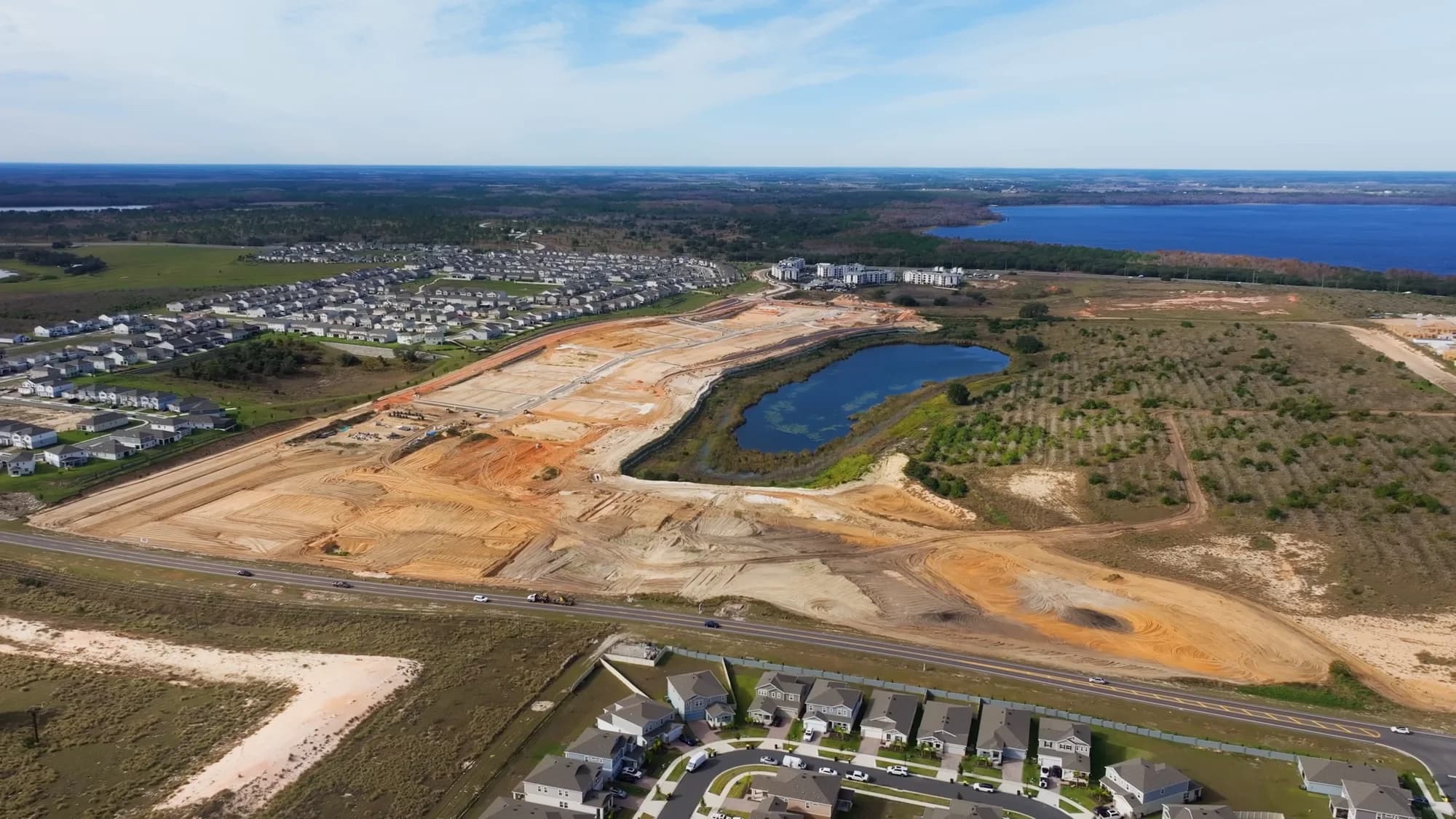
- Large or complex sites. Multi-building parks, big-box retail, campuses and land. A drone pass shows how the pieces relate.
- Decision makers who are not local. Investors, corporate real estate teams and franchise operators often shortlist from another state. A tour lets them screen the property before they travel.
- Floor plates and build-outs. Walking a full floor shows depth, column spacing, window line and condition in a way a wide photo only hints at.
- Offering packages. For a sale, a short film gives the offering memorandum a front door and gives the broker something to send in the first email.
When photos and aerials are enough
Not every listing needs a film. A small inline retail bay, a single office suite or a standard warehouse unit is usually well served by a tight photo set and one good aerial. If the space is going to change before the next tenant sees it, such as a suite about to be demolished to shell, video of the current condition has a short life. And if the listing will sit only on platforms where the first image does most of the work, put the effort there first. Our guide to preparing photos for LoopNet, CoStar and Crexi covers that side on its own.
A useful test: write down the three questions prospects ask most on the first call. If video answers at least one of them better than a photo, it is worth doing. If not, save the film for the listing that needs it.
A 60 to 120 second structure that works
Commercial viewers are screening, not browsing. A tour between 60 and 120 seconds is long enough to cover a building and short enough to be watched to the end. A simple order holds up across property types:
- Drone open (10 to 15 seconds). Start high and wide to place the property: the road it fronts, the nearest interchange or intersection, neighboring anchors or users. Then move toward the building.
- Arrival (10 to 15 seconds). The entrance drive, signage, parking and the front door, at the height a visitor would see them.
- The core of the space (30 to 60 seconds). For office: lobby, elevator lobby, a full walk of the available floor, the views. For industrial: dock doors, truck court, the warehouse floor with the clear height visible, then the office area. For retail: storefront, sales floor, back of house, the view back out to the parking field.
- Supporting features (10 to 20 seconds). Amenities, conference center, outdoor areas, loading, yard, extra parking.
- Close (5 to 10 seconds). A final aerial pulling away, with the broker's name and contact on screen.
Simple on-screen text does a lot of work: the address, the available square footage, and labels for roads and neighbors. Keep to facts the broker has confirmed. Many viewers watch with the sound off, so the film should make sense without narration. The labeled still frames that go into a sale package are a separate deliverable, covered in our post on annotated drone aerials for offering memorandums.
Planning the shoot
A commercial video shoot needs a little more coordination than a photo visit.
- Access. Roof, mechanical rooms, vacant suites and loading areas should be unlocked and lit. Property management should know the date and whether a certificate of insurance is required.
- Tenants and people. In an occupied building, film common areas when traffic is light, and keep faces, screens and tenant paperwork out of frame.
- Lights and housekeeping. Every fixture on, blinds set the same way on each floor, lots swept, dumpsters closed, cones and temporary signs removed.
- Drone. Flights are made by an FAA Part 107 certified pilot. Some sites sit in controlled airspace near an airport and need authorization before the flight, so give your photographer the address early.
- One visit. Photos, aerials and video can usually be captured together, which keeps the look consistent across the flyer, the listing and the film. Delivery timing is confirmed at booking.
JRP films commercial property across Central Florida and Central Texas. The commercial real estate photography and video page shows the full scope.
Where the video gets used
A tour only pays off if prospects see it. Plan the placements before the shoot so the edit fits them:
- The listing page on the brokerage site and any platform that accepts a video link.
- The first outreach email to tenant reps and investor lists, as a link with a still frame.
- The offering memorandum or flyer, as a link or code on the cover page.
- A shorter cut, 20 to 30 seconds, for LinkedIn, where much of the commercial audience spends time.
- Owner and lender updates, where a film shows a property's condition more clearly than a written summary.
Hosting matters too: a file that buffers or carries someone else's ads undercuts the listing. Our post on where to host a real estate listing video walks through the options, and they apply to commercial work as well.
If you have a listing where access, scale or an out-of-town audience is part of the story, a short tour is worth a conversation. Ready to book? Call or text (689) 600-2131 or get in touch.