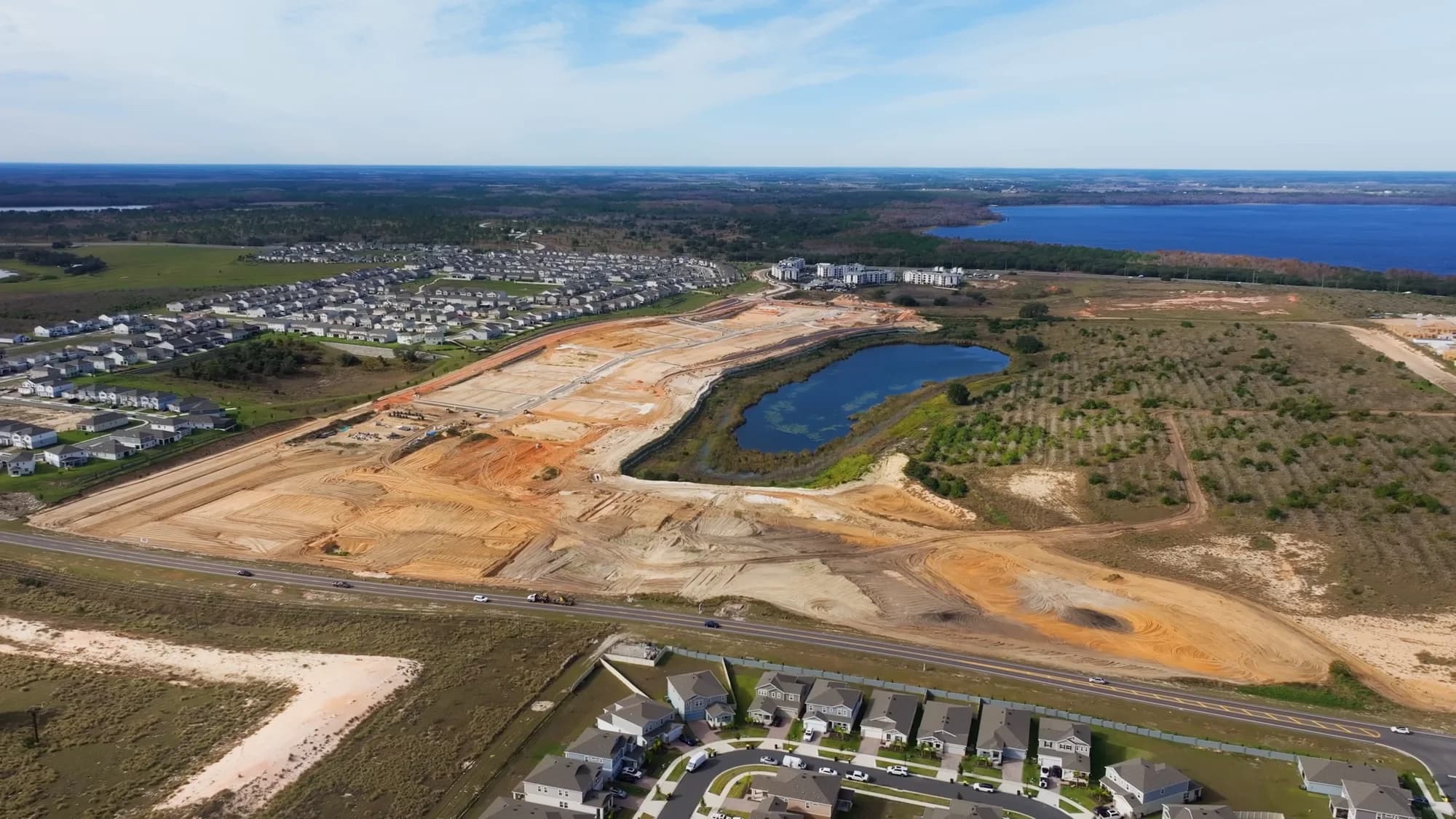
A commercial project produces a long paper trail: pay applications, inspection reports, schedules and change orders. Photographs are the part of that record everyone on the distribution list actually opens. For a developer in Orlando, Tampa Bay, Austin or San Antonio, a steady set of progress photos keeps investors, lenders and future tenants looking at the same site on the same date, without anyone having to drive out to it.
This post covers how a recurring progress program works on a commercial job: who reads the photos, what gets photographed, how often, and how the images sit beside a draw request. It is written for developers, owner's representatives and the lenders who review their reports. Our commercial real estate photography page covers the wider service.
Who reads the photos and what each reader looks for
The same set of images answers different questions for different people, and knowing the readers shapes the shot list.
- Lenders and their construction consultants want to see that the work described in a draw request is in place: the slab poured, the steel standing, the roof on, the materials stored on site.
- Equity partners want momentum. They compare this report with the last one and look for visible change.
- Leasing brokers and prospective tenants want to know when the building becomes real: the facade, the storefronts, the dock doors, the parking field.
- The project team wants a dated record of conditions, including what was inside the walls and under the slab before it was covered.
One caution belongs here. Progress photos support a draw package. They do not replace the lender's own inspection, the architect's certification or any other step the loan documents require. A photographer documents what is visible on a given date and leaves the judgment about percent complete to the people responsible for it.
Fixed stations: the same view on every visit
The single habit that makes progress photography useful is repetition. A station is a camera position that is chosen once, marked on the site plan and repeated on every visit with the same direction and framing. When a reader flips from one report to the next, the building changes and nothing else does.
A typical station plan for an office, retail, industrial or multifamily project includes:
- Ground stations at the corners of the site and at the main entry, far enough back to hold the full building as it rises.
- A frontage station from the road a tenant or customer will arrive on.
- Aerial stations: one straight-down view of the whole parcel and four angled views, one from each side.
- Interior stations once floors exist: the lobby, a typical floor or bay, and one representative suite or unit.
Files are named with the date and the station so the set sorts itself, and anyone on the team can pull the same view across the whole schedule.
A monthly cadence tied to the draw calendar
Many commercial construction loans fund on a monthly cycle, so a monthly visit timed shortly before the draw package is assembled is the usual starting point. The photos then show the site as it stood close to the date on the request, which is what a reviewer wants.
Milestones are worth a visit of their own when they fall between regular dates:
- Site work and underground utilities, before they disappear
- Foundations and slab
- Structure: tilt-wall panels lifted, steel topped out or framing complete
- Roof on and the building dried in
- Facade, glazing and storefronts
- Paving, striping, landscaping and signage
The right frequency depends on the loan and the pace of the job. Ask the lender what their reporting requires before the first visit, and set the calendar from that answer. Our post on how often to take construction progress photos walks through the cadence question in more depth, mostly from the home builder's side.
What a visit covers, from the air and on the ground
Drone work carries much of the load on a commercial site because one overhead frame shows the whole parcel, the access points and the neighbors. Flights are made by an FAA Part 107 certified pilot, and airspace is checked for each site before the first visit. A project near an airport may need authorization before a drone can go up, so it helps to raise the address early.
On the ground, the visit follows the station plan and then picks up what changed since the last report: each elevation, structural work, mechanical and electrical rough-in before it is covered, stored materials, and site improvements such as retention areas and turn lanes. On an active site the photographer works with the superintendent, wears the required protective gear, follows the site's safety orientation and carries the insurance certificate the general contractor asks for.
Labeled aerials that mark parcel lines, access and nearby anchors are a different deliverable from progress stations. They are covered in our post on annotated drone aerials for offering memorandums.
Setting up the program so the photos work twice
A progress program planned at the start of the job is easier to run and more useful at the end. Settle these points before the first visit:
- Who receives the photos, and in what form: a dated gallery, a folder by station, or images sized for a report template.
- The draw calendar, so each visit lands ahead of the package.
- The site contact, access rules and safety requirements.
- Whether the lender or investors have a required shot list.
- Who may use the images for marketing, and when.
That last point matters because the same visits feed leasing. Brokers send progress aerials to prospects to show the building is on schedule. A full run of station frames becomes a before, during and after sequence for the developer's next pitch, which our post on photography and video for investor and lender presentations covers as its own topic. The finished building still deserves a separate marketing shoot once the site is clean, the landscaping is in and the signs are lit.
Delivery timing for each visit is confirmed at booking so it lines up with your reporting dates. Ready to book? Call or text (689) 600-2131 or get in touch.