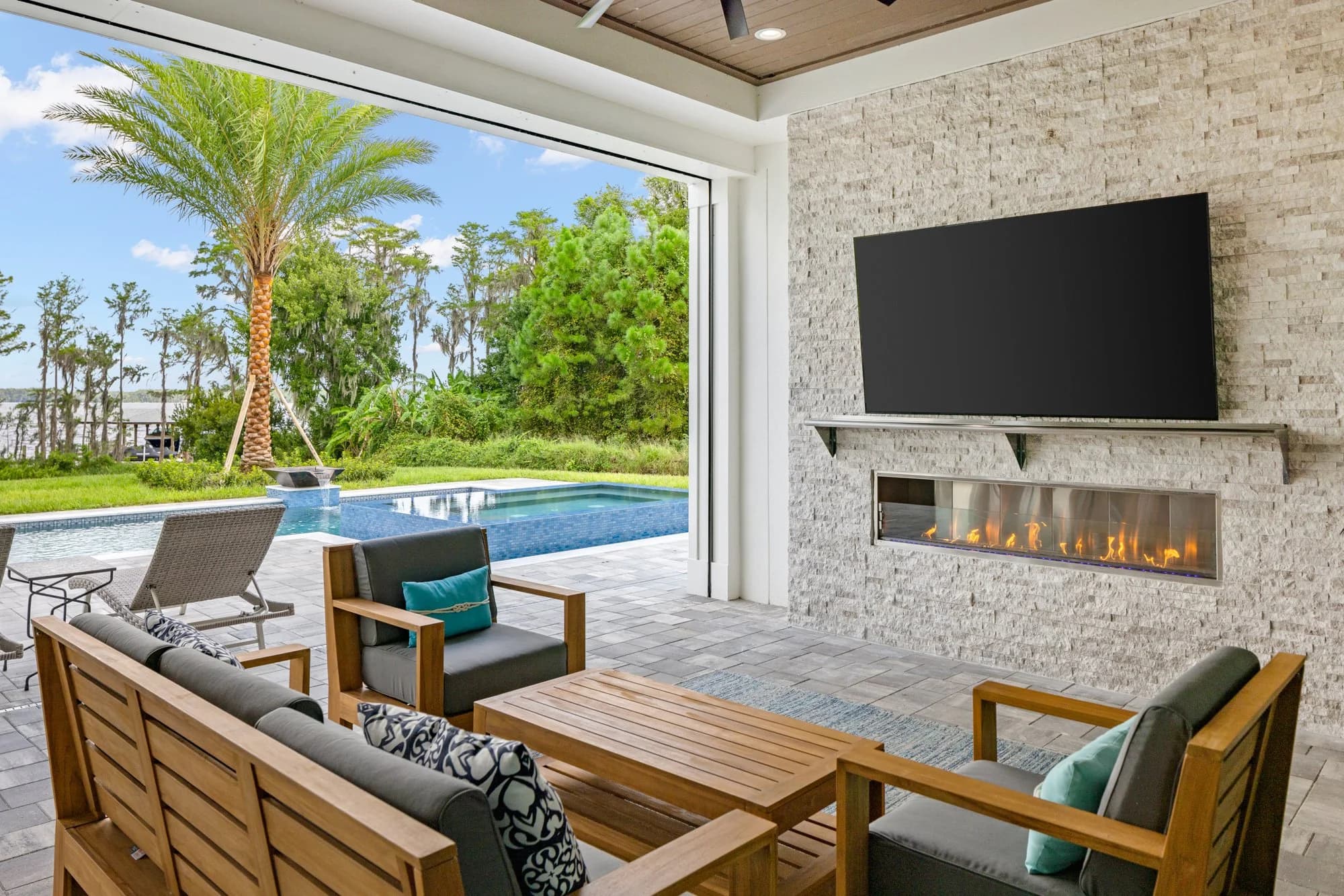
Some of the best selling features in Florida are the ones that are not finished yet. The pool is a shell of rebar and gunite, the lanai has a slab but no screen, and the pavers are still stacked on a pallet. For builders in Orlando, Tampa Bay, and Central Florida, and for the agents who list their homes, the question is how to market the house honestly while its best feature is still under construction.
The same problem shows up in Austin and San Antonio, where patios, covered porches, and outdoor kitchens are often the last items to be completed. The approach is the same in every market: show what is real, describe what is coming, and never let a photograph promise something the buyer will not find at closing.
Decide Whether the Home Is Ready for Exterior Photos at All
The first decision is timing, not technique. An open pool excavation, a bare slab, and a construction fence all read as a job site, and a job site rarely helps a listing. If the outdoor space is only days from completion, waiting is usually the better choice. If it is weeks away, there are honest ways to market the home now.
The landscaping question is a close cousin, and it has its own answer in Should You Photograph a New Home Before the Landscaping Is Finished. This post stays on the hardscape, the pool shell, and the screen enclosure, which have different rules because they involve structures and permits rather than plants.
Shoot What Is Finished and Frame Around What Is Not
A home with an unfinished outdoor area still has a finished interior, a finished front elevation, and usually a finished kitchen that opens to the backyard. Lead with those. The gallery does not need to apologize for the back of the house, but it should not pretend the back of the house is something it is not.
- Interior views toward the yard. Windows and sliders that frame the future outdoor space show the sightline and the connection to the house without showing the construction.
- Angles that exclude equipment. Excavators, stacked materials, and open trenches can often be avoided with camera position alone, as long as the frame is not implying a finished space that is not there.
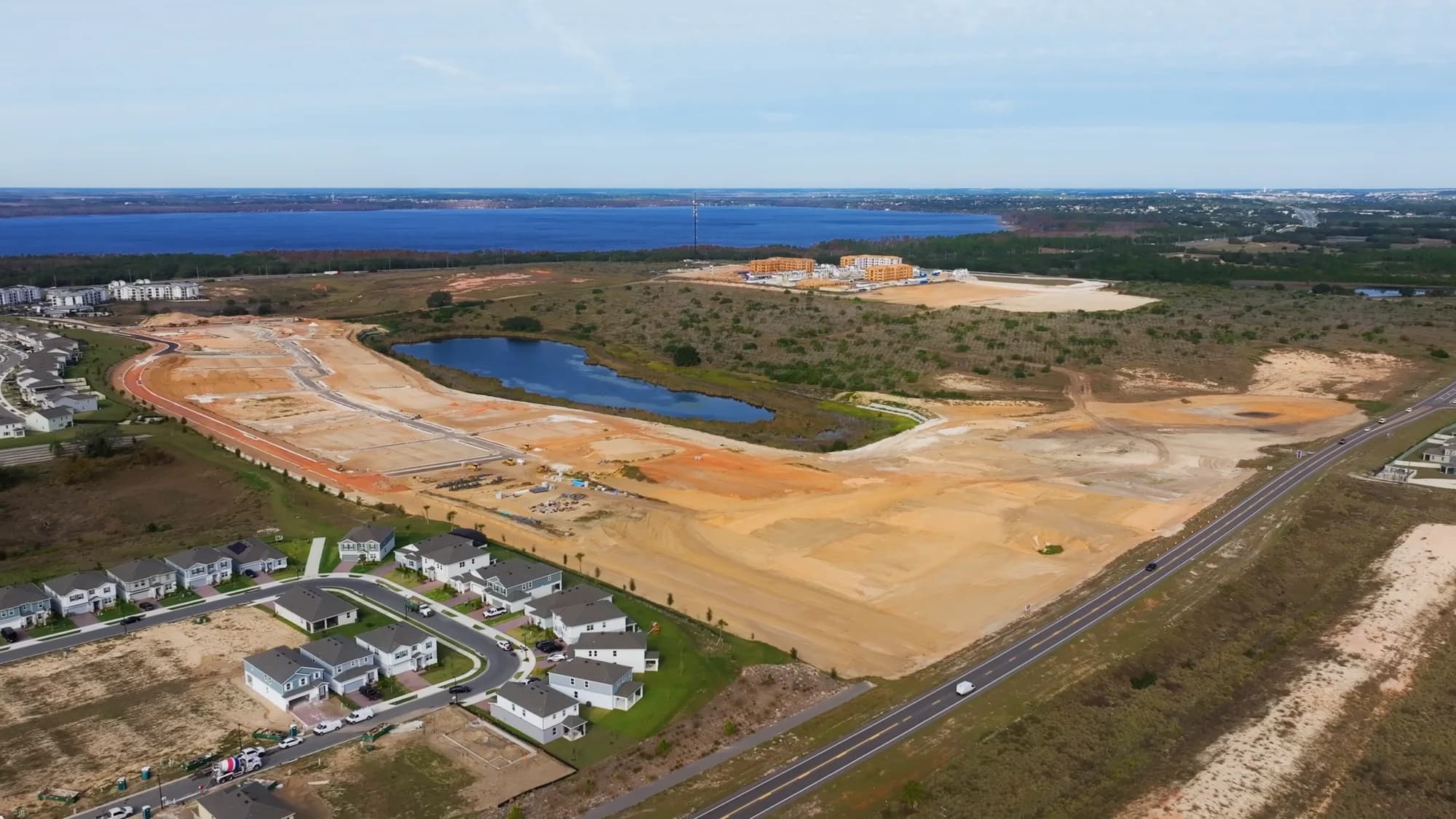
- Elevated views. A low aerial can show lot size, orientation, and the space where the pool will sit, which is often more useful to a buyer than a ground-level view of a dirt patch.
Screen enclosures are worth a special note. A lanai without its screen looks like an open slab, and a finished enclosure is what buyers picture when they read the word. If the screen is scheduled but not installed, shoot everything else now and plan a short return visit for the enclosure. The finished result is covered in How to Photograph Florida Pools, Lanais, and Screen Enclosures, and it is a separate session by design.
Use Renderings and Descriptions Honestly
When the finished space has to be shown before it exists, a rendering can do that job, but it needs to be labeled as one. A caption that reads "rendering of planned pool" and a description that says the pool is under construction protect the buyer and the seller. Mixing renderings into the same gallery as photographs without labels is where problems begin, because a buyer scrolling through will assume every frame is a photograph.
Builders who want a clear line between the two can look at Rendering vs. Photography: When to Use Each for Pre-Sale Marketing. The short version is that renderings belong in the plan stage and photographs belong to what exists.
A few habits keep the description honest:
- State plainly which outdoor features are complete and which are still in progress.
- Note whether the pool, pavers, or enclosure are included in the contract price or are optional upgrades, since buyers often assume everything in the marketing is included.
- Avoid photographing a neighboring completed model's pool and presenting it as the buyer's future backyard unless the caption says exactly that.
Plan a Second Visit Instead of Reshooting Everything
The most efficient plan for a home with an unfinished outdoor area is usually two visits: one now for the house, and a shorter one when the pool, pavers, and enclosure are complete. The interior and front elevation are captured once, and the second visit only replaces the outdoor frames. That keeps the listing active in the meantime and avoids paying for a complete session twice.
For inventory homes, this pairs naturally with the approach described in Spec Home Photography: Marketing New Construction Before It's Finished. That post covers the whole home, while this one covers the outdoor scope. When a builder has several homes at the same stage, scheduling the second visits together across a community can reduce the number of trips.
Update the gallery in place once the new frames exist. Replace the interim exterior photos rather than adding the finished ones beside them, so a buyer never sees an unfinished pool and a finished one in the same listing.
Keep the Buyer's Expectations Aligned With the Closing
The real measure of a good outdoor-living gallery is whether the buyer feels the same at closing as they did online. Pool decks change color as they cure, screens change how a yard reads, and planted beds fill in over a season. Photographing at a stage that reflects what the buyer will actually receive, and saying so, prevents most of the disappointment.
If you are a builder with several homes in different stages, a simple internal rule helps: every outdoor frame in a public gallery should match the current state of that specific home, and anything else carries a label. That rule is easy to apply, easy to audit, and easy for a sales team to follow without a long checklist.
Ready to book? Call or text (689) 600-2131 or get in touch.