It's one of the most common scheduling questions we get from builders in Orlando and Tampa: the house is done, the sod isn't, and the sales team wants photos yesterday. Here's how to decide whether to shoot now, wait, or split the difference.
Why the Question Comes Up So Often
New construction rarely finishes in a tidy sequence. Interiors get punched out, appliances go in, and the home is technically ready to show — while the yard is still sand, the irrigation crew is scheduled for next week, and the palms haven't been dropped in yet.
Meanwhile, the marketing clock is already running. The listing needs to go live, the community page needs updated inventory, and the sales center wants something to show walk-ins this weekend. Waiting two weeks for grass feels expensive when a spec home is sitting on the books.
The honest answer is that it depends on which photos you actually need first — and those needs don't all share the same deadline.
What Photographs Fine Without Finished Landscaping
A surprising amount of the gallery doesn't care about the yard at all:
Every interior room. Kitchens, baths, primary suites, living areas, and flex spaces are completely unaffected by what's happening outside — as long as the windows don't look out onto bare dirt in a way that dominates the frame.
Detail shots. Tile work, cabinetry, hardware, trim carpentry, and lighting fixtures are exactly as finished as they'll ever be.
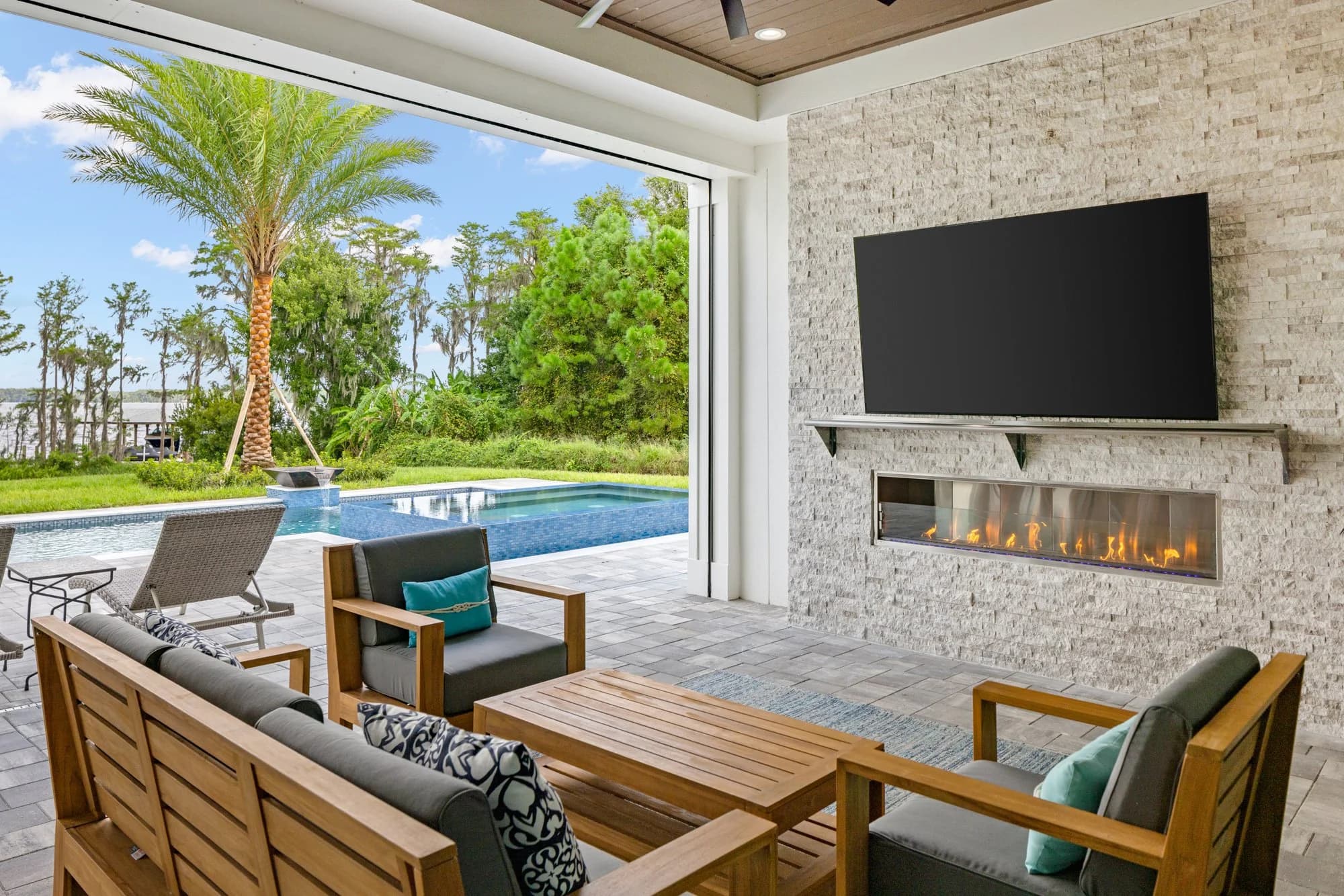
Covered outdoor living. Lanais, screened patios, and covered entries usually read well because the eye stays on the structure.
Twilight exteriors. Dusk is forgiving. Warm interior light through the windows and a deep blue sky pull attention toward the house, and unfinished ground cover largely disappears into shadow.
If your immediate need is MLS-ready interiors, a floor plan, or a Matterport tour for out-of-state buyers, unfinished landscaping is rarely a reason to postpone.
What You Genuinely Should Wait For
Some shots simply don't work, and forcing them costs you more than the delay would have:
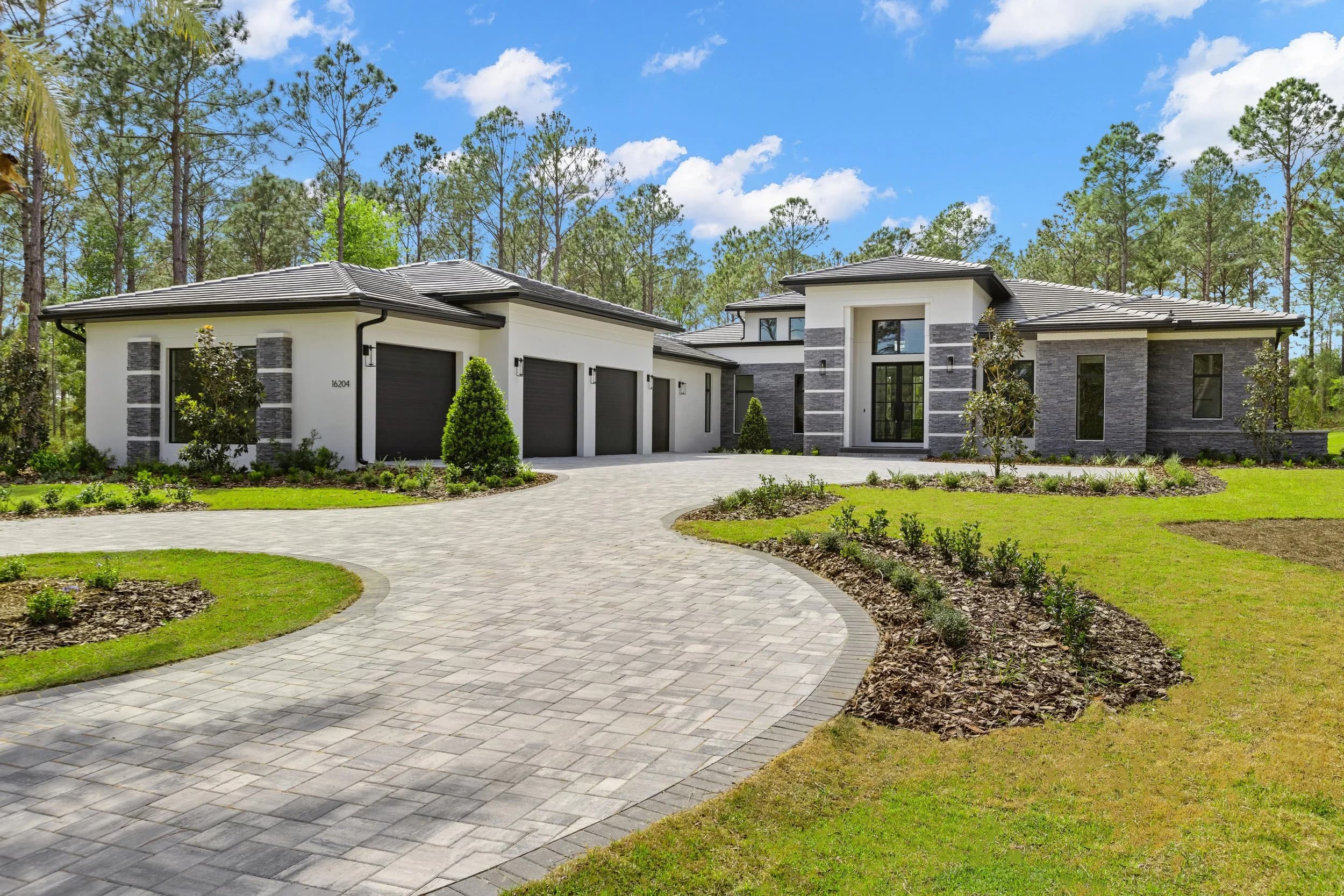
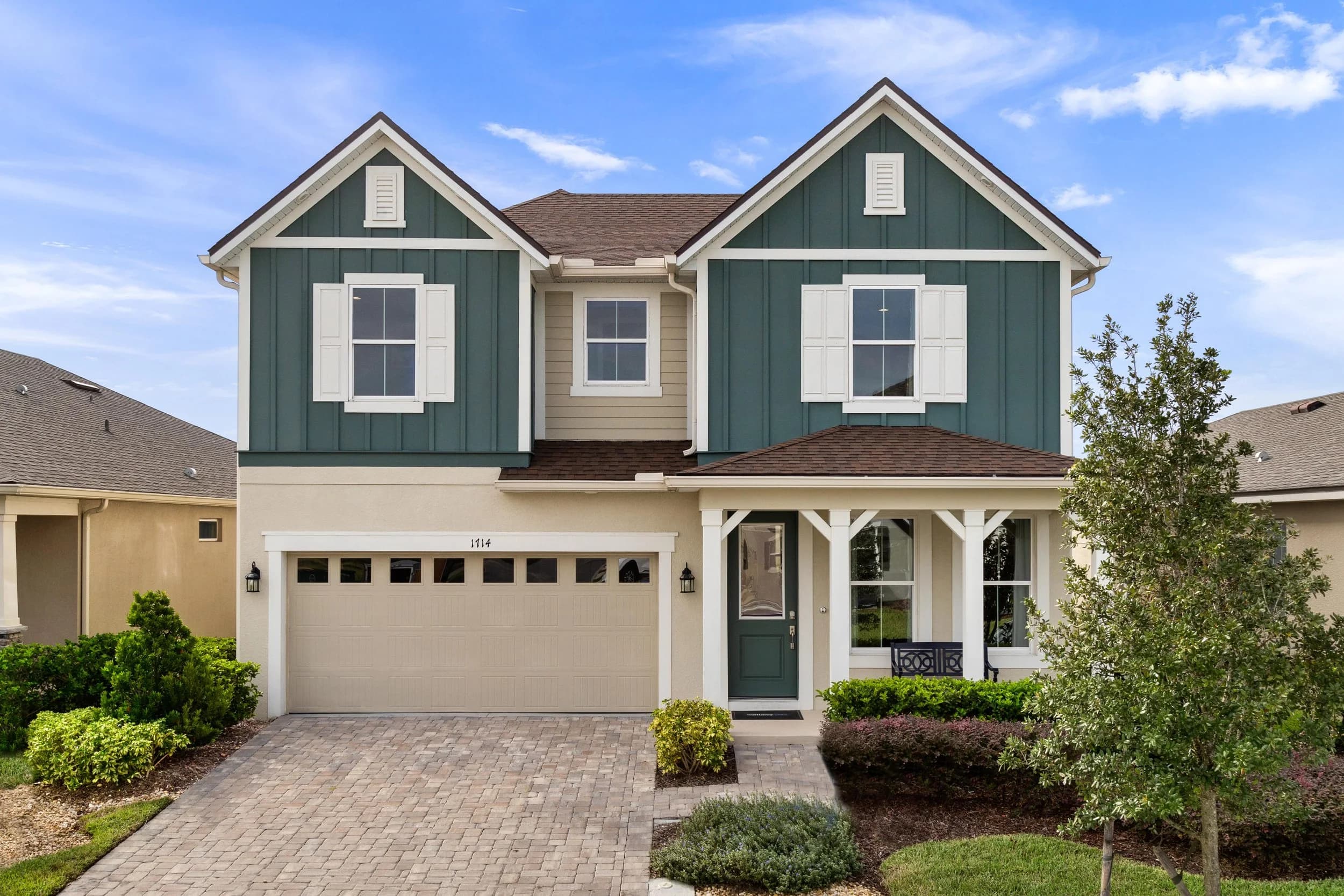
Daytime front elevations. This is the photo buyers see first. Bare sand, tire ruts, and construction fencing read as "not finished," which is a different message than "brand new."
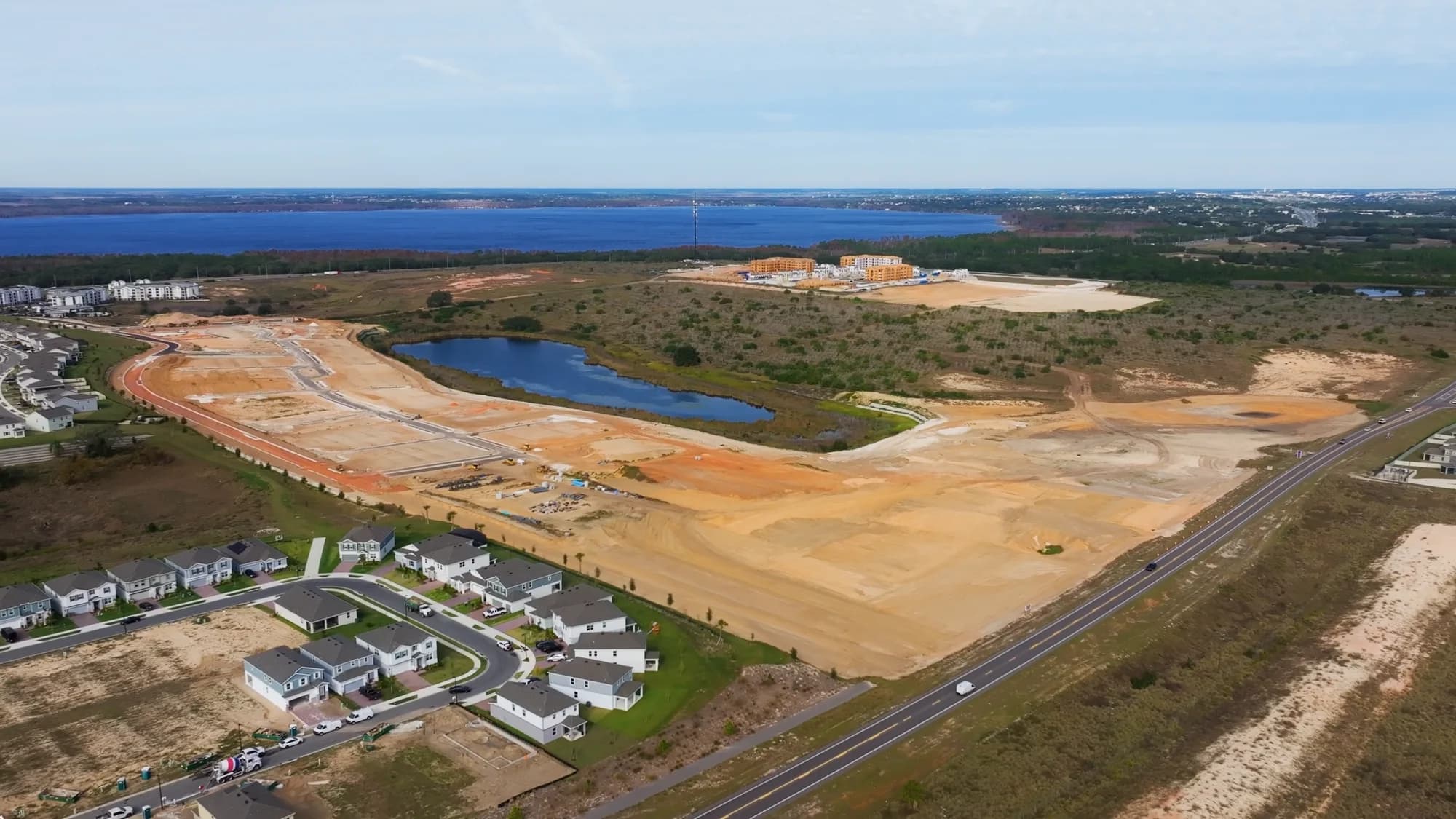
Aerials over the lot. Drone frames flatten everything into a top-down view of the ground plane, and the ground plane is the problem.
Anything selling the outdoor lifestyle. Backyard entertaining space, pool surrounds, and firepit areas need the landscape to do the work.
Community and amenity photography. If the model's yard is unfinished, the shared spaces around it usually are too.
A good rule: if the yard is the subject, wait. If the yard is the background, shoot.
The Two-Visit Approach Most Builders Land On
The practical solution for most of our builder clients is to split the shoot:
Visit one — interiors and details, as soon as the home is clean and staged. This gets the sales team a usable gallery, a floor plan, and a 3D tour immediately.
Visit two — exteriors, twilight, and aerials, once sod and plantings are in. This is a shorter, cheaper visit because nobody has to work around the interior.
Yes, it's two trips. But it's usually faster to market than waiting for a single perfect day, and the final gallery is stronger than a compromise shoot would have been. It also gives the sales team a natural second content drop — the exterior reveal — a couple of weeks after the initial listing, which is useful for social and email.
If a two-visit plan isn't in the budget, the fallback is to shoot everything at twilight and lead the gallery with the dusk exterior. It's the single most forgiving light for an unfinished yard.
What Not to Do
A few shortcuts cause more problems than they solve:
Don't rely on AI or editing to "add grass." Beyond the disclosure problems, buyers notice, and it sets an expectation the finished home may not match. Renderings are the honest tool for pre-landscape marketing — clearly labeled as renderings.
Don't shoot the front elevation from an angle that hides half the house just to crop out dirt. An awkward composition is more noticeable than an unfinished yard.
Don't forget to re-shoot. The most common failure isn't shooting early — it's shooting early and never going back. Six months later, that spec home is still marketed with construction-phase exteriors.
Plan the Photo Schedule With the Construction Schedule
The builders who never face this problem are the ones who put the photographer on the same calendar as the trades. If landscaping is scheduled, the shoot gets booked for a few days after — with a rain buffer, since this is Florida and afternoon storms don't negotiate.
For sales offices juggling multiple homes at once, it's often worth batching: schedule one session for the two or three homes that will be fully finished the same week, rather than booking each one separately as it closes out.
Ready to book? Get in touch or call us — we serve Orlando, Tampa Bay, and Central Texas.