Mid-century modern homes have a following. Buyers who want one search for the style by name, know the details that matter, and can tell from the first photo whether a house is the real thing or a ranch with new paint. Orlando, Tampa Bay, Austin and San Antonio all have neighborhoods built in the 1950s and 1960s where these homes still stand, some carefully kept and some heavily changed.
Photographing one well means understanding what the architect was doing. The style is about horizontal lines, glass, and the connection between inside and outside. A standard listing approach, with a wide lens in every corner, tends to hide all three. This guide is for agents listing a mid-century home and for designers who have restored one.
Why mid-century homes need a different approach
Most listing photography is about showing space: how big the room is and how it connects to the next one. Mid-century photography is about showing design. The buyer already assumes the rooms are modest by current standards. What they want to see is the roofline, the window wall, the beams, the stone, and how much of the original house is left.
That changes the shot list. There are fewer corner-to-corner wide frames and more straight, composed views, closer to how an architectural photographer would work. If you want to understand that distinction, our post on architectural photography versus real estate photography explains it.
Low rooflines and long exteriors
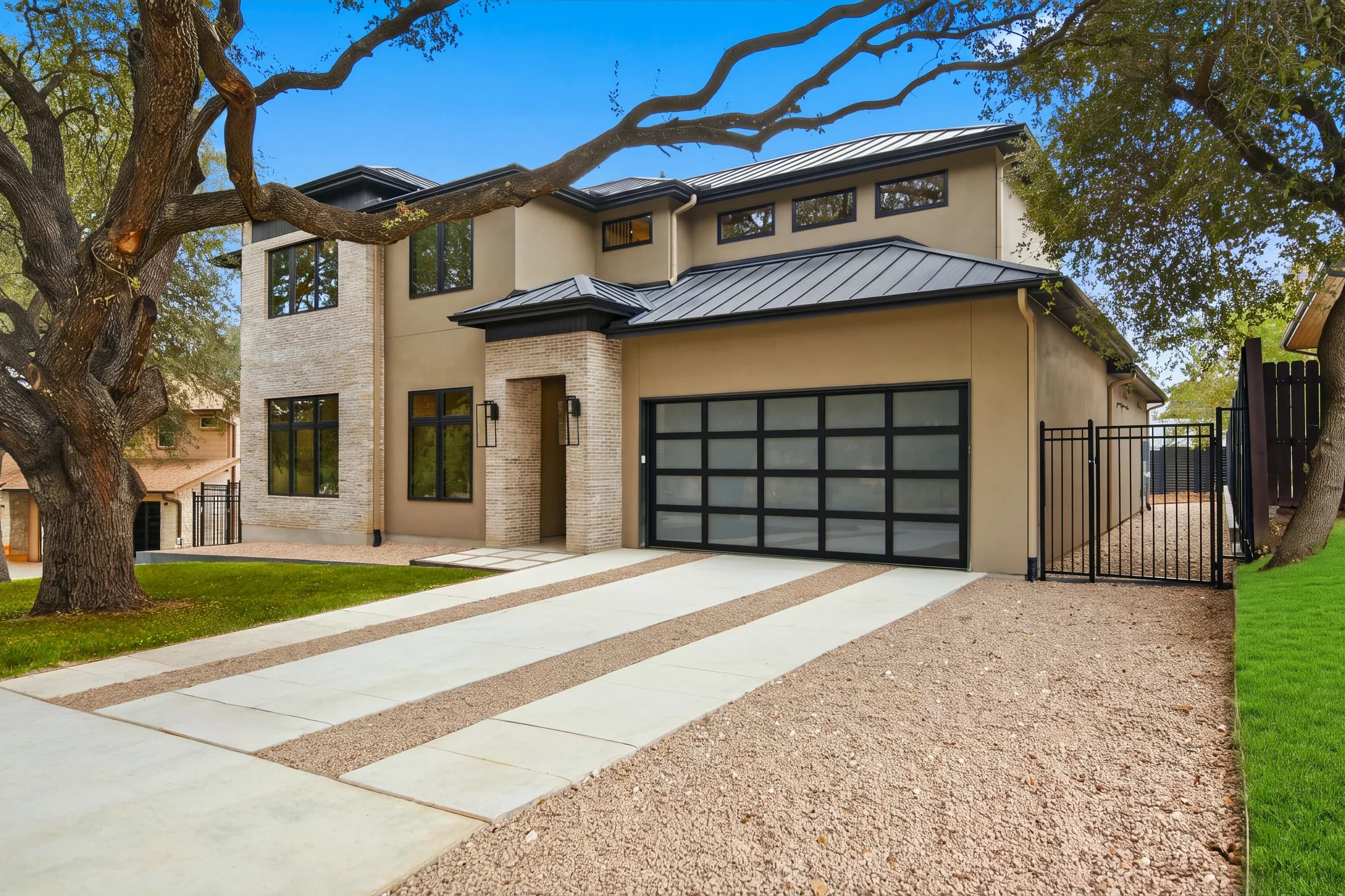
The front of a mid-century home is usually low and wide, with a flat or gently pitched roof, deep eaves and often a carport in place of a garage. The exterior photo should respect that shape.
- Shoot straight on first. A square, level view of the front shows the long horizontal line the way it was drawn. Angled views come second.
- Keep the camera low enough. A camera set too high looks down on a low roof and flattens it. A slightly lower position lets the eaves and fascia read.
- Do not go too wide. A very wide lens stretches the ends of a long house and bends the roofline. Stepping back with a longer lens keeps it true.
- Mind the shade. Deep eaves put windows and entries in shadow. Soft light, early or late in the day, shows both the roof and what is under it.
- Include the carport and breeze block. Features that would be played down on another house are selling points here.
Twilight suits these homes especially well. With the lights on behind a wall of glass and the roof drawn as a dark line above it, a dusk exterior shows the whole idea of the house in one frame.
Window walls, clerestory windows and light
Glass is the hard part. A mid-century living room may have floor-to-ceiling windows on one side and a band of clerestory windows up near the roof on another. The view through them is the point, and so is the light they throw across the ceiling.
- Exposures have to hold both the room and the yard beyond it. A window wall that goes white loses the reason the wall is there. Our post on blown-out windows in listing photos covers how that is controlled.
- Photograph clerestory windows so the sky or the trees show through them, and include enough ceiling that the buyer sees how the roof seems to float above the walls.
- Open the sliders for at least one frame, with the patio or courtyard set up, to show the room and the outdoor space as one.
- Watch for reflections. That much glass will show the camera, the lights and the photographer unless positions are chosen with care.
Rooms with exposed beams and wood ceilings also need accurate color. Warm wood under mixed lighting can turn orange quickly, so bulbs are matched or switched off and the color is corrected in editing.
Original details that deserve their own frame
Buyers of this style look for what has survived. Before the shoot, walk the house and list every original feature, then make sure each one is photographed on purpose.
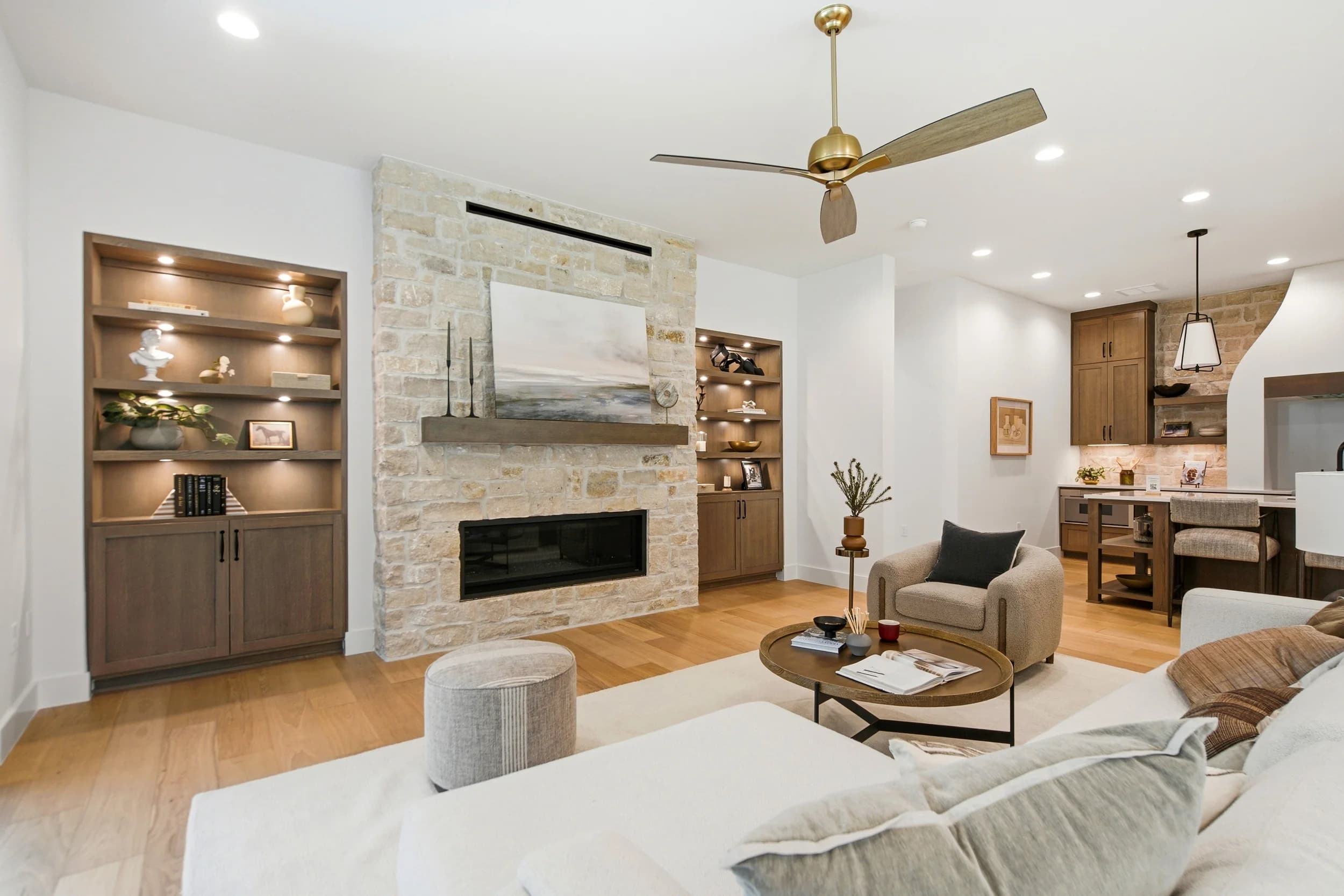
- Stone or brick fireplaces, especially ones that divide two rooms
- Terrazzo, original wood or cork floors
- Wood paneling and built-in cabinets, shelves and room dividers
- Original kitchen or bath tile, fixtures and hardware in good condition
- Globe lights, door hardware and house numbers
- Screen block walls, planters and courtyards
These frames sit between the room views in the gallery, where they slow the buyer down. Our guide to detail shots in a listing gallery explains how many to use and where to place them.
For designers, the same list is the portfolio. A restoration is judged on how the new work sits beside the old, so pair each detail with a wider view that shows it in context.
Staging and prep for a mid-century shoot
Furniture matters more than usual, because scale and line are part of the design. Low, simple pieces suit the rooms. Oversized sectionals and tall cabinets fight them.
- Remove heavy curtains and anything that blocks the glass.
- Clear the floor so terrazzo or wood shows from wall to wall.
- Keep decor spare. A few period-appropriate pieces do more than a full set of accessories.
- Clean every window inside and out. On a glass wall, streaks show.
- Tidy the yard and patio that the glass looks onto, since they will be in most interior frames.
If the home has been updated, be clear in the gallery about what is original and what is new. A buyer who loves the style will ask, and photos that answer the question build trust before the showing. Older homes from before this period raise different issues, covered in our post on photographing historic homes in Central Florida.
A mid-century home photographed with care reaches the buyers who have been waiting for it. Ready to book? Call or text (689) 600-2131 or get in touch.