Every apartment community photographs one unit and leases hundreds. That is not a problem in itself — it is how the industry has always worked, and no marketing team is going to shoot forty-two identical one-bedrooms. The problem starts when the gallery stops being an illustration of the floor plan and starts reading as a promise about a specific apartment.
The gap between the photographed unit and the leased unit is where most multifamily marketing complaints come from, and almost none of them are about photo quality. They are about expectation. A renter who toured a gallery of quartz counters and walked into laminate did not get bad photos; they got an unlabeled one. This post is about closing that gap without weakening the marketing.
Why the photographed unit is almost never the leased unit
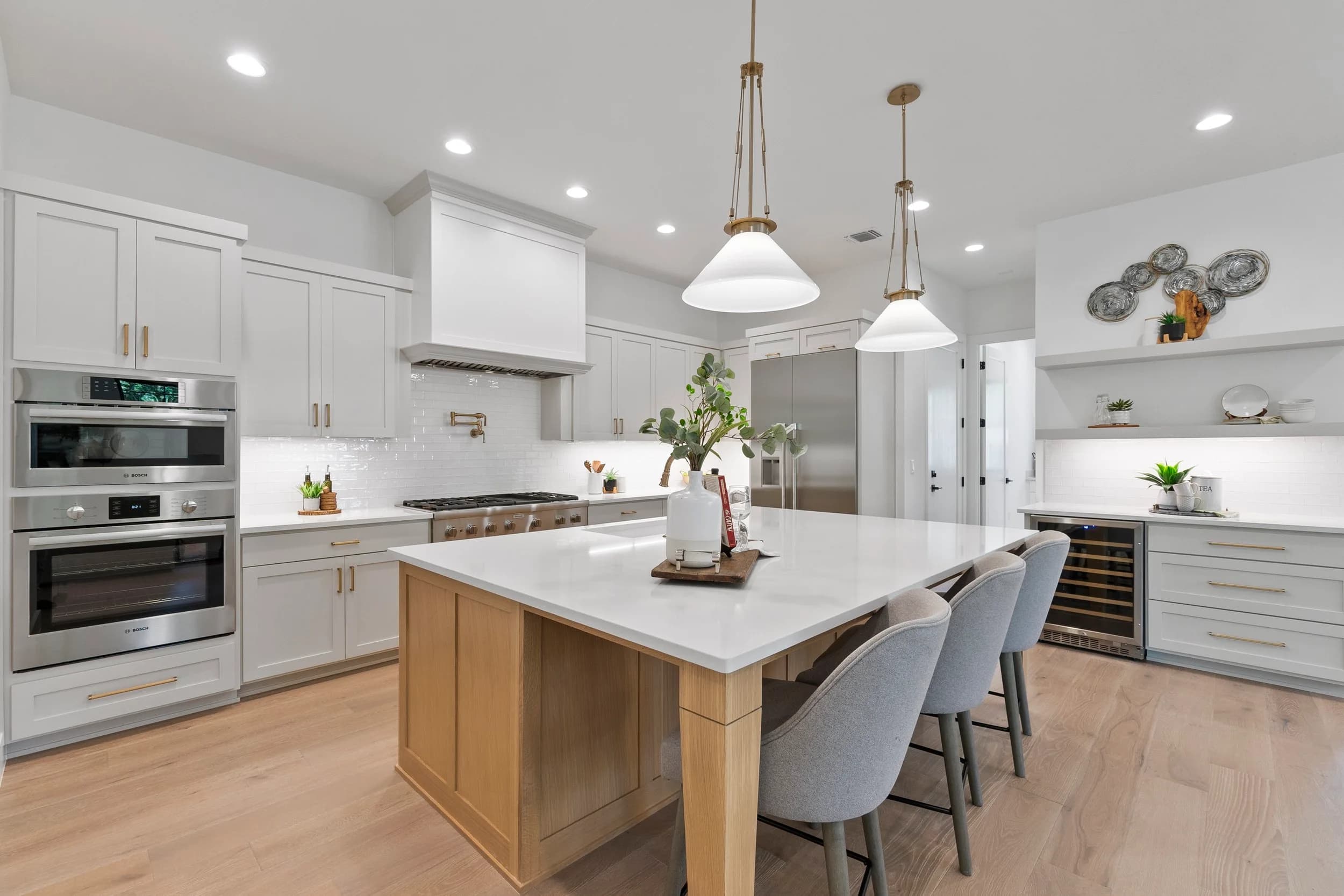
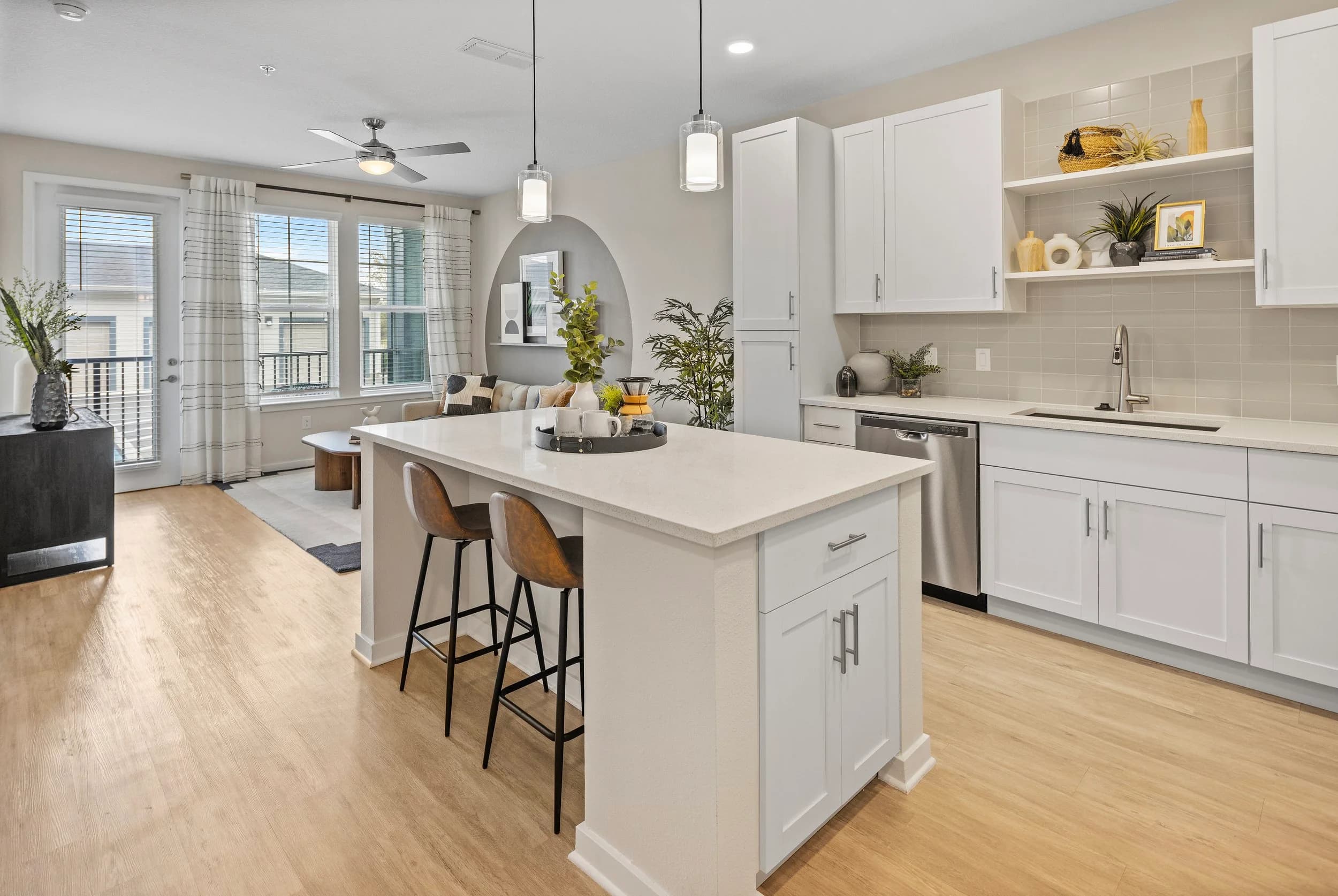
Communities in Central Florida and around Austin and San Antonio typically shoot the model — the unit held back, furnished, and kept in show condition — because it is the only apartment that is reliably available and reliably presentable. Everything else is occupied, mid-turn, or bare.
That choice bakes in several differences the renter will eventually notice:
- Furniture. The model is furnished and scaled to look generous. The leased unit is empty, and empty rooms read smaller to most people, not larger.
- Finish level. Many communities run two or three finish packages. The model is usually the top one.
- Floor and view. The model may be on a corner, on a high floor, or facing the courtyard rather than the parking deck.
- Upgrades that are not standard. Accent walls, light fixtures, and window treatments installed for the model and nowhere else.
None of these make the photographs dishonest. Leaving them unlabeled does.
Label the floor plan, not just the room
The single highest-leverage fix costs nothing at shoot time and happens afterward, in how images are named and placed. Every image that came from the model should be tied to the plan it represents and identified as a representative image of that plan — not buried in a sitewide gallery where a renter browsing a specific available unit sees it as that unit.
Practically, that means:
- Gallery images grouped by floor plan, with the plan name in the caption rather than only in a separate floor-plan tab.
- A short, plain line on the plan page saying the images show a furnished model of that plan and that finishes and views vary by unit.
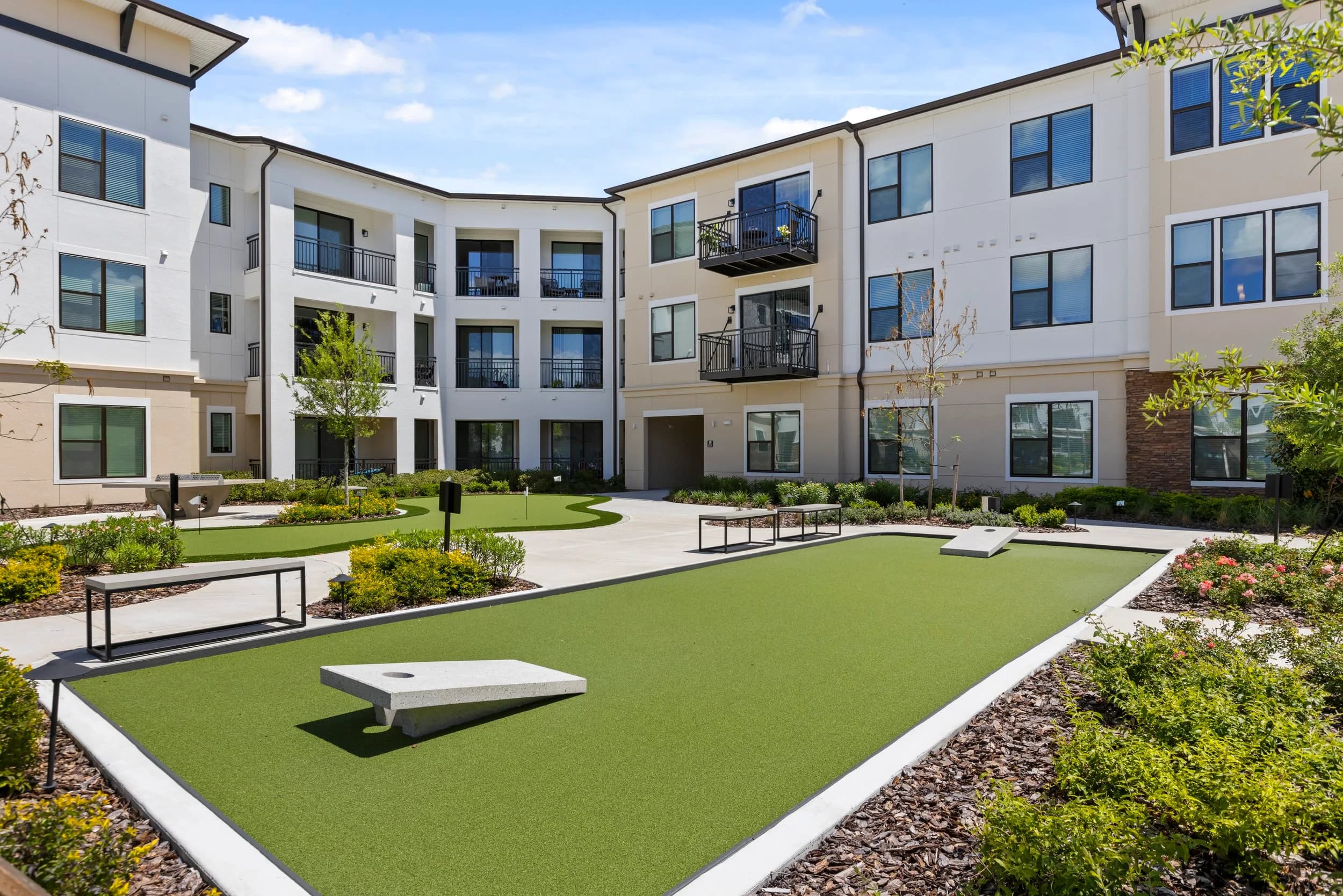
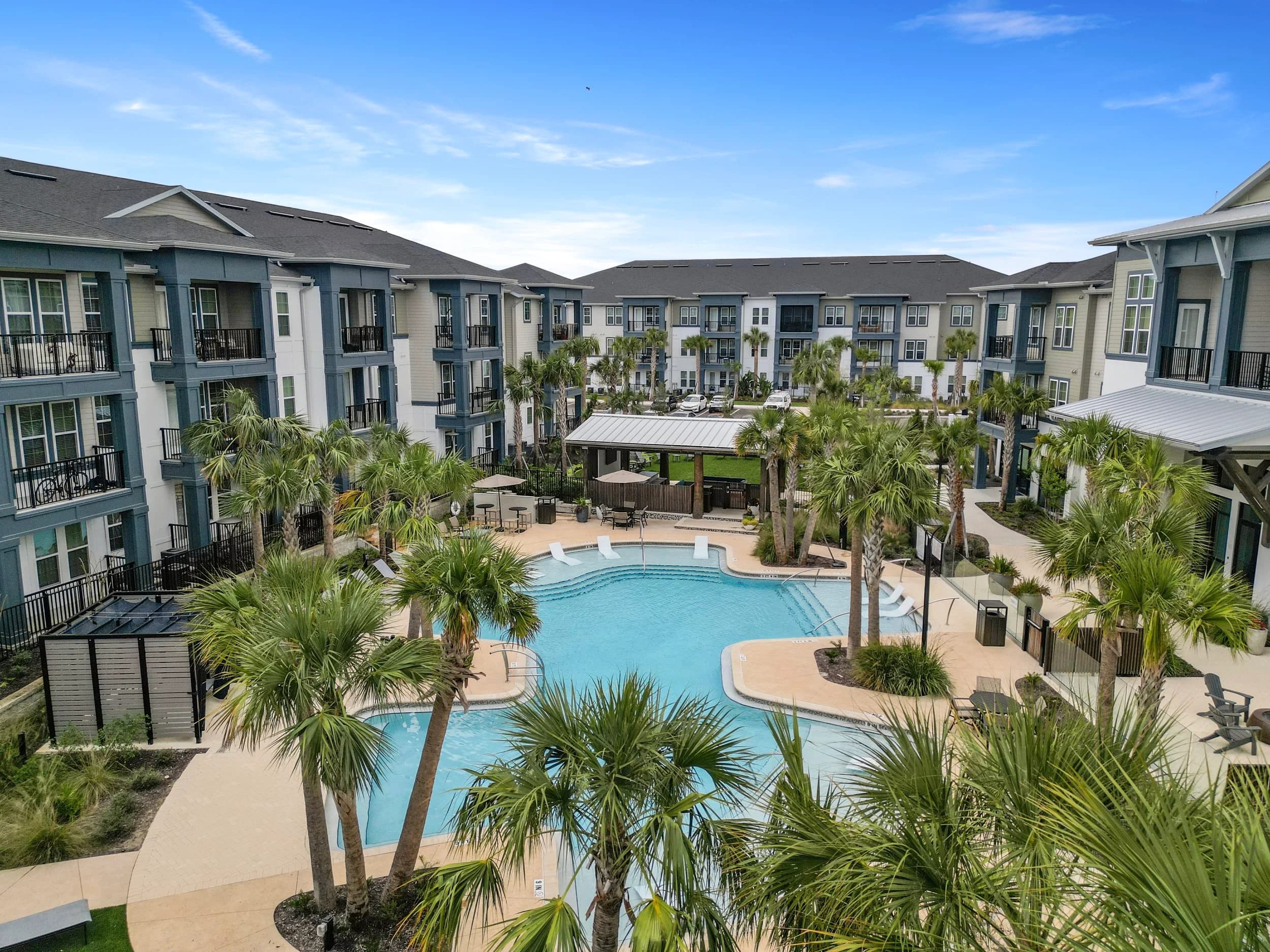
- Amenity and common-area images kept in their own set, since those are what every resident gets. Our post on amenity photography covers how hard those images work when they are not mixed in with unit interiors.
Check what your own syndication partners and ILS feeds do with captions before relying on them — some carry caption text through and some do not, and that is worth confirming with each provider rather than assuming.
Finish levels and the variance problem
If a community runs multiple finish packages, one model cannot represent all of them, and stretching it to try is where marketing crosses into misleading. The straightforward answer is to photograph the variance directly: a short, honest set of detail images of each package's counter, cabinet, floor, and fixture, shot in a consistent way so a renter can compare them side by side.
These are not hero images and should not try to be. They are reference frames — closer to a product shot than a lifestyle shot — and they answer the question the leasing office otherwise answers fifty times a month. They also give the leasing team something to send in a follow-up email when a prospect asks what "classic" versus "renovated" actually means.
The same logic applies at the community level for build-to-rent, where the product is a house rather than an apartment but the model-versus-actual question is identical. Our build-to-rent photography post approaches it from the developer's side.
What a gallery renters call bait costs you
The reputational cost is easy to underestimate because it does not show up in a marketing report. It shows up in tour-to-lease conversion, in review sites, and in the tone of the first five minutes of every tour where the prospect arrives already suspicious.
A leasing team that has to spend the walk-through managing disappointment is not selling. And review language about photos "not matching" is durable — it sits on the profile long after the finish package in question has been replaced. Communities that label clearly tend to see the opposite: prospects arrive with accurate expectations, and the tour is about fit rather than correction.
Two things worth separating here. Honest labeling is a marketing decision. Whether a particular claim or disclosure meets your obligations under fair-housing and advertising rules is a question for your legal counsel and your management company's policy — not something a photographer should be answering.
Where a 3D tour changes the math
A scanned tour of the model has the same model-versus-actual issue as a photograph, with one difference: it lets a prospect verify the layout themselves, which removes most of the surprise about space and flow even when finishes differ. That is a real advantage on plans that are hard to read on paper.
It does not solve the finish problem, and it should not be sold as if it does. We go deeper on how tours fit leasing workflows in 3D tours for apartment and multifamily leasing, and the broader case for professional imagery on rental inventory is in photography for property managers.
If you are planning a shoot around a model unit and multiple finish packages, timing and scope are confirmed at booking so the variance set does not get squeezed out at the end of the day. Ready to book? Call or text (689) 600-2131 or get in touch.