A staged house photographs better than an empty one, and almost nobody argues about that anymore. What still goes wrong is the handoff — the stretch where the stager is working, the photographer is booked, and nobody has written down which one finishes first. In Orlando and Tampa Bay, where a listing is often expected to go live the same week the agreement is signed, that overlap gets squeezed until something gives.
This is a logistics post, not a staging post. It is about one day — the install day — and where to put the photo call relative to it.
What "install complete" actually means
"We'll be done Tuesday" means different things to different stagers, and the gap is where most conflicts live. A crew can be finished moving furniture into a house and still be a long way from finished styling it. The sofa is placed. The art is leaning against the wall. Bedding is in a bag on the mattress. Nothing is wrong, but the house is not photographable.
Before the shoot is scheduled, get specific about what will be true when the crew leaves:
- Beds fully made, including the layer of pillows that reads as styled rather than slept in.
- Art hung, not propped. A leaning frame is visible in every wide frame of that room.
- Accessories placed and edited — the second pass, where half of what came out of the truck goes back in it.
- Packing material removed from the property, not stacked in the garage. Garages get photographed too.
- Tags, plastic, and stickers off everything — invisible in person, obvious at full resolution.
If all five are confirmed, the house is ready. If any one is a maybe, the photo call is in the wrong place.
Build the day backward from the photo call
The instinct is to schedule the install, then schedule the shoot after it. The better order is the reverse: decide what light the exteriors need, set the photo call there, and work the install backward from that fixed point.
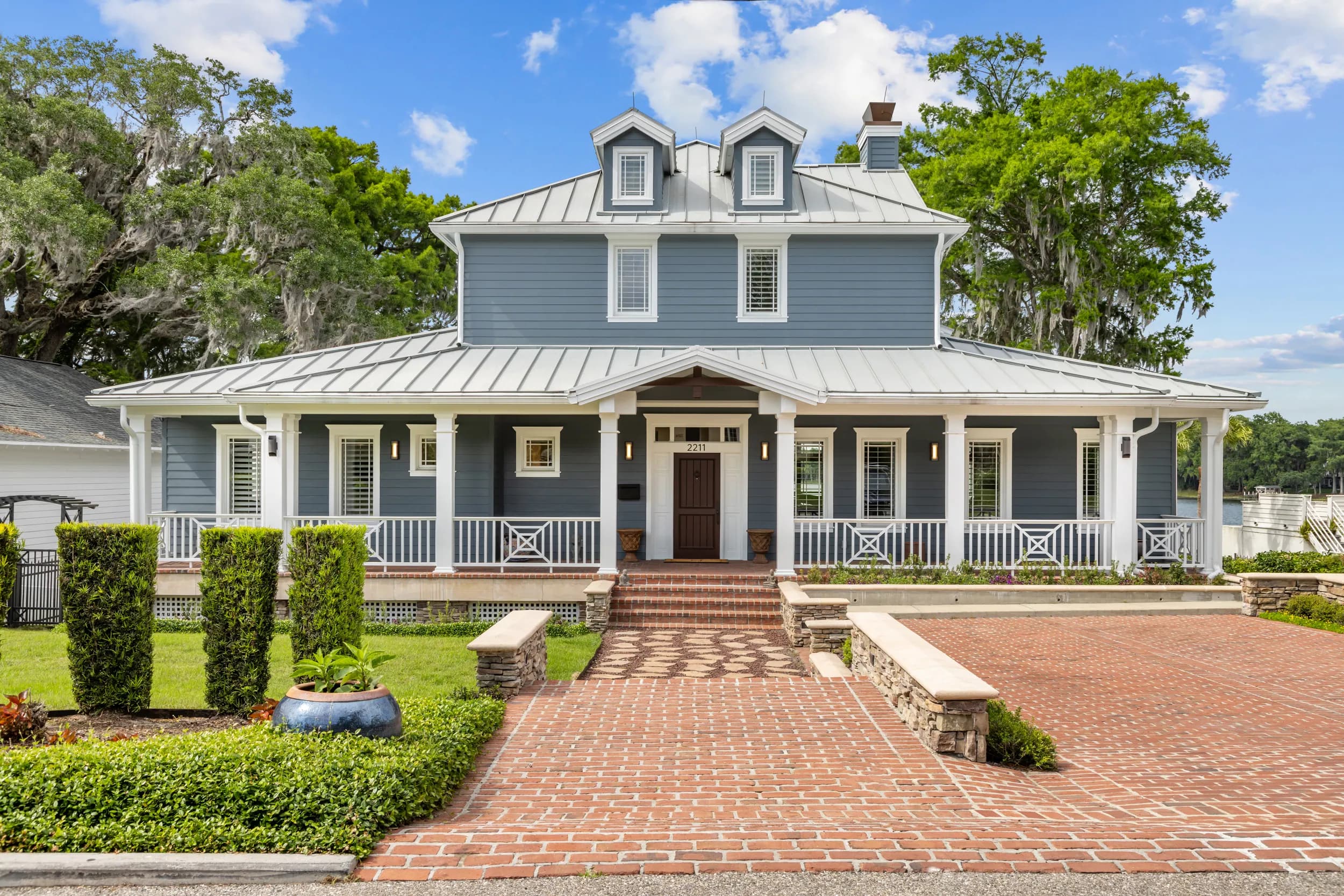
Exteriors are the constraint that will not move. Interiors can be lit at almost any point in the day, but a front elevation has one or two windows where the sun is on the right side of the house, and on a Central Florida afternoon the sky may simply close. Pick the photo time for the exterior, then ask whether the install can finish comfortably before it — with margin, not with the crew driving away as the photographer pulls in.
The cleanest version of this is a full day of separation: the crew installs one day, the shoot happens the following morning. It also gives someone a chance to walk the house with fresh eyes and catch what the install left behind. Our listing marketing timeline lays out where this single day sits inside the larger sequence from signed agreement to live.
When the install runs long
Installs run long. A truck gets stuck in traffic, a piece does not fit through a doorway, the seller decides the dining set is wrong. The question is not how to prevent it but what the default decision is when it happens, and that should be agreed in advance.
In practice there are three choices, and only one of them is usually right:
- Shoot anyway, on time. Almost never the right answer unless the unfinished rooms are genuinely minor and can be left out of the gallery entirely.
- Shoot the finished part, return for the rest. Reasonable on a large property where the primary suite and main living spaces are done and the guest wing is not.
- Move the photo call. Usually the cheapest option, even though it feels like the most expensive. A short delay costs a slot. A weak gallery costs the first week of buyer attention, which does not come back.
Agreeing on the default before install day means nobody is making this call at 4 p.m. with a seller standing in the kitchen.
What a half-dressed house actually costs
The temptation to shoot early is understandable, and it is worth being plain about the cost. A gallery photographed mid-install does not read as "almost staged" to a buyer scrolling a portal — it reads as a house where something is off. Buyers cannot always name what they are seeing, but they respond to it: the empty wall where art should be, the bare mattress, the room that looks like a storage unit.
Reshooting the affected rooms is the fix, and it is a real cost in coordination and access, not just in a line item. Delivery timing is confirmed at booking, and an on-time shoot of a finished house reaches the market sooner than an early shoot plus a return visit.
Whether the house is staged or empty on shoot day changes the plan in other ways too, which we cover in vacant versus occupied shoots. And if the decision is still open between a physical install and a digital one, the staging comparison post is the better place to start.
A five-line handoff note
Everything above fits in a short message sent to the stager and the photographer together, a few days out. Name the address, the photo call time, what "complete" includes, who has access and how, and what happens if the install runs long. Copy both parties so neither is hearing it secondhand.
That note is also where a stager can flag the rooms they are not touching — a photographer who knows the third bedroom is staying empty will plan the gallery around it instead of discovering it on arrival. Stagers choosing who to work with regularly may also find the photographer selection guide for stagers useful; it covers the relationship rather than the single day.
Good installs and good galleries are not in tension. They just need to happen in the right order. Ready to book? Call or text (689) 600-2131 or get in touch.