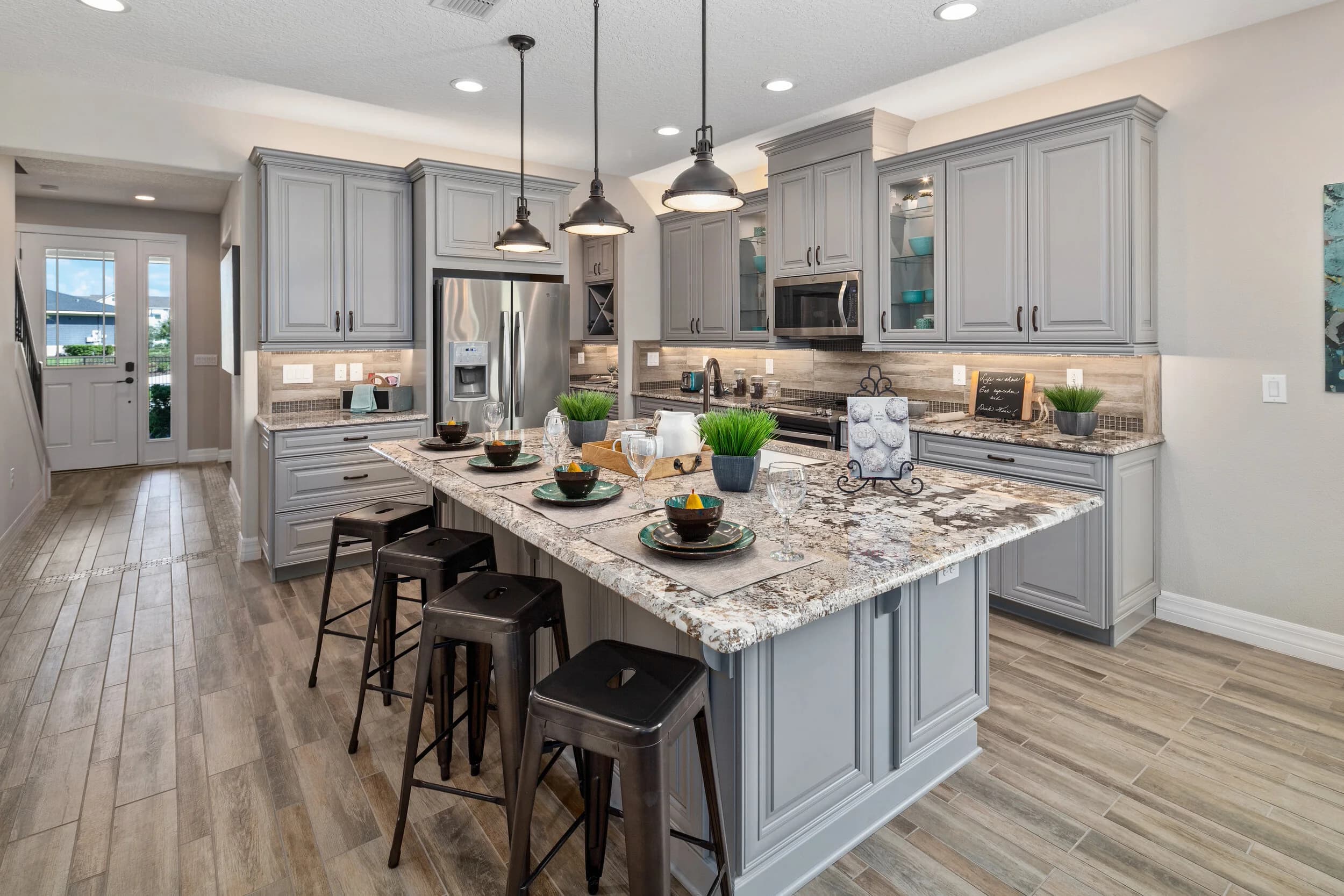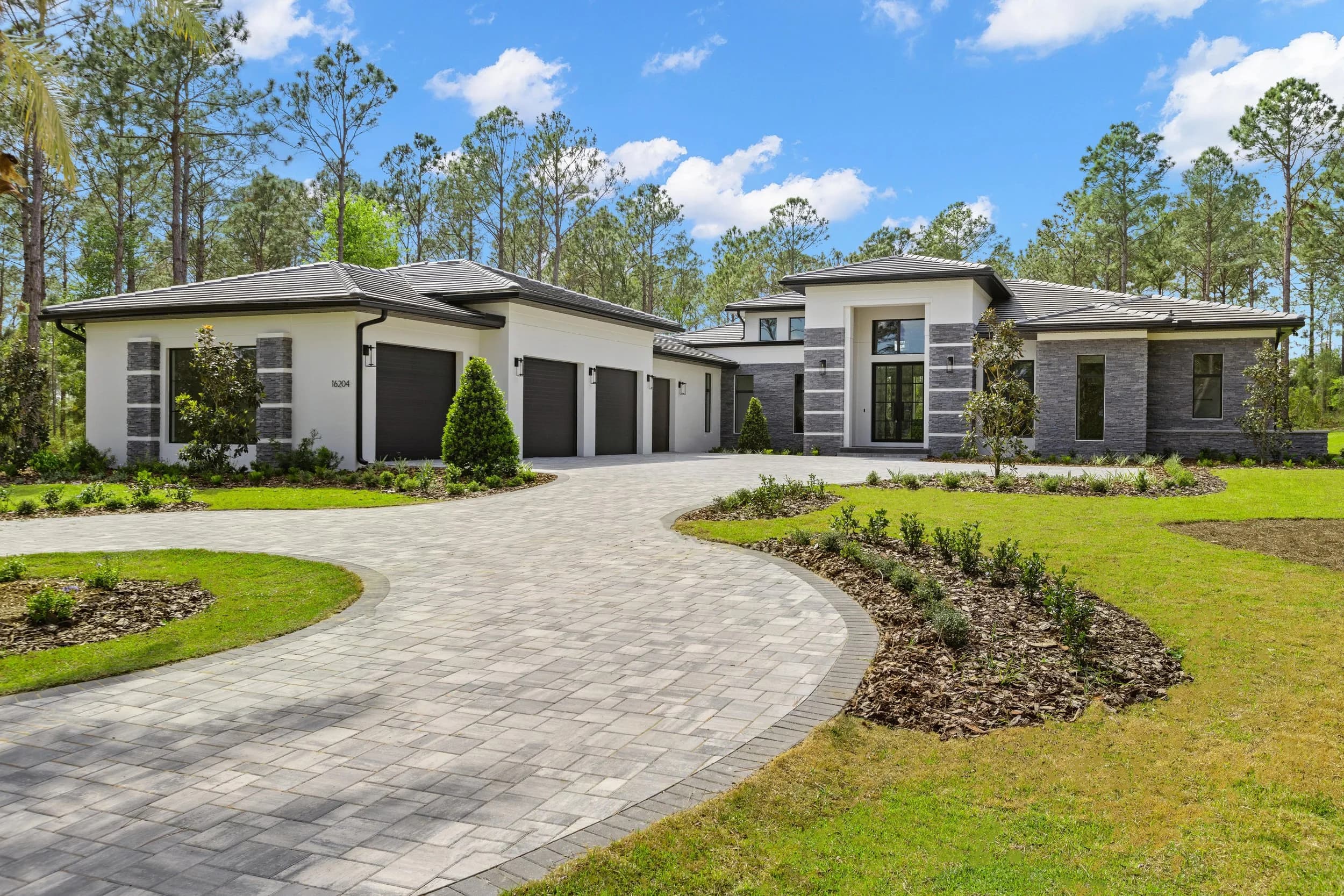
Two identical floor plans in the same Orlando subdivision can require completely different shoot days — because one is empty and one is lived in. Knowing which challenges come with each helps agents prep sellers properly and set realistic expectations for the gallery.
The Vacant Home Problem: Scale and Warmth
An empty house sounds easy to photograph. No clutter, no coordinating with occupants, no waiting for someone to finish breakfast. But vacant homes create their own issues.
Rooms lose their sense of scale. Without furniture, buyers can’t tell whether a bedroom fits a king or a queen. Empty rooms consistently photograph smaller than they feel in person, which is the opposite of what most sellers assume.
Every flaw is visible. Scuffed baseboards, patched drywall, carpet dents from the previous furniture, and uneven paint all read clearly in an empty frame. There’s nothing to draw the eye away.
The house feels cold. Empty rooms photograph as blank boxes. Buyers scrolling a gallery of white walls and beige carpet have nothing to connect with emotionally.
Practical issues stack up. Utilities are sometimes off, meaning no lights and no air conditioning — a real problem in Central Florida in August, when a photographer working in a closed-up house is also fighting humidity fogging the lens. Landscaping may have gone unattended. Interior air can be stale enough that windows need opening before the shoot.
What actually helps:
Confirm power and A/C are on at least a few hours before the shoot
Consider virtual staging for the primary living space and primary bedroom — the most cost-effective way to restore a sense of scale
Have the home cleaned even though nobody lives there — empty floors show dust
Refresh the landscaping — curb appeal carries even more weight when interiors are bare
Include a floor plan so buyers can understand dimensions the photos can’t convey
The Occupied Home Problem: Control
Occupied homes photograph with natural warmth and clear scale. The tradeoff is that the photographer controls almost nothing.
Clutter is the top issue. Not disorder — normal life. Mail on the counter, shoes by the door, a laundry basket, kids’ artwork on the fridge. Individually minor, collectively distracting.
Personal items break the buyer’s connection. Family photos, religious items, diplomas, and medications pull a buyer out of imagining themselves in the space. This is also a privacy matter for the seller.
Furniture may be arranged for living, not viewing. A sectional pushed against a walkway makes a great room look narrow.
Scheduling gets complicated. Pets need somewhere to go. Kids need to be out. Someone has to be awake and ready at 9 a.m. Shoots run long when the photographer waits on a room to be cleared.
What actually helps:
Send the seller a prep checklist 3–4 days ahead, not the night before
Ask for all counters and surfaces cleared — kitchen, bathrooms, nightstands, desks
Have personal photos and medications put away
Arrange pet care — crated pets in the frame or barking during a video walkthrough are both problems
Turn on every light and open every blind before arrival
Park cars away from the front of the house for exterior shots
Which Photographs Better?
Occupied homes that are genuinely well-prepared photograph best. Furniture gives scale, textiles add warmth, and the space reads as livable.
But a well-prepared vacant home beats a cluttered occupied one every time. The failure mode of a vacant home is “sterile.” The failure mode of an occupied home is “messy,” and messy is worse — it makes buyers question how the property has been maintained.
The Tenant-Occupied Wrinkle
Investment properties add a third scenario, and it deserves its own approach. Tenants have no financial stake in the sale, so cooperation ranges widely. Florida law requires reasonable notice before entry, and photographers should never move a tenant’s belongings without permission.
Best practice: schedule further out than usual, communicate directly with the tenant rather than through the owner only, and set expectations that the gallery will show the home as it’s kept. If the property is under contract for an investor buyer, extensive prep may not be worth the friction anyway.
Timing Your Shoot Around the Transition
The most common scheduling mistake is photographing during a move. Half-packed boxes and disassembled furniture produce the worst gallery of any scenario.
If a seller is moving out, either shoot before packing starts — while the home is still fully furnished and staged for living — or wait until the move is complete and the home is clean and empty. Never in between.
For Orlando and Tampa Bay listings on a tight timeline, shooting fully furnished a week before the move usually produces the strongest gallery and gives you time to get the listing live.
The Bottom Line
Vacant homes need help conveying scale and warmth. Occupied homes need help with control and clutter. Both can produce excellent galleries — as long as the prep matches the situation and the shoot isn’t scheduled in the middle of a move.
Ready to book? Get in touch or call us — we serve Orlando, Tampa Bay, and Central Texas.