A community's amenity photography is usually shot once, early, and then asked to work for years. As the build-out matures, those first images start to tell the wrong story: saplings that have since grown in, an empty pool deck, a clubhouse that was not yet open. Knowing when to refresh the set, and which original frames can stay, keeps a community's marketing honest and current.
When does amenity photography start to look out of date?
Amenity photography looks out of date when a prospective buyer can visit and see something different from the gallery. That gap usually opens in a few predictable ways:
- Landscaping has matured. Young trees and sod seams in the first images read very differently from a community with established canopy.
- Amenities were added or finished. A trail, dog park or second pool that was a plan on day one is now real and worth showing.
- The community is populated. Empty streets and pools can suggest an unproven neighborhood once real residents live there.
- Brand or signage changed. New entry monuments, updated logos or revised wayfinding make older frames inconsistent.
If any two of these are true, a refresh is worth planning. For the first-time shoot itself, the post on amenity photography and how pools, clubhouses and trails sell homesites covers the original approach, and this post stays on the later decision.
Which original frames are still worth keeping?
Keep any frame that still matches what a visitor will see, and retire the rest rather than editing around the problem. Architectural details, interior finishes and well-composed views of hardscape often hold up for years. Wide exteriors that rely on bare landscaping, or any frame with a feature that has since been rebuilt, are the ones to replace.
A practical method is to audit the existing library against a current site walk. Mark each image as current, usable with a note, or retired. That list becomes the shot list for the refresh, so the reshoot only covers what changed instead of repeating everything. If the community markets across several channels, the quarterly approach in building a quarterly photo asset library shows how to keep that audit routine.
Once a refresh is complete, tell the sales team and any marketing partners which images are retired. Old photos tend to linger on third-party sites, brochures and ads long after the community has changed, and a short retirement list keeps everyone pointing buyers to the current set.
Resident privacy matters as the community fills in. Shoot amenities at quiet times of day, keep residents out of frame unless they have agreed to appear, and let the association know when the crew will be on site.
How should a refresh be planned during build-out?
Plan it around milestones rather than the calendar. The best times are usually just after an amenity opens, after a landscaping phase settles in, and just before a major marketing push such as a new phase release or event. Matching camera positions to the original set also helps, because comparable frames let the team swap new images in without rebuilding every page and brochure.
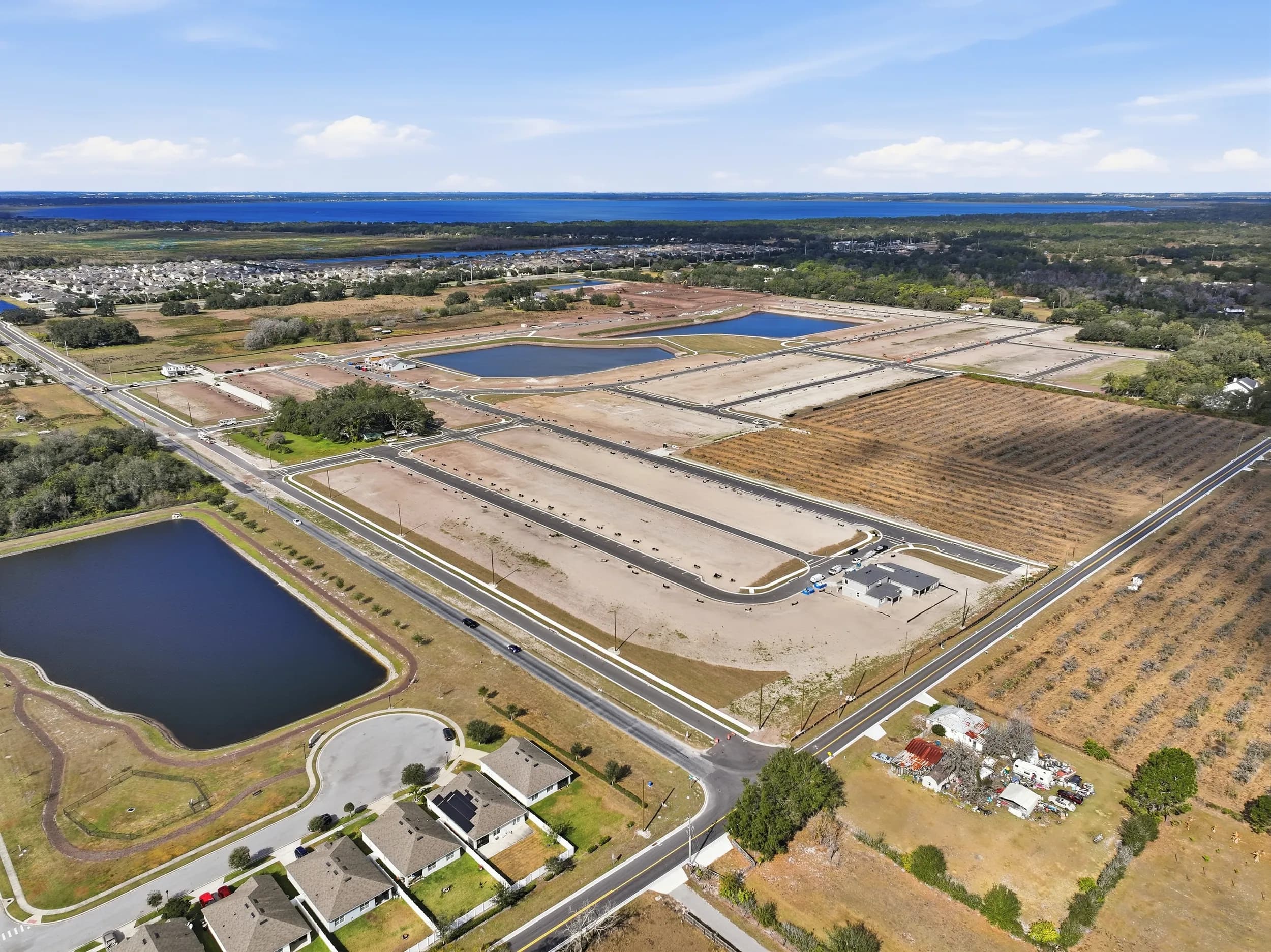
Aerials deserve their own look. As roads, homes and common areas fill in, overhead views change more than any other frame, and the guide to aerial photography for new construction communities in Florida explains why those views are worth updating on their own cycle. A grand opening or major event is another natural trigger, and photographing a community grand opening covers how to capture it.
How does JRP support a long build-out?
JRP supports a long build-out by staying with the community from the first shoot to the last phase. Since 2020, JRP has photographed every Central Florida community Mattamy Homes has brought to market, covering models, amenities, communities, films, 3D tours and reels. That continuity lets the team match earlier camera positions, keep the visual standard consistent across phases and reshoot only what has changed.
The work is flown and shot by local crews in Orlando, Tampa Bay, Austin and San Antonio, with every drone flight handled by an FAA Part 107 certified remote pilot insured for commercial aerial work. Every builder and developer project is scoped and quoted individually. Send the project to john@meetjrp.com or call (689) 600-2131 for a proposal.
Ready to book? Call or text (689) 600-2131 or get in touch.