Westlake and Rollingwood sit just west of downtown Austin, where the land starts to climb into the Hill Country. Listings here are defined by their terrain: hillside lots with steep driveways, tiered backyards held by limestone walls, live oaks that shade the whole house, and views that run east to the downtown skyline or west toward Lake Austin and the hills. For agents, the photography has to do two things at once: show the home and show where it sits. This post covers how we photograph hillside homes and views in Westlake Hills, Rollingwood and the neighborhoods off Bee Cave Road and Loop 360, with a short FAQ at the end.
Photographing a hillside lot
A home on a slope rarely has a flat front yard to shoot from, which is where many galleries go wrong. Shot from the street below, a Westlake house looks like a garage with a roof. Shot from the driveway above, it looks squat. The fix is to find the elevation that matches a buyer's eye on arrival, often partway up the drive, and to use a moderate wide angle rather than the widest lens available, so the house does not lean. Retaining walls, stone steps and terraced planting beds are features, not obstacles, and a frame or two that shows how the lot steps down to the pool or the yard helps a buyer understand the property before a showing.
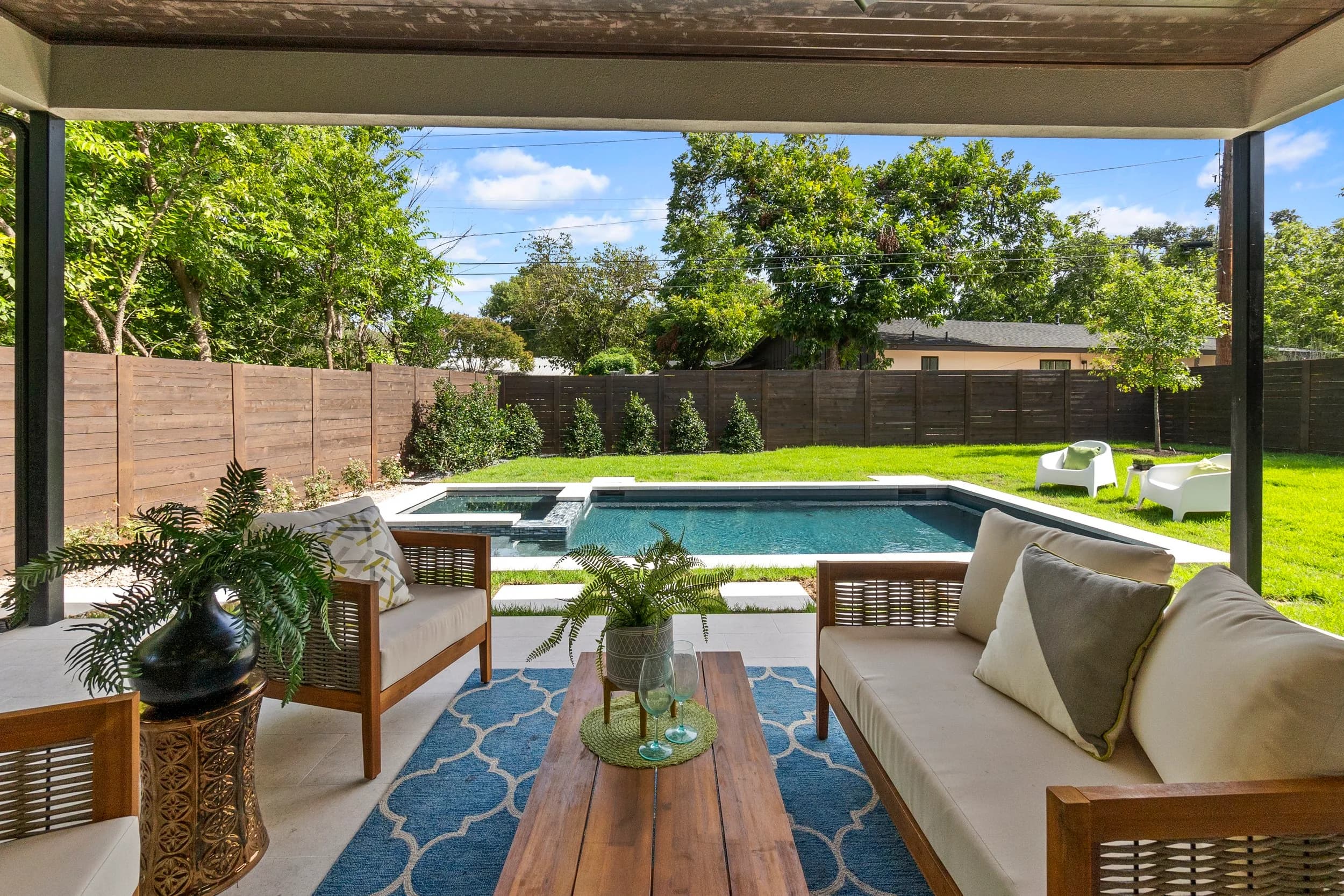
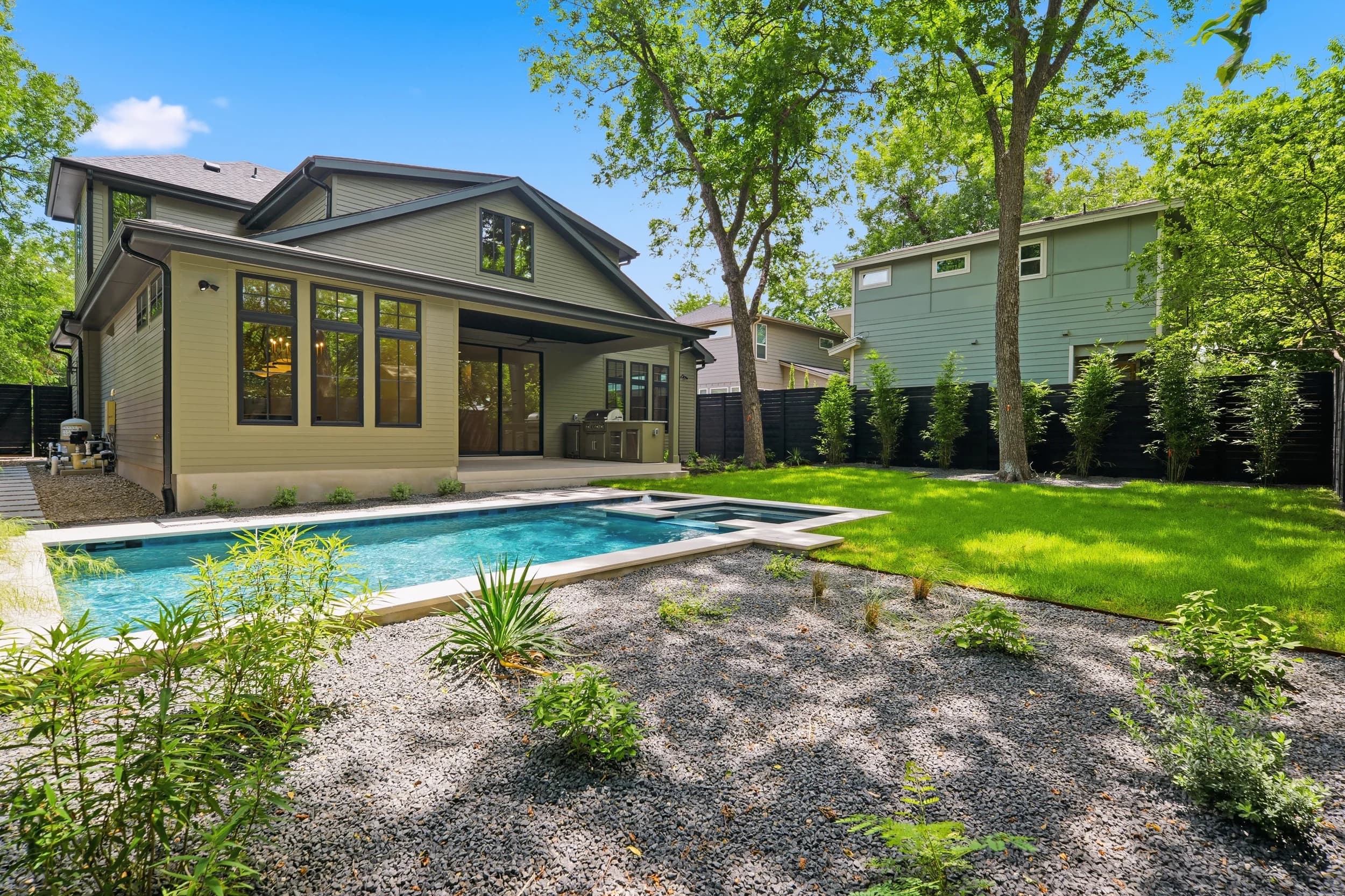
Backyards on a grade are their own puzzle. A pool cut into a hillside with a view beyond it is one of the best frames in Austin real estate, but it only works from the right height. We often shoot it from the upper terrace looking out, then from pool level looking back at the house, so the gallery shows both the view and the architecture.
Showing the view without losing the house
Views are a large part of the value in Westlake. Downtown skyline views face east and photograph best in the late afternoon, when the sun is behind the camera and the buildings catch warm light. Hill Country and Lake Austin views face west and are best in the morning, or at dusk when the sky holds color and the hills go soft. A view photographed into the sun at midday becomes a white sky and a dark room, which is the opposite of what a buyer wants to see.
Inside, the view is usually behind a wall of glass. We balance the exposure so the room and the view both read, and we shoot the main living space, the primary suite and the outdoor living area with the view held in frame. For twilight, the question is whether a real twilight shoot or a virtual one is appropriate; our post on twilight vs. virtual twilight walks through that decision. On a true view lot, the real thing is almost always worth it.
When a drone earns its place
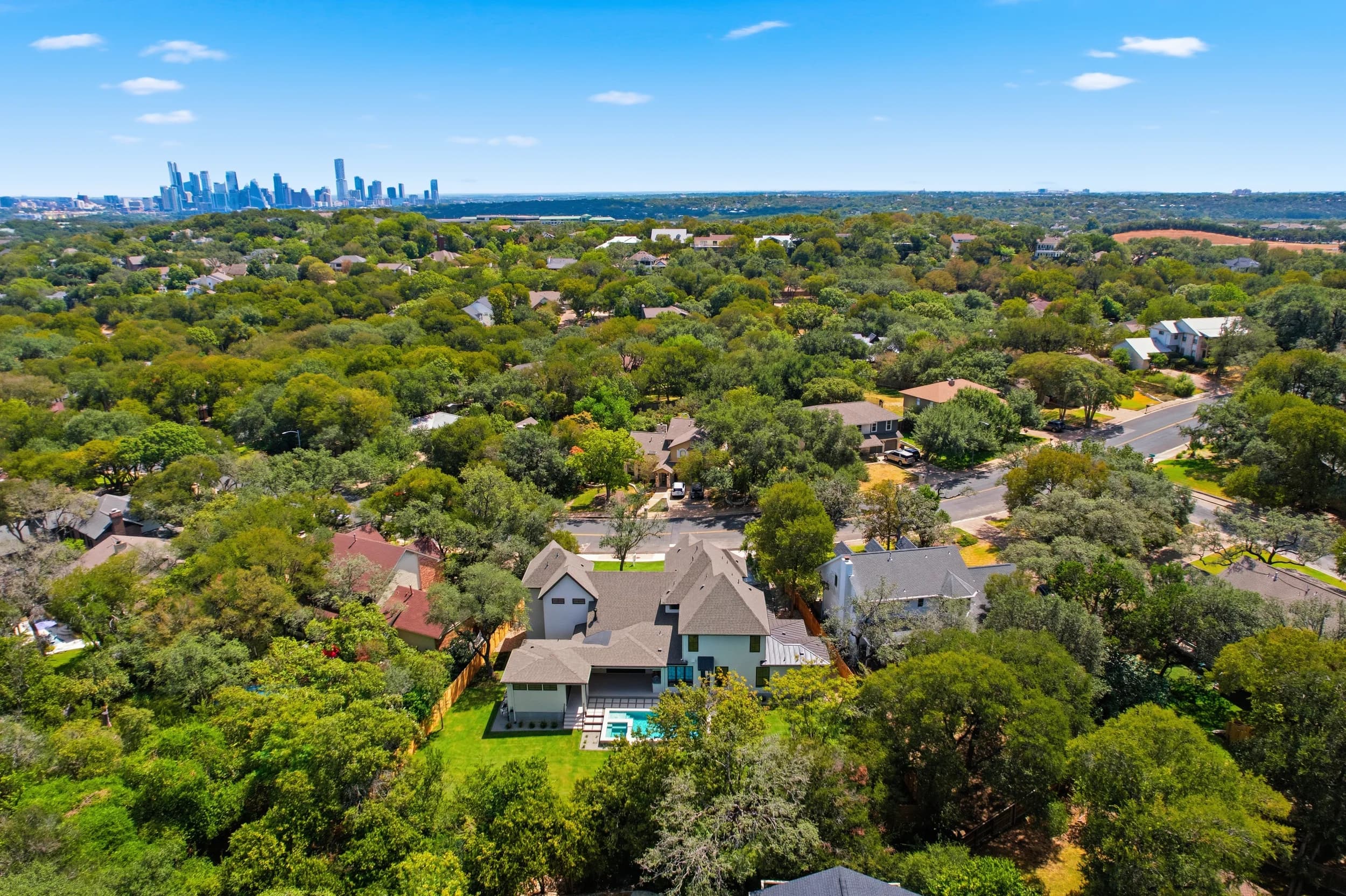
Aerials matter more here than in most Austin neighborhoods, because the lot, the trees and the terrain are the story. A drone frame from above the house, angled toward downtown or the lake, places the home in its setting in a way no ground shot can. Lower aerials that show the driveway, the lot lines and the tree canopy help buyers who are weighing privacy and usable yard. Our post on location aerials explains how to use those frames in the listing.
Austin airspace has its rules, and a licensed pilot checks the address and secures any authorization an area needs before the shoot. Tree cover is the more common limit in Westlake: a home under a dense canopy of live oaks and cedars may not be visible from above at all, in which case we rely on elevated ground shots and a wider neighborhood aerial instead.
Rollingwood: smaller lots, closer to town
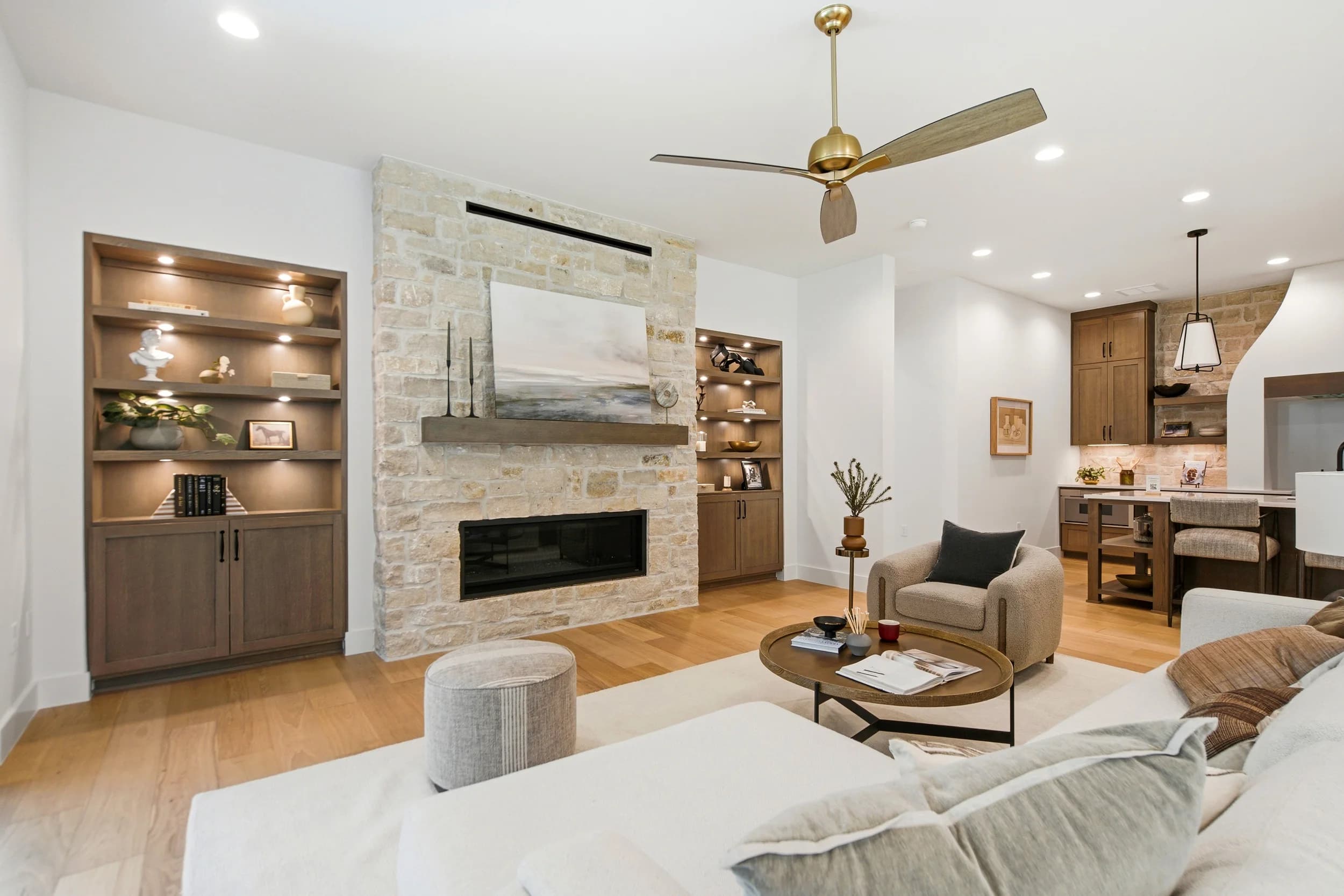
Rollingwood is flatter and closer to Zilker Park than Westlake Hills, with a mix of original ranch homes and newer rebuilds on smaller lots. The photography here is more about the neighborhood feel: the quiet streets, the mature trees, the walk to the park and the short drive downtown. Interiors in the newer homes tend to be bright and modern, and the exteriors mix limestone, stucco and standing-seam metal in the way our post on Hill Country style exteriors describes. Expect to spend more of the gallery on the interior and the yard than on views.
Across both areas, summer heat and dormant lawns shape the schedule, and we plan around them. Listing galleries are delivered within 24 hours, video in 48 to 72 hours. Larger properties take a little longer. If you are choosing a photographer for west Austin, our guide to finding a real estate photographer in Austin covers what to ask.
Frequently asked questions
Do you photograph listings in Westlake Hills and Rollingwood?
Yes. JRP has a local Austin crew that covers Westlake, Rollingwood, the Bee Cave Road and Loop 360 corridors, Lost Creek, Barton Creek and the neighborhoods out toward Lake Travis, along with the rest of the Austin and San Antonio markets.
What time of day should a view home be photographed?
It depends on which way the view faces. Downtown views are best in the late afternoon, Hill Country and lake views in the morning or at dusk. We schedule around the orientation when you book and often split the shoot so interiors and the view are both at their best.
Can you fly a drone over a home in Westlake?
Usually, yes. A licensed pilot confirms the airspace for the address before the shoot. Heavy tree canopy is the more common issue, and when the house is hidden from above we shift to elevated ground frames and a neighborhood aerial.
How do you photograph a steep driveway so it does not scare buyers?
We shoot from the elevation a buyer sees on arrival, keep the lens moderate so the grade is not exaggerated, and include a frame that shows the garage approach and parking area so the buyer can see how daily arrivals work.
Should a Westlake listing include a twilight shoot?
If the home has a real view or outdoor living space with lighting, yes. Twilight shows the skyline or the hills at their best and gives the listing a hero frame the daytime set cannot match.
Ready to book? Call or text (689) 600-2131 or get in touch.