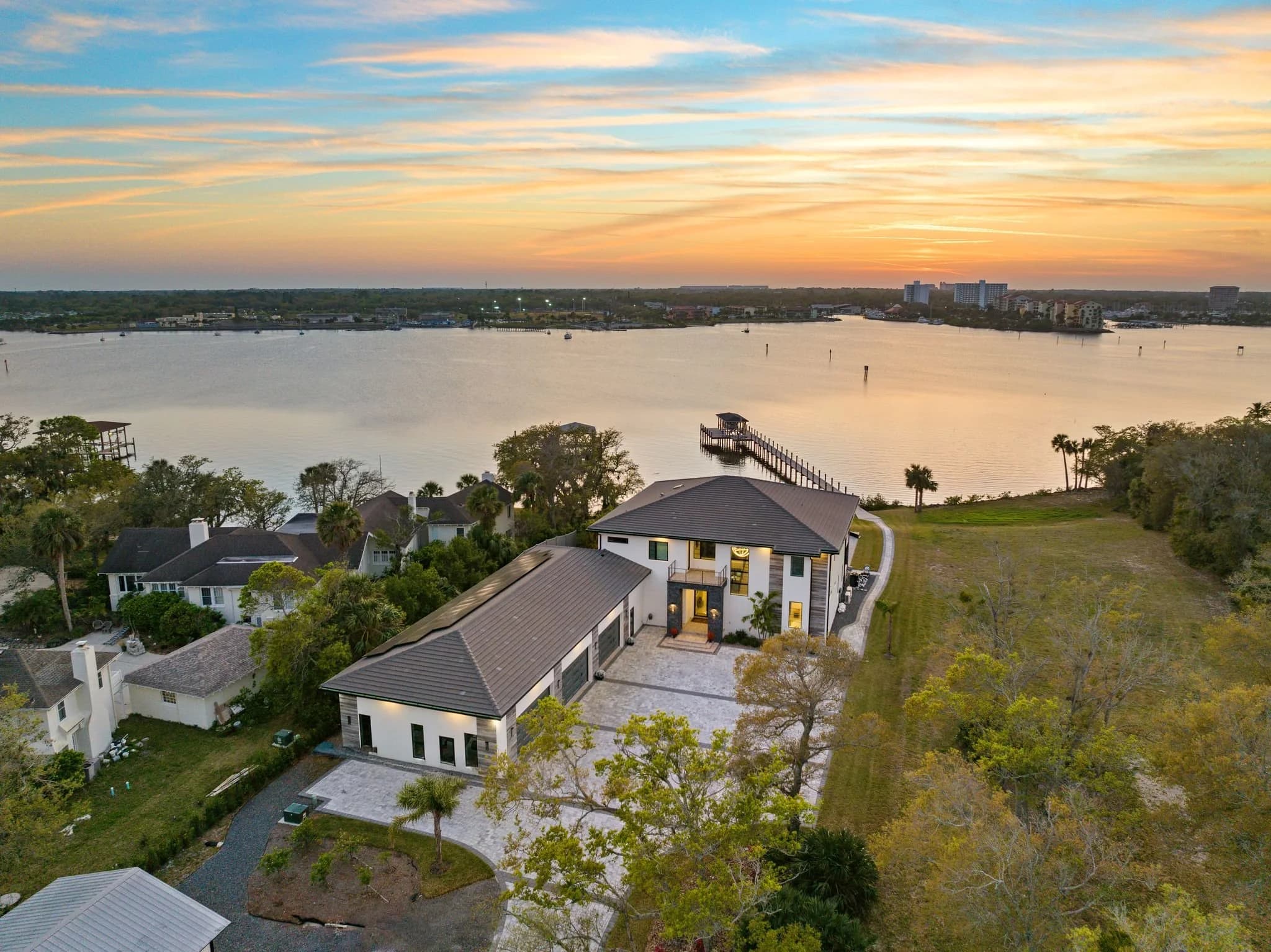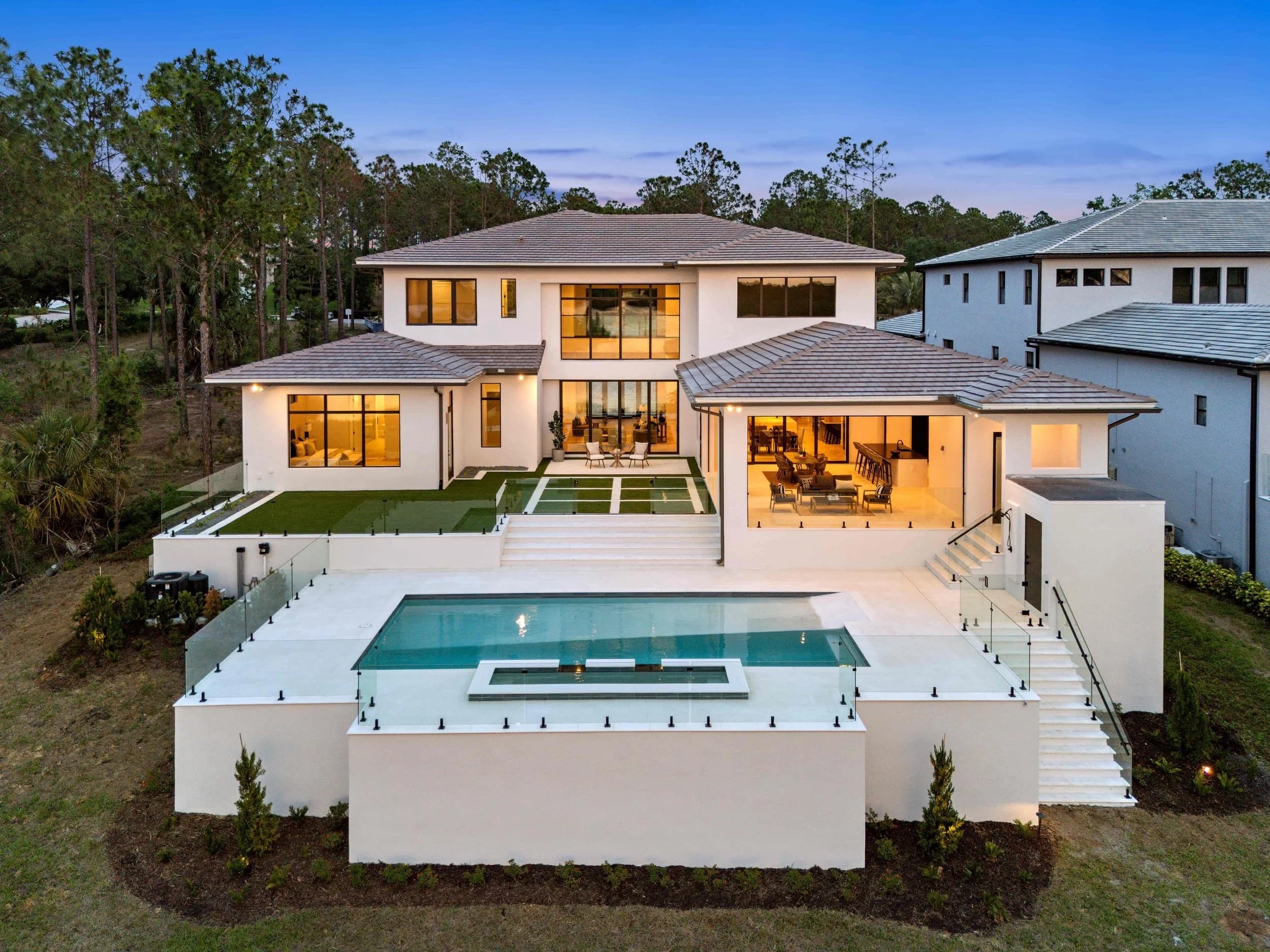
Twilight photos and drone photos are two of the most requested add-ons in real estate marketing. Combining them — flying during the short window after sunset — produces some of the most striking listing images available, but it only works on the right property.
What Twilight Drone Photography Actually Is
A twilight aerial is captured in the roughly 20 to 30 minutes after sunset, when the sky still holds color and the home's exterior and interior lights read as warm points of light from above. The result is a frame that shows the property, the lot, and the surrounding context all at once, with the kind of mood a midday aerial simply cannot produce.
It is a different job from a standard drone photo. Light levels fall fast, exposures get longer, and the aircraft has to hold position cleanly to avoid motion blur. Most twilight aerials are captured as bracketed exposures and blended, so the sky, the roofline, and the lit windows all hold detail in a single image.
For Part 107 pilots, flying past sunset is legal, but it comes with requirements: the aircraft needs anti-collision lighting visible for three statute miles, and the pilot needs current night-operations training. Any photographer offering dusk aerials in Orlando or Tampa Bay should be able to explain how they meet those requirements without hesitating.
The Properties Where It Earns Its Keep
Twilight aerials are not a universal upgrade. They pay off when the property has something that only reads from above and only reads at dusk:
Waterfront homes. Lake Nona, Winter Park's chain of lakes, and the Tampa Bay waterfront all photograph beautifully when the water picks up the last of the sky color.
Golf course lots. Fairway frontage disappears in a ground-level twilight shot. From 120 feet, the relationship between the home and the course is obvious.
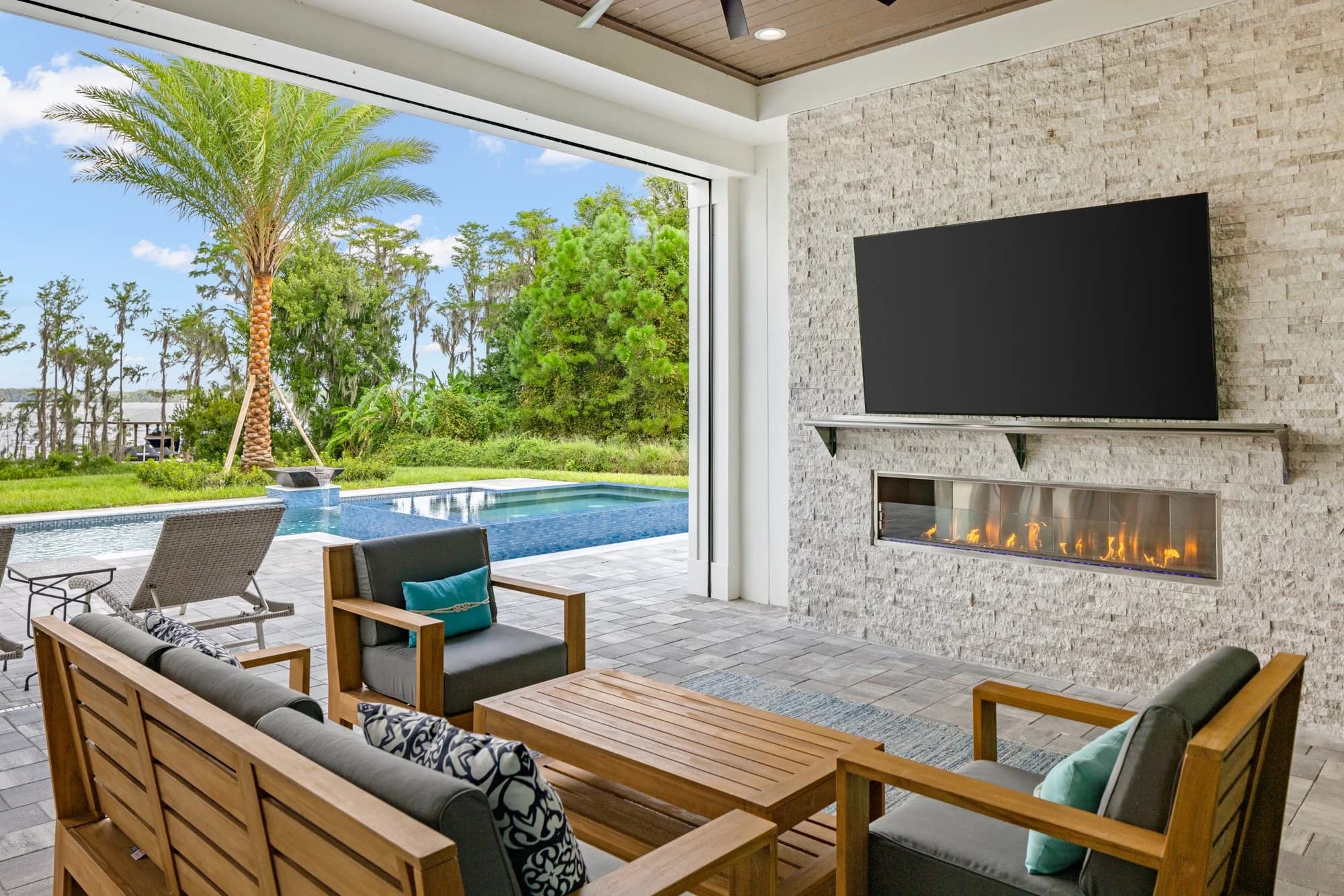
Pool and lanai homes. A lit pool viewed from above is one of the strongest single images a Central Florida listing can lead with.
Large acreage and estate properties. When the lot is the selling point, an aerial is the only way to show it, and dusk gives the frame depth that flat afternoon light does not.
New construction communities. Builders use dusk aerials to show an entire completed phase with streetlights and model homes lit — an image that sells the neighborhood, not just one house.
The Window Is Genuinely Short
This is the part agents underestimate. Between the moment the sun drops and the moment the sky goes flat, there are maybe 25 usable minutes. On a Florida evening in August, that window can be cut in half by an afternoon storm cell that has not fully cleared.
A few practical consequences:
Everything has to be ready before sunset. Lights on, blinds set, pool light on, cars moved, trash cans out of frame. There is no time to fix a staging problem once the light starts going.
The interior shoot has to happen earlier. Twilight is the last thing on the schedule, not something squeezed between rooms.
One property per evening. A photographer who promises two twilight shoots on the same night is going to shortchange one of them.
Weather cancels it, not the whole shoot. If the sky is a flat gray sheet, the dusk aerial gets rescheduled while the daytime work still delivers on time.
What the Shoot Day Looks Like
A typical twilight drone add-on in Central Florida runs like this. The photographer arrives in the late afternoon, completes the interior and standard exterior work, then does a pre-flight check and scouts flight lines while there is still light. About 15 minutes before sunset, the home gets lit — every interior light on, every ceiling fan off, landscape and pool lighting on. The aircraft goes up as the sun hits the horizon, and the pilot works through a planned sequence of two or three angles rather than improvising.
Deliverables are usually three to six finished twilight aerials. That is intentional. A gallery does not need a dozen dusk frames; it needs one hero image and a small supporting set.
When to Skip It
Twilight aerials are the wrong spend when the home is on a small interior lot with neighbors close on both sides, when the landscaping is unfinished, or when the property has no exterior lighting to speak of. An unlit house at dusk reads as a dark box. In those cases, a standard golden-hour ground exterior does more for the listing at a lower cost.
They are also a poor fit for listings that need to hit the MLS in 24 hours during a stretch of unsettled weather. Timing risk is real, and a delayed launch costs more than a dramatic photo gains.
The Short Version
Ask two questions before booking a dusk aerial: does this property have a feature that only shows from above, and does it have enough exterior and interior lighting to glow? If both answers are yes, twilight drone photography is one of the highest-impact add-ons available. If either is no, put the budget into video or a 3D tour instead.
Ready to book? Get in touch or call us — we serve Orlando, Tampa Bay, and Central Texas.