Florida is full of properties defined by what surrounds them — a canal out back, a lake view, a fairway beyond the lanai. Standard interior photos can’t capture that relationship. Drone footage can, and for these premium listings it frequently becomes the single most persuasive marketing asset.
Why Ground-Level Photos Fall Short
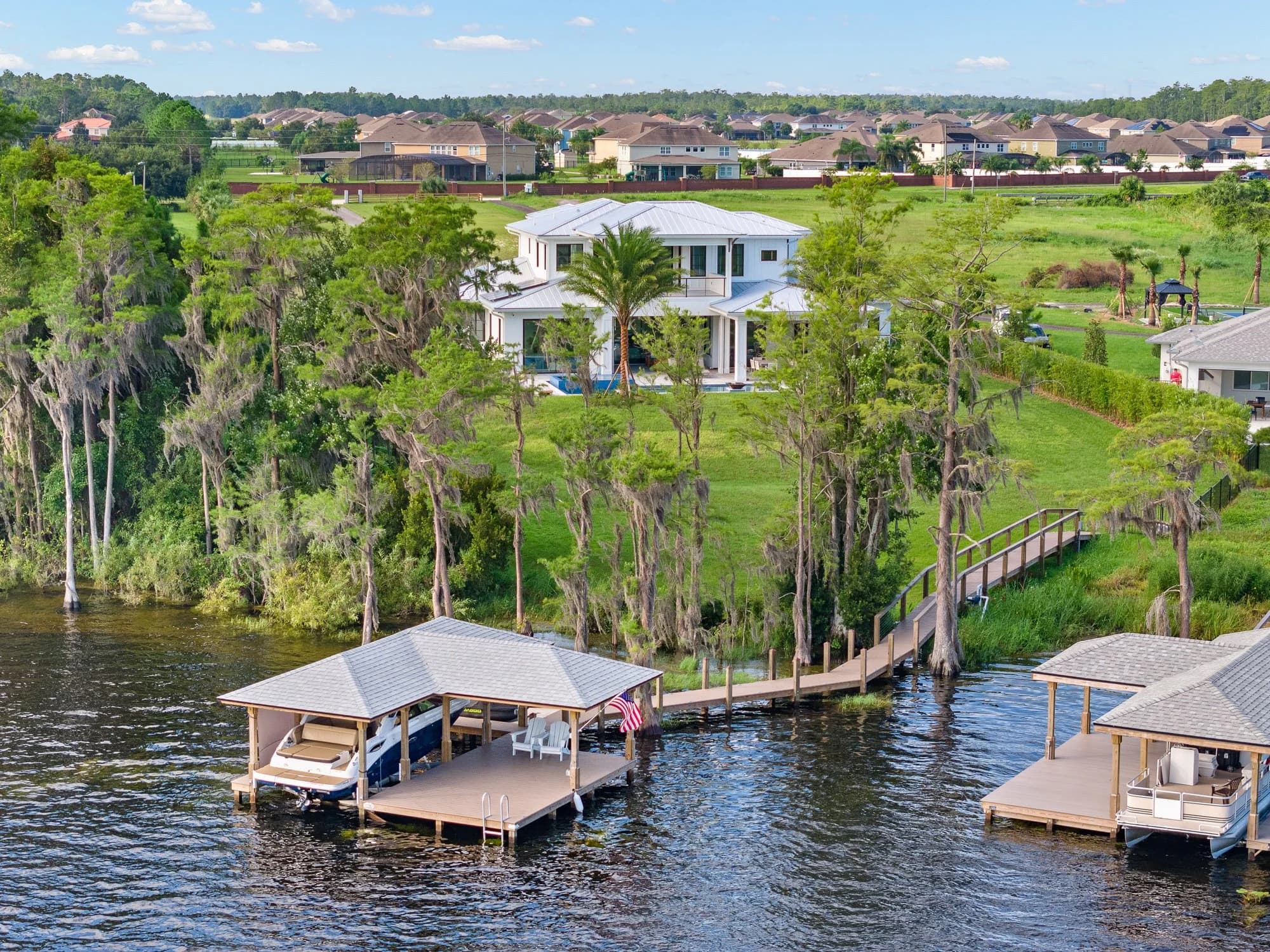
A buyer searching for a waterfront home wants to answer specific questions before they ever step inside: How close is the water? Is it a lake, canal, or pond? Is there a dock, a sea wall, a protected cove? For golf-course homes, they want to know which hole the property backs up to, how private the lot feels, and how the home sits against the course.
None of that comes through in a photo taken from the back patio. Aerial imagery answers all of it instantly, giving buyers the context they need to feel confident enough to schedule a visit.
What Drone Coverage Captures for These Listings
For waterfront and golf-course properties in Orlando, Tampa Bay, and across Central Florida, aerial coverage typically highlights:
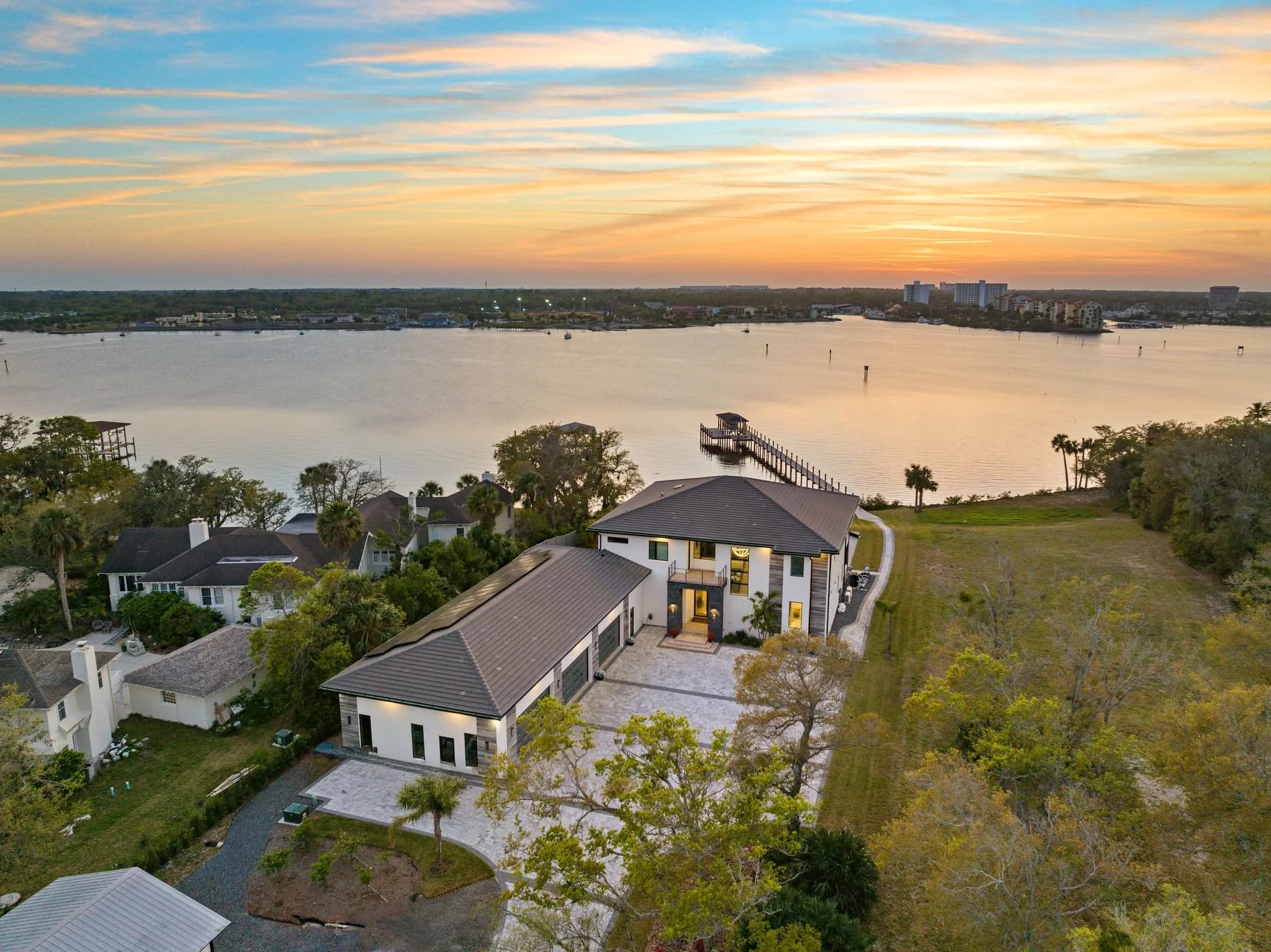
• The water or fairway relationship, showing exactly how the lot connects to its defining feature
• Frontage and lot lines, conveying the size and shape of the property in a single frame
• Docks, pools, and outdoor living, captured from angles that show how they fit together
• Proximity to amenities like the clubhouse, marina, community pool, or nearby parks
• Sunset and golden-hour light, when water and greenery look their most dramatic
For golf-course homes especially, a slow aerial pull-back that reveals the fairway behind the property gives buyers an immediate sense of the lifestyle they’d be buying into.
Aerial Video vs. Aerial Stills
Both have a role. Aerial stills are perfect for the MLS and printed materials — a clean overhead or angled shot that establishes the property at a glance. Aerial video shines on social media and listing pages, where motion holds attention and reveals the setting in a cinematic way.
A short aerial reveal — rising over the rooftop to expose the lake, or gliding along the shoreline — is the kind of clip buyers share and remember. Pairing a few hero stills with a 20-to-40-second aerial video usually covers both the practical and the emotional sell.
The Legal Side: Why Licensed Drone Work Matters
For any commercial real estate listing, drone photography must be flown by an FAA Part 107 certified remote pilot. This isn’t optional — it’s federal law, and it protects you and your seller. A licensed operator also understands airspace rules, which matter in much of Central Florida given proximity to airports and controlled airspace.
Hiring a professional service means the aerial work is captured legally, safely, and at a quality that matches the rest of your listing. It’s one less liability for you to manage.
When Aerial Is Worth It
Not every listing needs a drone, but waterfront and golf-course homes almost always benefit. The premium you can command on these properties — and the buyers you’re trying to reach — justify marketing that does the location justice. Aerial is especially valuable for lakefront, canal-front, or Gulf-access homes, properties on or backing up to a golf course, large or acreage lots where boundaries matter, homes in amenity-rich communities, and luxury listings where presentation sets the tone.
Buyers fall in love with waterfront and golf-course homes because of where they are. Aerial photography and video let you lead with that strength — and give serious buyers a reason to book the showing.
Ready to book? Get in touch or call us — we serve Orlando, Tampa Bay, and Central Texas.