After the kitchen, the primary suite is the part of a listing buyers look for first. They want to know if their bed fits, whether there is room for a sitting area, how much light comes in, and whether the closet will actually hold their things. Yet the primary bedroom and walk-in closet are often the weakest images in a gallery: a bed shot head-on, a closet photographed from the doorway with clothes everywhere.
This guide covers how to prepare and photograph primary suites and walk-in closets so buyers in Orlando, Tampa Bay, Austin and San Antonio can read the space correctly. Primary bathrooms are their own subject, covered with kitchens in our post on kitchen and bathroom photography.
Prepare the bedroom before the photographer arrives
A primary bedroom is personal space, and it usually needs more editing than any other room. A short checklist for the seller:
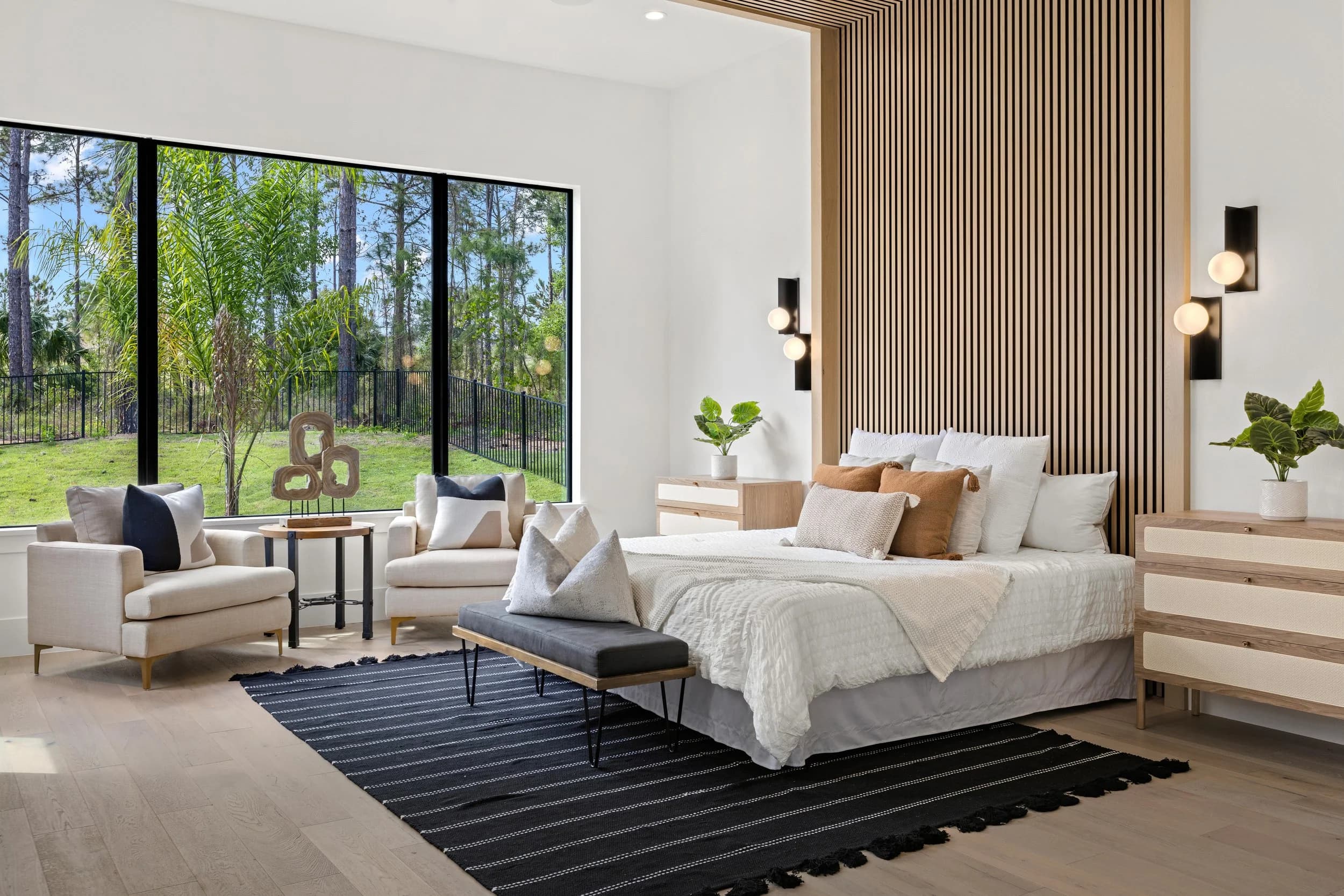
- Make the bed tight and simple. Light, solid bedding photographs best. Remove extra throw pillows beyond two or three, and smooth the duvet so it doesn't look lumpy from a low camera.
- Clear the nightstands. A lamp and maybe one small object each. Chargers, medications, glasses and books go in a drawer.
- Hide cords. Phone cables, lamp cords and TV wires show up more than people expect.
- Stop the ceiling fan. A moving fan blurs. Turn it off before the photographer arrives so the blades are still.
- Even out the window treatments. All blinds at the same height and angle, curtains open evenly. Mismatched blinds read as clutter.
- Remove personal photos and anything private. Bedrooms collect personal items that don't belong online.
Framing the primary bedroom
The goal is to show size and layout honestly. A few principles do most of the work:
- Shoot from a corner, not straight at the bed. A corner position shows two or three walls, the bed, and the windows at once, which tells the buyer how the room is laid out.
- Keep the camera at a natural height. Too high and the bed dominates the frame; too low and the room feels like a ceiling photo. Our post on the best camera height for real estate photos explains why this matters in every room.
- Show what makes the suite a suite. A sitting area, a tray ceiling, a door to the lanai or a view of the pool deserve a frame of their own.
- Show the connection to the bath. One frame looking from the bedroom toward the bathroom entry helps buyers understand the suite as a whole.
- Take a reverse angle. A second wide from the opposite side shows the wall the first image hides, often where the dresser or TV sits.
Two or three bedroom images are usually enough for most homes. Luxury listings with a sitting room, coffee bar or private terrace may need more, but each image should show something new.
Walk-in closets: the hardest small room in the house
Buyers care about storage, and a good walk-in closet is a real selling point. It is also tight, often windowless, full of reflective surfaces and personal belongings. Here is how to make it work:
- Edit the contents. Remove at least a third of what is hanging, line up shoes, fold stacks neatly and clear the floor. Bare rods photograph better than overstuffed ones.
- Turn on every light. Closet lighting is usually weak. The photographer will add light, but every fixture should be on and working.
- Shoot from the doorway, slightly off center. This shows depth and both sides of hanging space. For large closets with an island or built-ins, a second frame from inside helps.
- Watch the mirrors. Full-length mirrors catch the photographer and the camera. Our post on mirrors and reflections in listing photos covers how that is handled.
- Don't over-stretch it. An extreme wide lens can make a small closet look like a dressing room, and buyers notice at the showing. The same restraint applies to condos and other small spaces.
If a closet is small and can't be cleared, a single honest frame or even no image can be better than a cluttered one. A floor plan shows the closet's footprint either way.
Where the suite sits in the gallery
Order the primary suite as a group: bedroom wide, reverse or sitting area, then the bath, then the closet. Keeping them together helps a buyer scrolling on a phone understand that these spaces connect. Split them up and the closet becomes a mystery image somewhere near the garage.
For agents on a listing schedule: listing galleries are delivered within 24 hours, video in 48 to 72 hours. Larger properties take a little longer. Giving the seller this checklist well before the shoot means the suite is ready when the photographer walks in, rather than being edited on the spot.
The primary suite is where buyers picture their daily life. Clean preparation, honest framing and a sensible gallery order do more for it than any filter. Ready to book? Call or text (689) 600-2131 or get in touch.