A new roof is one of the few upgrades buyers in Central Florida and Central Texas ask about before they ask about the kitchen. In Florida, roof age comes up early because it affects insurance options. In Austin and San Antonio, buyers who have lived through hail storms and long summers know what a replacement involves and what it saves them. Yet most listing galleries show the roof by accident, as a thin strip at the top of the front elevation. If the seller just replaced it, the photos should say so. This post covers how to photograph a new roof, gutters and related exterior upgrades so they register as a selling point, without making claims the photos cannot back up.
Why ground-level photos rarely show the roof
From the street, a standard front elevation sees the roof at a steep angle, often half hidden by trees or the gutter line. On a two-story home you may only see a sliver of it. Shingles, metal panels and tile can all look alike from that distance, so a brand-new roof and a fifteen-year-old roof can photograph almost the same.
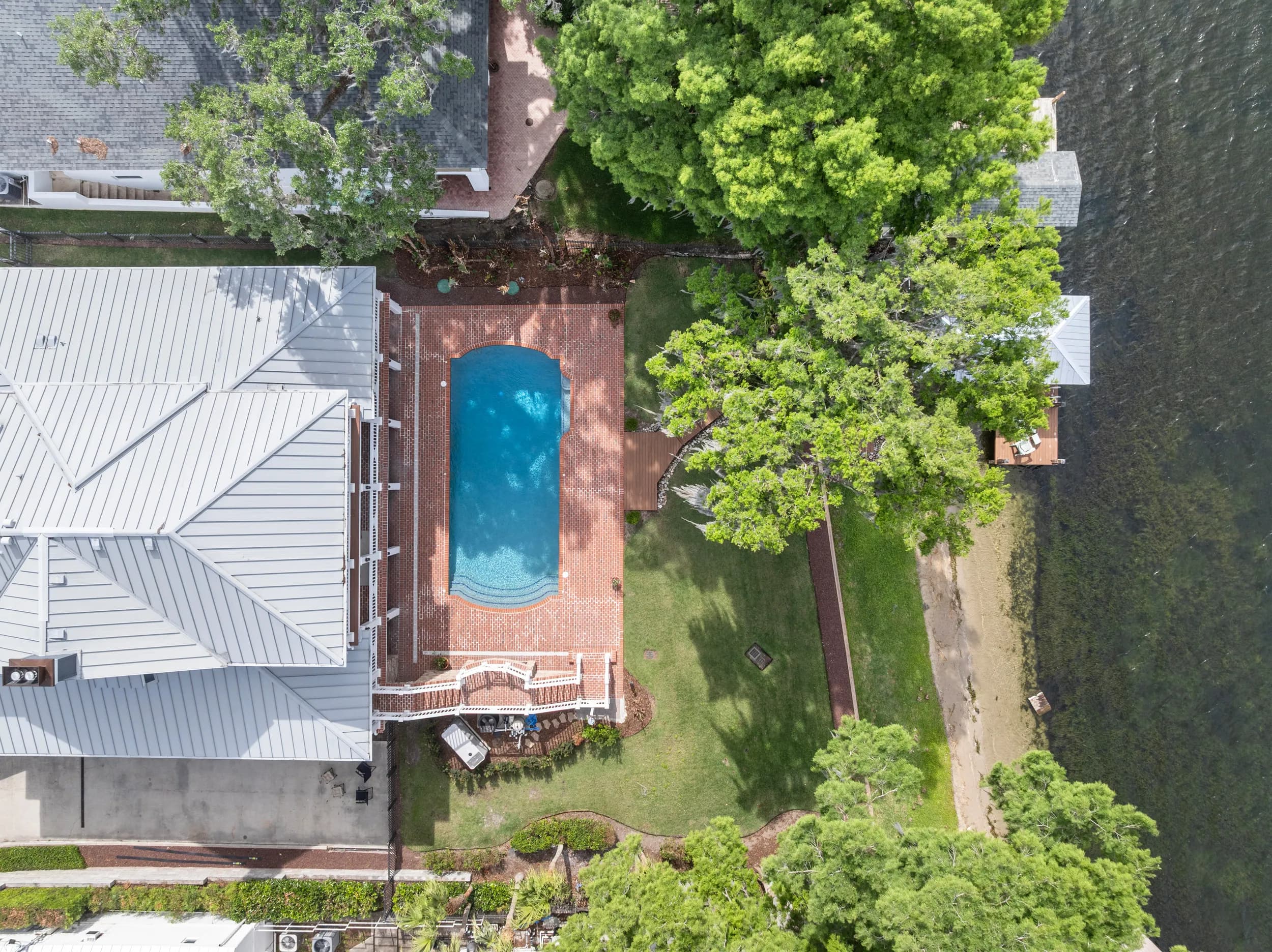
Fixing that takes height. A drone or a tall pole camera puts the lens above the gutter line, where the roof surface, ridge lines and flashing become visible. That one change turns the roof from background into a feature.
The elevated frames that show a new roof
When the roof is a selling point, we plan a short set of elevated frames:
- Front three-quarter view from moderate height. Shows the roof and the facade together, so it can sit high in the gallery.
- Straight-down overhead. Shows the whole roof plane at once and doubles as a lot overview.
- Rear oblique. Covers the slopes buyers cannot see from the street, plus the lanai, pool cage or covered patio roof if those were redone too.
- Close detail from the drone. A tighter frame of a ridge or valley shows clean lines and new material without anyone climbing a ladder.
Drone work is done by an FAA Part 107 licensed pilot, and some addresses sit in airspace that needs authorization or cannot be flown. If you are not sure a listing needs aerials at all, our guide on when a listing actually needs drone photos helps you decide. A new roof is one of the clearer cases for yes.
Gutters, soffits and the rest of the exterior
Roof replacements often come with new gutters, drip edge, soffits or fascia, and sometimes fresh exterior paint. These details read best from the ground, in good light, with a slightly longer lens:
- A corner frame of the eave line showing new gutters and downspouts.
- Soffit and fascia detail where new material or paint is visible.
- Related upgrades the seller can document, such as impact windows in Florida or a new garage door anywhere.
Shoot exteriors when the sun is on the side of the house you are photographing, so roof color and gutter lines look true. Overcast light works well for roof detail and avoids glare on metal roofs, which can flare badly under a high sun. Florida homes that were re-roofed after storm damage have their own considerations, covered in our post on photographing homes after hurricane repairs.
In the gallery, place the strongest roof frame early, usually second or third after the hero, so buyers scrolling on a phone see it before they move on. Listing galleries are delivered within 24 hours, video in 48 to 72 hours. Larger properties take a little longer.
Captions and claims: let the documents do the talking
Photos show that a roof looks new. They do not prove its age, its permit or its rating, and they should not be presented as if they do. Keep those facts in the listing remarks and the disclosure documents, where the seller and agent can stand behind them, and use captions to point buyers to what they are seeing.
- Good: "New roof, see listing remarks for year installed."
- Good: "Overhead view of the roof and lot."
- Avoid: anything about insurance savings, warranty terms or ratings that the photo itself cannot show.
Questions about insurance, wind mitigation or warranties belong with the seller's paperwork and the buyer's insurance agent, not in a photo caption. Our post on writing MLS photo captions that do real work has more on what a good caption says.
JRP photographs listings across Orlando, Tampa Bay, Central Florida, Austin and San Antonio, with licensed drone pilots who can plan roof frames as part of the regular shoot.
Ready to book? Call or text (689) 600-2131 or get in touch.