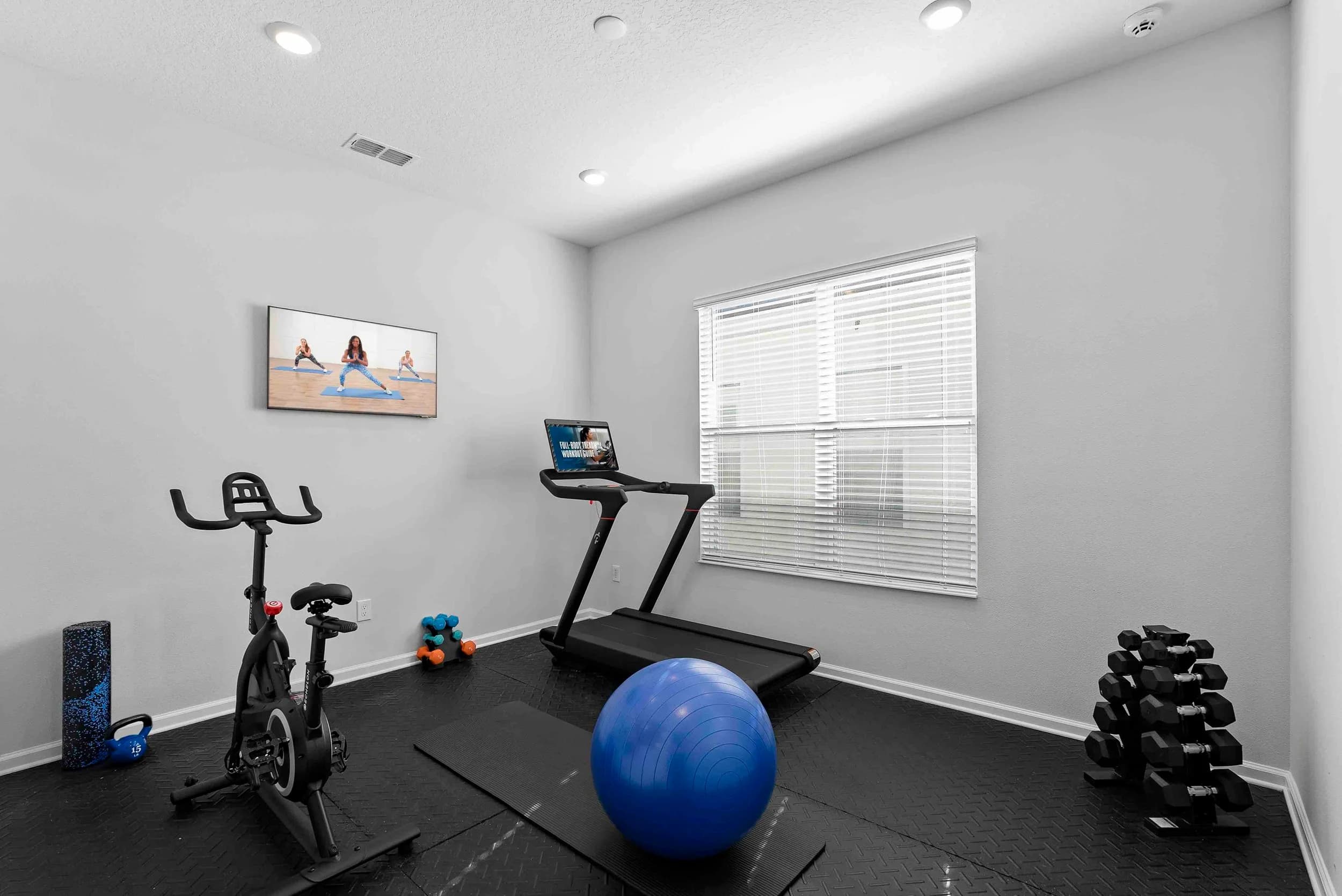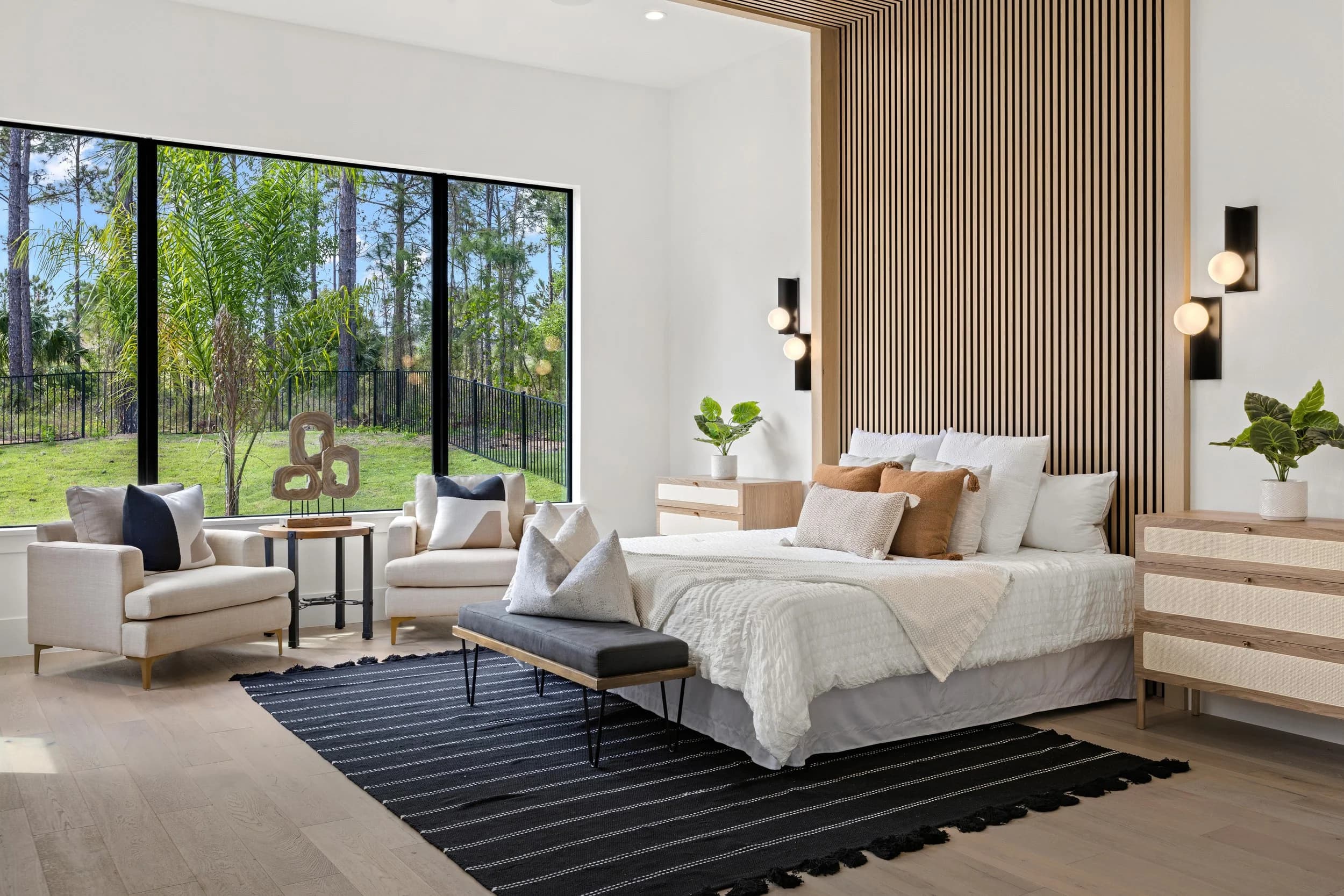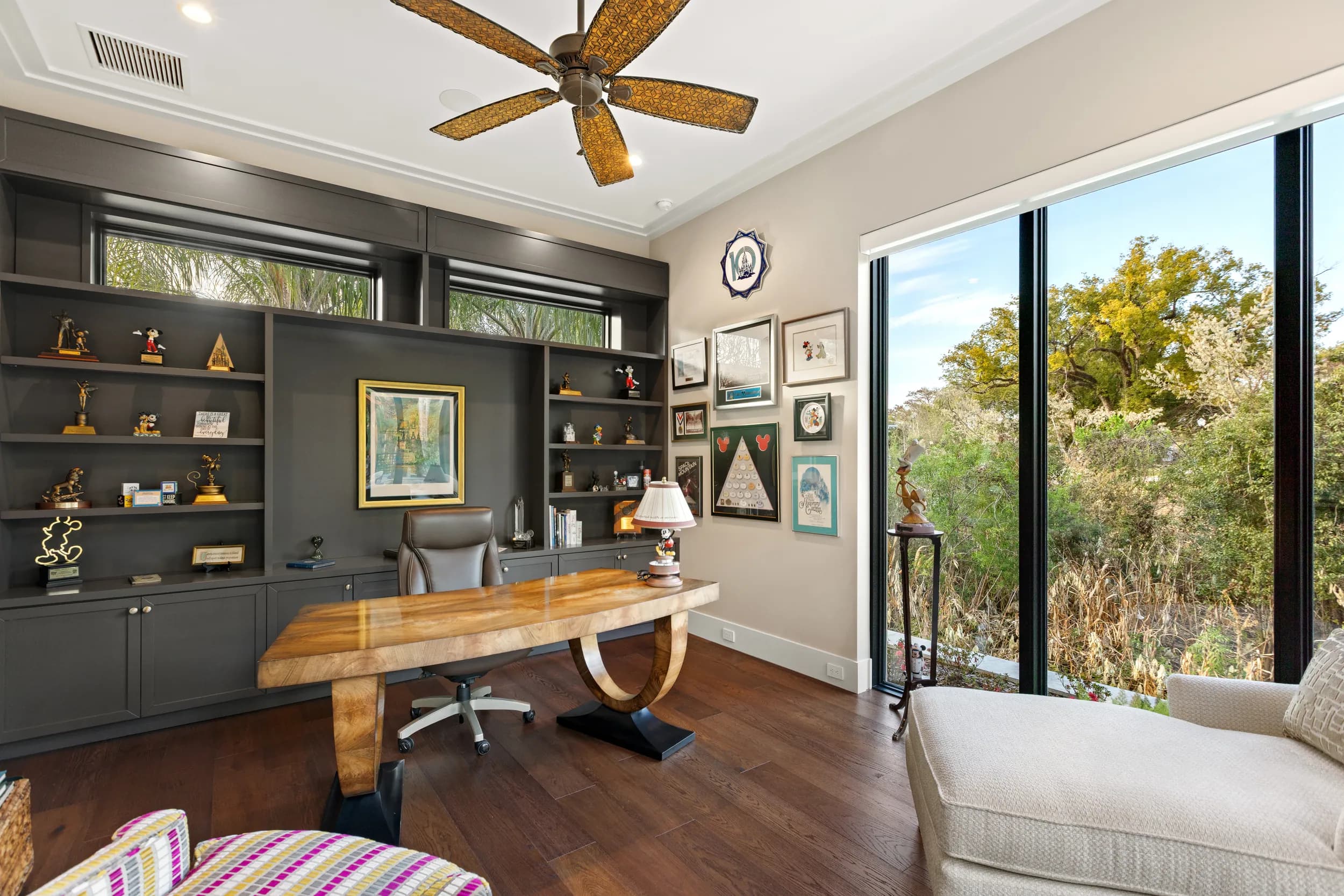
Home offices and flex rooms are on most buyers' wish lists now, but they are some of the hardest rooms to photograph well. A flex room that is part guest room, part storage and part workout space reads as clutter. A home office with two monitors, a tangle of cables and a stack of files reads as someone else's job. Buyers scrolling a listing need to understand in one image what the room is for and picture themselves using it.
This guide is for agents in Orlando, Tampa Bay, Austin and San Antonio preparing listings with an office, den, bonus room or loft that can serve more than one purpose.
Decide what the room is before the shoot
The single most useful prep step is choosing one clear use for the room. Photos cannot explain "it could be an office, a nursery or a gym." They can show one of those things well.
- Match the room to the buyer. In a family home, a dedicated office is usually the strongest choice. In a smaller condo or townhome, a flex room styled as a guest room or den may matter more.
- Look at the floor plan. A room off the entry with French doors reads as an office. A loft at the top of the stairs often works best as a media or play area.
- Let the listing remarks do the rest. Once the photos show one clear use, the description can mention the others. Our post on writing MLS photo captions covers how to label flexible spaces.
Converted garages are a separate case with their own considerations, covered in photographing converted garages as gyms, studios and offices.
Prepping a home office for photos
A working office needs more prep than most rooms because it is full of things the seller uses every day.
- Clear the desk. Leave a laptop (closed), a lamp and one plant or object. Remove paperwork, sticky notes, chargers and extra monitors where possible.
- Hide the cables. Cord clutter under and behind a desk shows up in every wide shot. Bundle or tuck it away.
- Remove personal and work information. Calendars, whiteboards, mail, diplomas with names and anything on a screen should be put away. See what to remove before listing photos for the full privacy checklist.
- Edit the bookshelves. Take about a third of the items off and leave space between groups.
- Turn the chair. A desk chair pushed in neatly, or angled toward the window, looks more inviting than one left pulled back.
Framing offices, dens and flex rooms
These rooms are often smaller than bedrooms and sometimes have unusual shapes. A few framing choices help:
- Show the window and the door. Natural light is a selling point for an office, and the doorway shows how the room connects to the rest of the house.
- Shoot from the doorway or a corner. One wide frame that shows the whole room, then a second angle that shows the desk or main furniture facing the light.
- Keep the camera height natural. A height around the middle of the wall keeps furniture proportions honest, which matters in a small room.
- Do not over-widen. Pushing the lens too wide to make a small office look bigger stretches the furniture and sets up a letdown at the showing.
- Include built-ins. Built-in desks, shelving and closet systems deserve a closer frame of their own.
Lofts, bonus rooms and second living areas
Open lofts and upstairs bonus rooms are common in newer homes across Central Florida and Central Texas. They are often furnished as a catch-all.
- Give the space a clear purpose. A sectional and a TV for a media room, or a small desk area plus seating for a study nook.
- Show how it connects. One frame that includes the stair landing or the railing helps buyers understand where the loft sits in the house.
- Watch the light. Lofts often have one window and a lot of ceiling. Balanced exposure keeps the space from looking dark or blown out.
Listing galleries are delivered within 24 hours, video in 48 to 72 hours. Larger properties take a little longer.
An office or flex room that is clearly staged for one purpose gives buyers an easy answer to "where would I work?" and makes the whole home feel more usable. Ready to book? Call or text (689) 600-2131 or get in touch.