A marina is three businesses on one piece of waterfront: a real estate asset that can be sold or financed, a set of slips and dry racks that have to stay full, and upland space leased to a ship store, a restaurant or a service yard. Each one has a different audience, and each audience looks for different things in the pictures.
This guide is for marina owners, operators and the brokers who represent them in Tampa Bay, Central Florida and around the lakes near Austin. It covers what to photograph for a sale, for slip marketing and for leasing, and how to plan one shoot that feeds all three. For our general approach to these sites, see the post on photographing marinas and waterfront commercial property. This one stays with the ownership side.
What a buyer or lender wants to see in a sale package
An investor reading an offering memorandum is trying to understand the whole operation before a site visit. A sunset frame helps the cover, but the pages inside need pictures that answer questions.
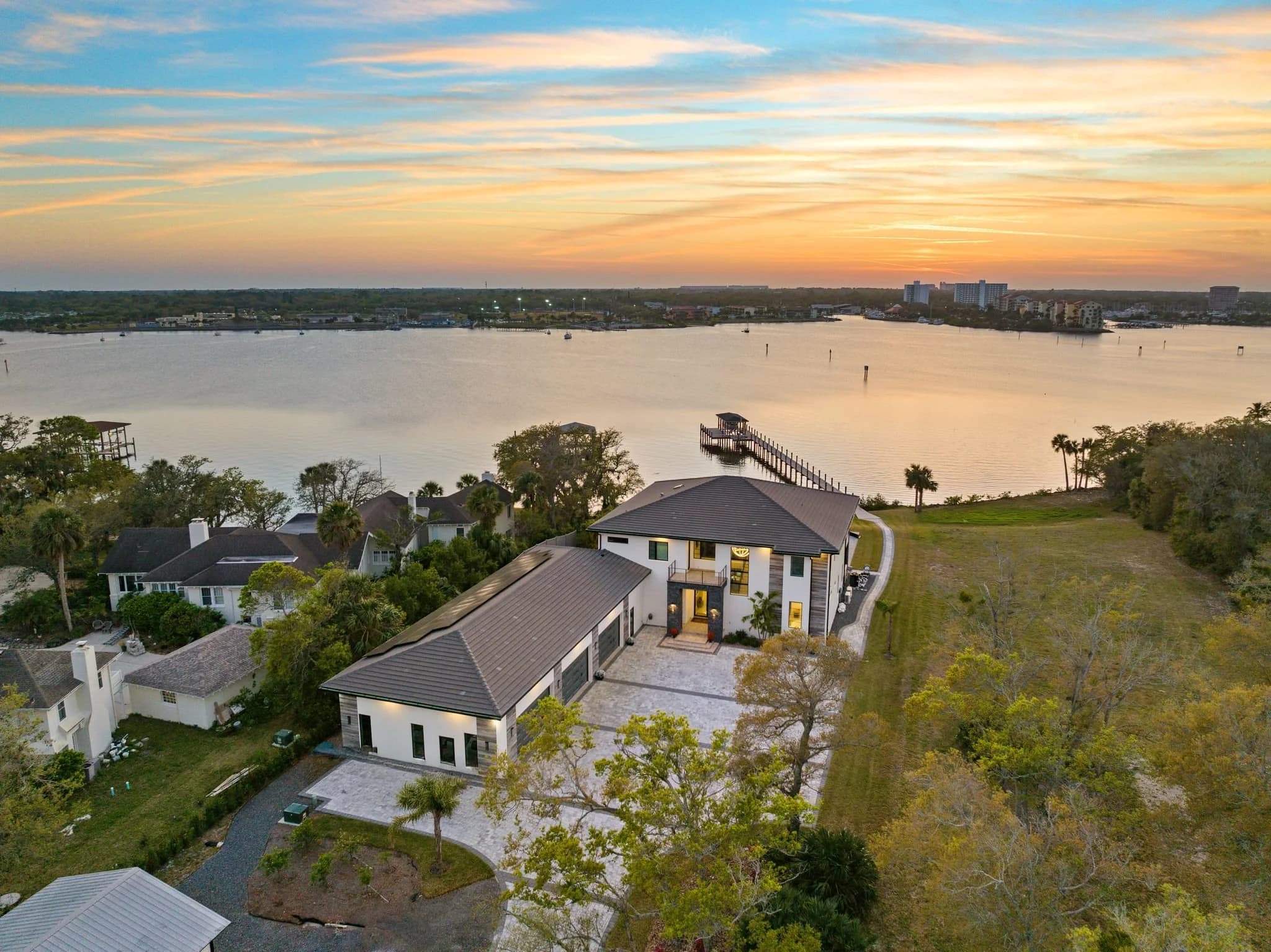
- The basin and its protection. A high aerial showing the full basin, the breakwater or natural shelter, and the route to open water.
- Dock condition. Straight views down each main pier, plus closer frames of decking, pilings, cleats, power pedestals and fire equipment.
- Every revenue area. Wet slips, the dry stack building, fuel dock, pump-out, boat ramp, ship store, service bays, trailer storage, and any restaurant or event space.
- The upland. Parking, entry, signage, restrooms and showers, and any undeveloped land that is part of the parcel.
- Context. The surrounding shoreline, nearby bridges and the road frontage.
Brokers often ask for labeled aerials with parcel lines, docks and access points marked. We explain how those are built in annotated drone aerials for offering memorandums. The figures on the labels come from the owner or broker. The photographer's job is a clean base image that leaves room for them.
Slip marketing: what boaters check before they call
A boater choosing a home slip has a different list. They want to know whether their boat fits, how easy it is to get in and out, and what daily life on the dock is like.
- A view down the fairway that shows its width and the turn into the slips.
- One clear frame of a typical slip in each size range, with the finger pier, pedestal and dock box visible.
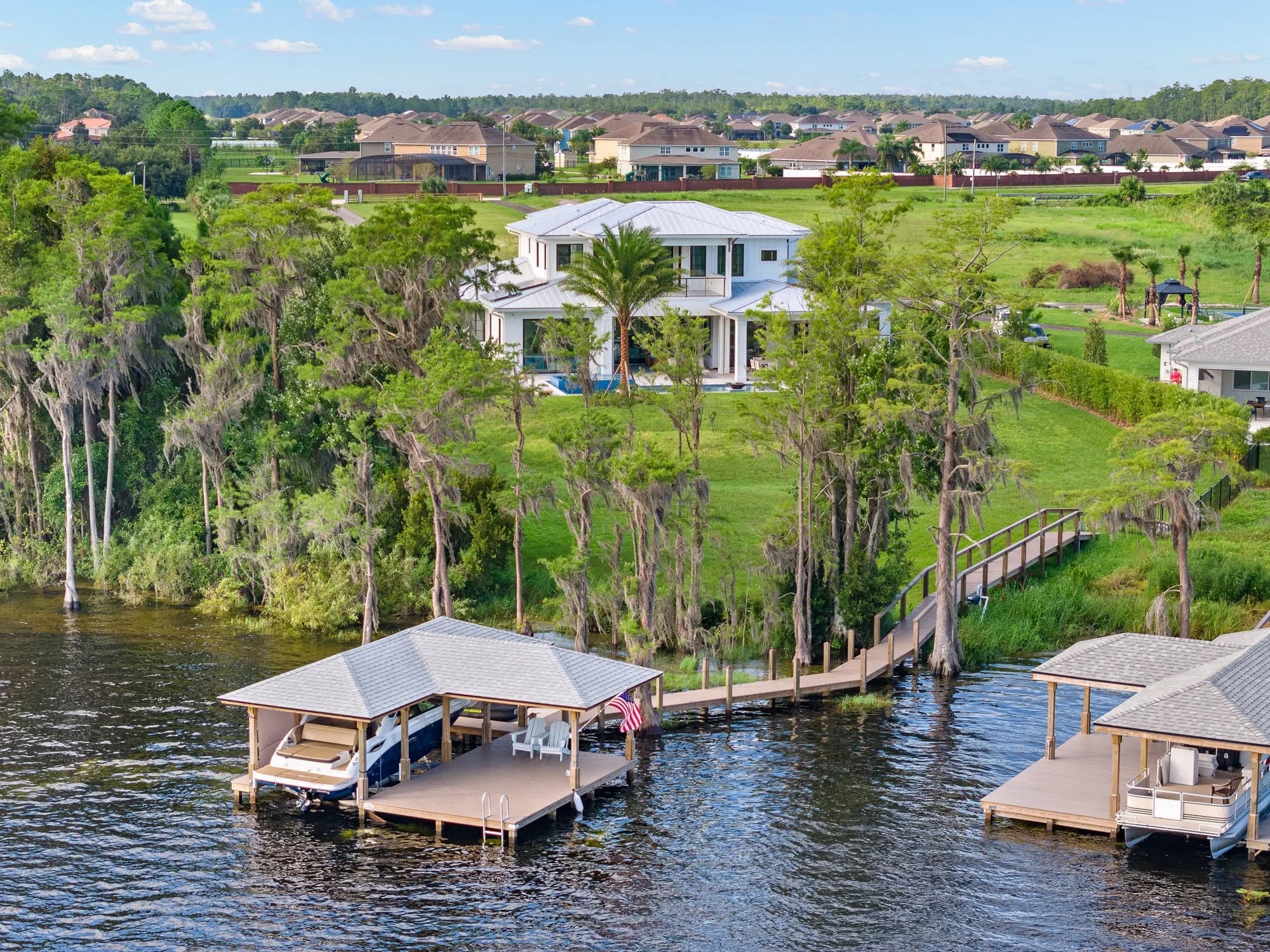
- Covered slips and lifts photographed from the water side, so the clearance reads.
- The fuel dock, pump-out and ramp, shown as easy to approach.
- Restrooms, showers, laundry, the lounge and the ship store, clean and bright.
- The gate, lighting and parking, because security is one of the first things slip holders ask about.
Dry storage needs its own small set: the building, the racks, the forklift launch area and the staging dock. If the property also has trailer or RV storage, the approach in our post on self-storage, RV and boat storage photography applies to that part of the site.
A short video or a 3D tour of the docks and amenities helps seasonal boaters who are choosing a marina from far away. Keep the film simple: arrival, docks, fuel, amenities, the run out to open water.
Leasing the upland space
Restaurant, retail and service tenants look at a marina the way they look at any commercial space, with one addition: the water is the draw. For a vacant restaurant or ship store, photograph the interior empty and clean, the storefront from the parking lot and from the dock, the patio or deck with its view, and the path a customer walks from car or boat to the door.
For a service yard, show the bays, the haul-out equipment, the laydown area and truck access. An aerial that marks the leasable building within the whole property helps a tenant see how boaters and drive-up customers will find them.
Aerials, light and timing on the water
Marinas are drone subjects. A basin is hard to read from the ground, and one good aerial explains it in a second. Flights are made by FAA Part 107 certified pilots, and some waterfronts sit in controlled airspace that needs authorization before the flight, so we check the location when the shoot is booked.
Light matters more on water than almost anywhere else. Low sun early or late in the day keeps glare off the surface and gives the docks shape. Midday sun flattens the water and bleaches white hulls. Wind is the other factor: a calm morning gives reflections, while chop makes a basin look rougher than it is. A dusk set, with dock and pedestal lights on, is worth adding for the cover of a sale package and the top of a slip marketing page.
Occupancy shows in pictures too. For slip marketing, a busy marina looks healthy. For a sale, buyers also want to see the docks themselves, so we plan a mix of full views and frames where the structure is visible.
Planning a shoot at a working marina
A marina does not close for a photo shoot, so planning does most of the work.
- Pick a weekday when traffic at the ramp and fuel dock is light.
- Have dock lines coiled, carts put away, hoses hung and trash emptied the day before.
- Tell slip holders and liveaboards the date, and that the drone is photographing the property, not people.
- Decide in advance whether boat names and registration numbers should be kept out of close frames.
- Arrange a boat and a staff member if water-level views of the docks are on the list.
- Send the photographer a site map with the priorities marked for sale, slips and leasing.
One visit, planned this way, produces a set the owner can use across the offering memorandum, the marina website, listing platforms and leasing flyers. Delivery timing is confirmed at booking. To see how JRP works with brokers and owners, visit our commercial real estate photography page.
Ready to book? Call or text (689) 600-2131 or get in touch.