A marina is a strange property to photograph. It's part real estate, part infrastructure, and part hospitality business, and the photos have to work for a broker's offering memorandum, a lender's file, and the website where boaters shop for a slip. Most marina galleries online do one of those three jobs and fail the other two.
Florida has more marinas than any other state, and the Tampa Bay and Central Florida corridors are thick with them — plus dry stack facilities, boatyards, and waterfront commercial parcels that trade regularly. Here's how the photography actually works on these.
The Site Is the Asset, So Start in the Air
With a house, an aerial is supporting material. With a marina, it's the primary image, because everything a buyer wants to know is legible only from above.
A well-planned aerial set should establish:
- Slip count and configuration — how many, what sizes, fixed or floating, and how the fairways are laid out.
- Occupancy. A full basin photographs as a full basin. This is the first thing an investor looks for and it cannot be faked.
- Water access and channel. The route to open water, any bridges, and the relationship to the inlet or the lake. Air draft and channel depth are deal points, and an aerial makes the geography obvious in a way a paragraph can't.
- Upland acreage. Parking, dry stack buildings, service yard, fuel dock, and — critically — undeveloped land. Upland is where marina value expands.
- Seawall and dock condition. Deterioration, settling, and aging decking read clearly from above and belong in the documentation set whether or not they go in the marketing set.
Two practical notes. Fly at or near high tide when possible, because a low-tide basin shows mud flats and makes the property look shallower than it is. And confirm airspace early — marinas cluster near inlets, bridges, and in the Tampa Bay area frequently sit inside controlled airspace requiring LAANC authorization.
Three Audiences, Three Shot Lists
Decide before the shoot which of these you're buying, because trying to serve all three with one gallery is why marina photography usually disappoints.
- Boaters and slip customers want to picture their boat there. They care about dock width, power pedestals, finger pier length, fuel, pump-out, the ship's store, restrooms and showers, and whether the place looks maintained. Shoot this at eye level, on a clear day, with clean docks.
- Investors and brokers want the asset. Slip mix, dry stack racks and forklift, service bays, the restaurant or retail component, parking count, and expansion land. This set is systematic and thorough rather than pretty.
- Lenders and appraisers want coverage. Every structure, every dock run, the fuel system, the seawall, and the boundaries — dated, complete, and organized.
A slip-marketing gallery might be eighteen images. A disposition package is more often a hundred and twenty plus aerials, organized by area.
Water and Light Are Working Against You
A few things make waterfront commercial genuinely harder to shoot than an inland building.
- Glare off the water will flatten a midday shot completely. Early morning and the hour before sunset are not a stylistic preference here, they're a technical requirement. A polarizer helps, but timing helps more.
- The direction of the sun relative to the basin matters more than at any other property type. A west-facing basin is an evening shoot. An east-facing one is a morning shoot. Getting this backwards means shooting into reflected glare all day.
- Wind changes the water surface and the schedule. A choppy basin looks unappealing and makes drone work harder. Calm mornings are the window.
- Boats move. The vessel that anchors your best composition may be gone in an hour. Shoot the hero angles first.
- Salt and spray are hard on equipment, which is a photographer's problem, but it's also why marina work takes longer per frame than a strip center.
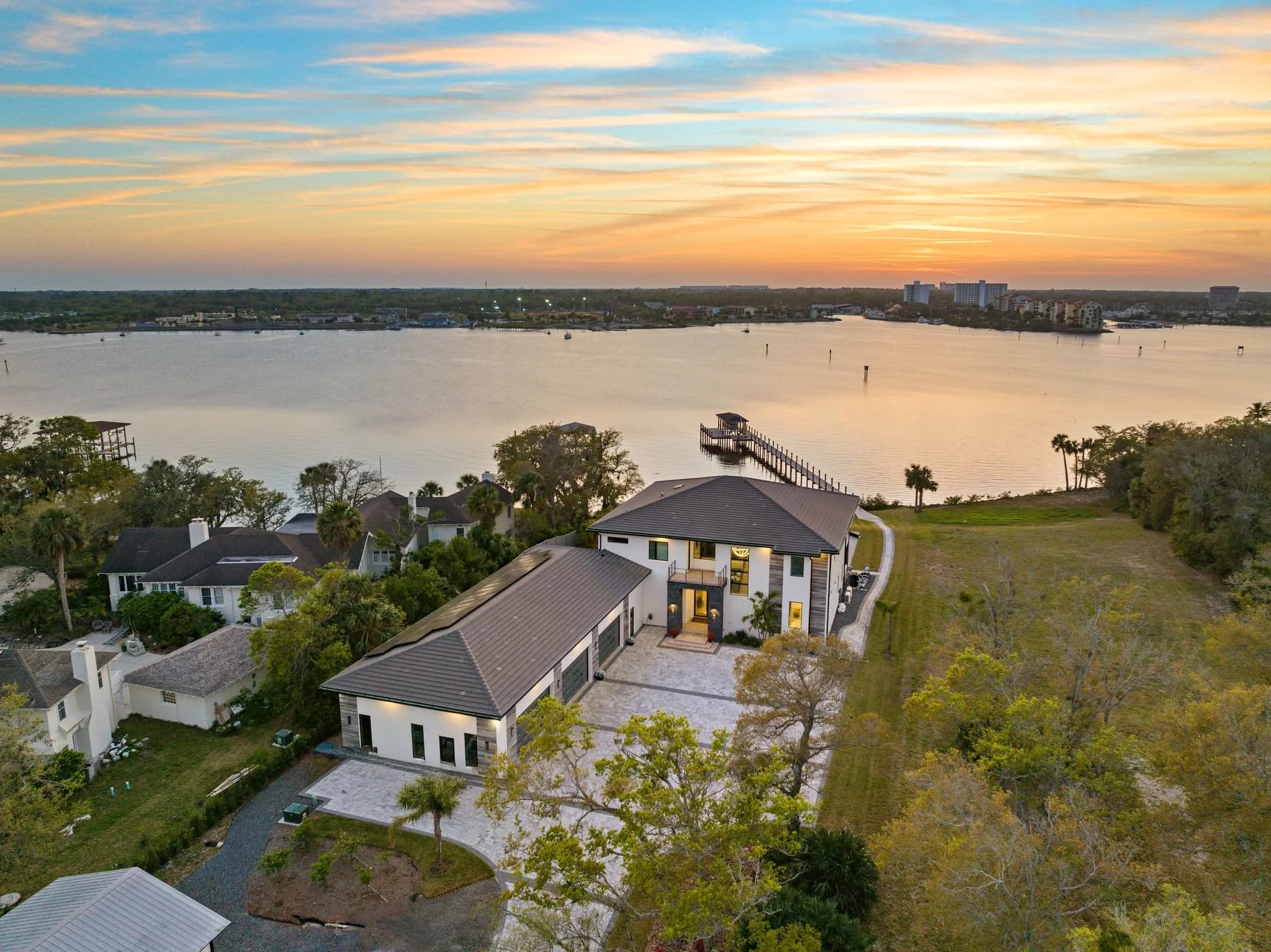
Twilight deserves special mention. A marina at dusk with dock lighting on and boats lit is one of the strongest images in commercial real estate photography, and it's the frame that ends up on the cover of the offering memorandum. It's worth the extra visit.
Working Around an Operating Business
Marinas are busy, and the photography has to fit around that rather than the reverse.
- Weekday mornings are the window. Weekends mean launch traffic, crowded parking, and constant movement through every frame.
- Blur legible vessel names and registration numbers in anything published. Boat owners are particular about this, and the marina operator has a relationship to protect.
- Coordinate with the harbormaster before the shoot, not on arrival. They know which docks are accessible, which slips are vacant, and what's scheduled in the service yard.
- Ask about the fuel dock and the yard. These are operating industrial areas with real safety rules, and access needs to be arranged.
- Watch what's visible in the background of a hero shot — a shrink-wrapped hull on stands or a dumpster behind the ship's store will pull the eye every time.
What to Ask For at Delivery
Waterfront commercial imagery gets used in more formats than almost anything else:
- A full-resolution aerial site overview, which becomes the cover of every flyer, OM, and lender package.
- An organized investor folder sorted by area — docks, upland, structures, service, and site.
- Web-sized sets for the marina's own site, Google Business Profile, and the slip-listing platforms where boaters search.
- Vertical crops for social and paid campaigns, particularly if there's a restaurant or event component.
- A dated Matterport or scan of the ship's store, office, and any restaurant or event space if the property is being marketed for sale. Out-of-state buyers on these assets are common.
Marinas and waterfront commercial parcels are among the most photogenic properties anyone shoots, and among the most often shot badly — usually from the parking lot, at noon, in eleven frames. The site deserves better, and the numbers behind it are easier to defend when the imagery is complete.
Ready to book? Get in touch or call us — we serve Orlando, Tampa Bay, and Central Texas.