Every November the same question comes up on shoot day: the tree is up, the wreath is on the door, and the seller would rather not undo two days of work. The short answer is to take it down. The useful answer is knowing the handful of cases where that is wrong.
Decorated Photos Put a Date Stamp on the Listing
A holiday photo tells a buyer exactly when it was taken. That is fine for the first few weeks and increasingly damaging after that.
Buyers scroll galleries looking for reasons to skip. A December tree in a listing viewed in February answers a question they had not consciously asked: how long has this been sitting? Days on market is already visible on most portals, but decorated photos make it feel longer than the number does. The listing reads as stale even when it is not, and the assumption that follows — something must be wrong with it — is hard to unwind.
The problem compounds if the home does not sell in the season. You then choose between running dated photos into spring or paying for a reshoot in March. A secondary issue: decorations physically cover the house. A tree occupies the corner a buyer is trying to measure, garland hides a stair railing, a mantel display obscures the fireplace surround.
The Default: Clear It Before the Camera Comes Out
For most listings in Orlando, Tampa Bay, and the Texas markets the guidance is simple — decorations come down before the shoot, the same way personal photos and countertop clutter do. Put it in the prep list you send when the shoot is booked, not on the morning of. Sellers accept almost any instruction they receive a week ahead and resent the same one delivered at the door.
What to remove:
The tree and anything freestanding, which take the most floor space and read the most seasonally.
Wreaths, garland, door decor, and mantel displays.
Exterior lights, inflatables, and yard displays, including anything visible in a drone frame.
Seasonal linens, towels, and dishware — red-and-green kitchen towels show up in every counter shot.
Storage boxes staged in the garage, where the decor lands and where buyers do look.
Three Exceptions Worth Making
The rule has real exceptions, and applying it blindly costs listings.
A home going live in-season with a realistic in-season sale. A well-priced home in a moving price band, listed the first week of December, may be under contract by mid-January. If the seller and agent accept that risk, tasteful decor is not a liability across a six-week window. Understand you are betting on the timeline.
Luxury homes where the decor is genuinely architectural. Some high-end homes are decorated by a designer to the scale of the house — a fifteen-foot tree in a two-story foyer, integrated lighting on a stone facade. When the decor reinforces the architecture instead of sitting on top of it, it raises the ceiling of the photography. The test: would this run in a design magazine?
Short-term and vacation rental listings marketing a seasonal stay. Different product entirely. Rentals near Orlando's attraction corridor and the Gulf beaches book on emotional appeal, and a decorated great room is a direct sales asset for holiday-week bookings. Keep those in a seasonal set that swaps in and out, with the clean set as the year-round default.
The Middle Ground That Costs Almost Nothing
For most homes, the answer is not either-or. It is sequence.
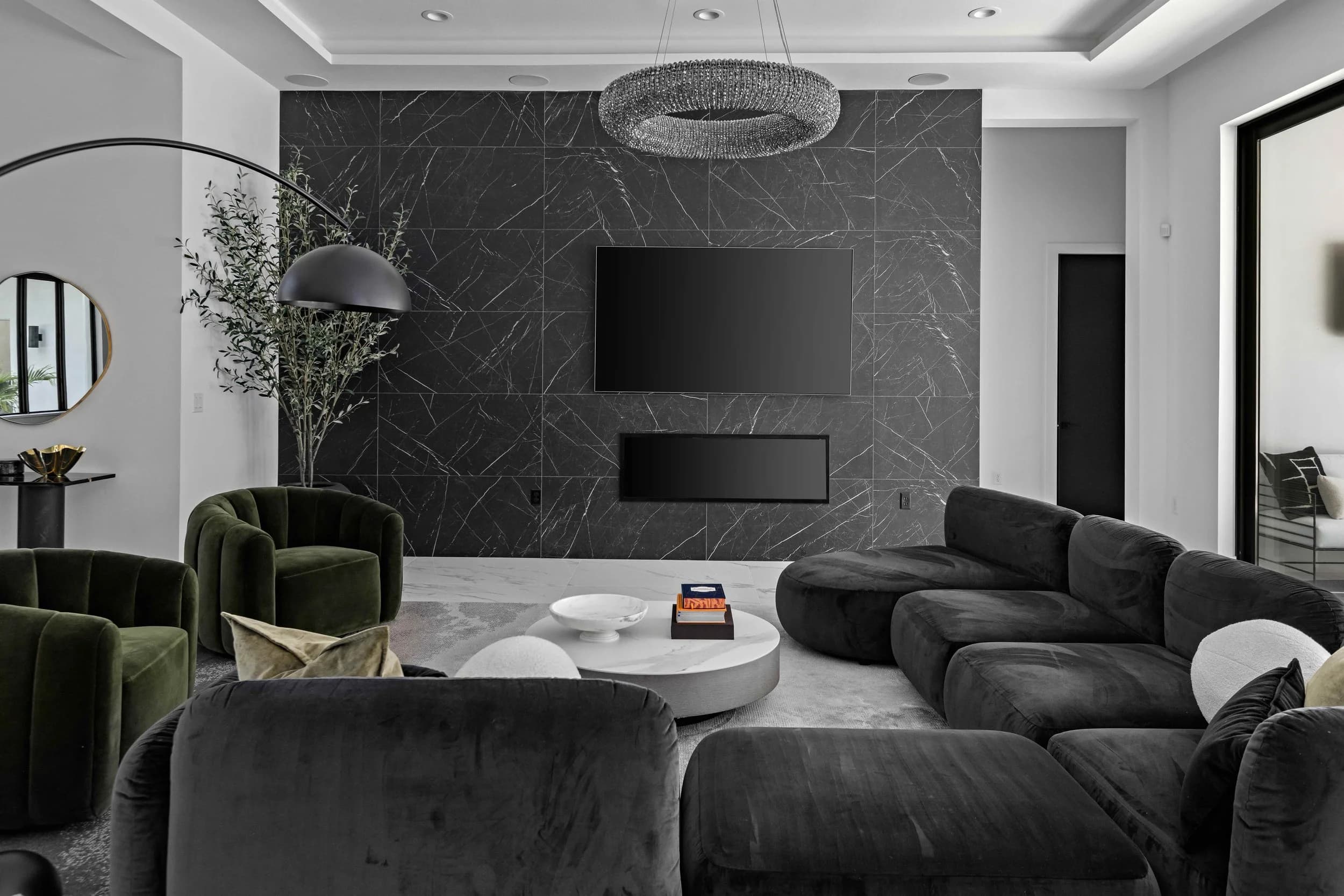
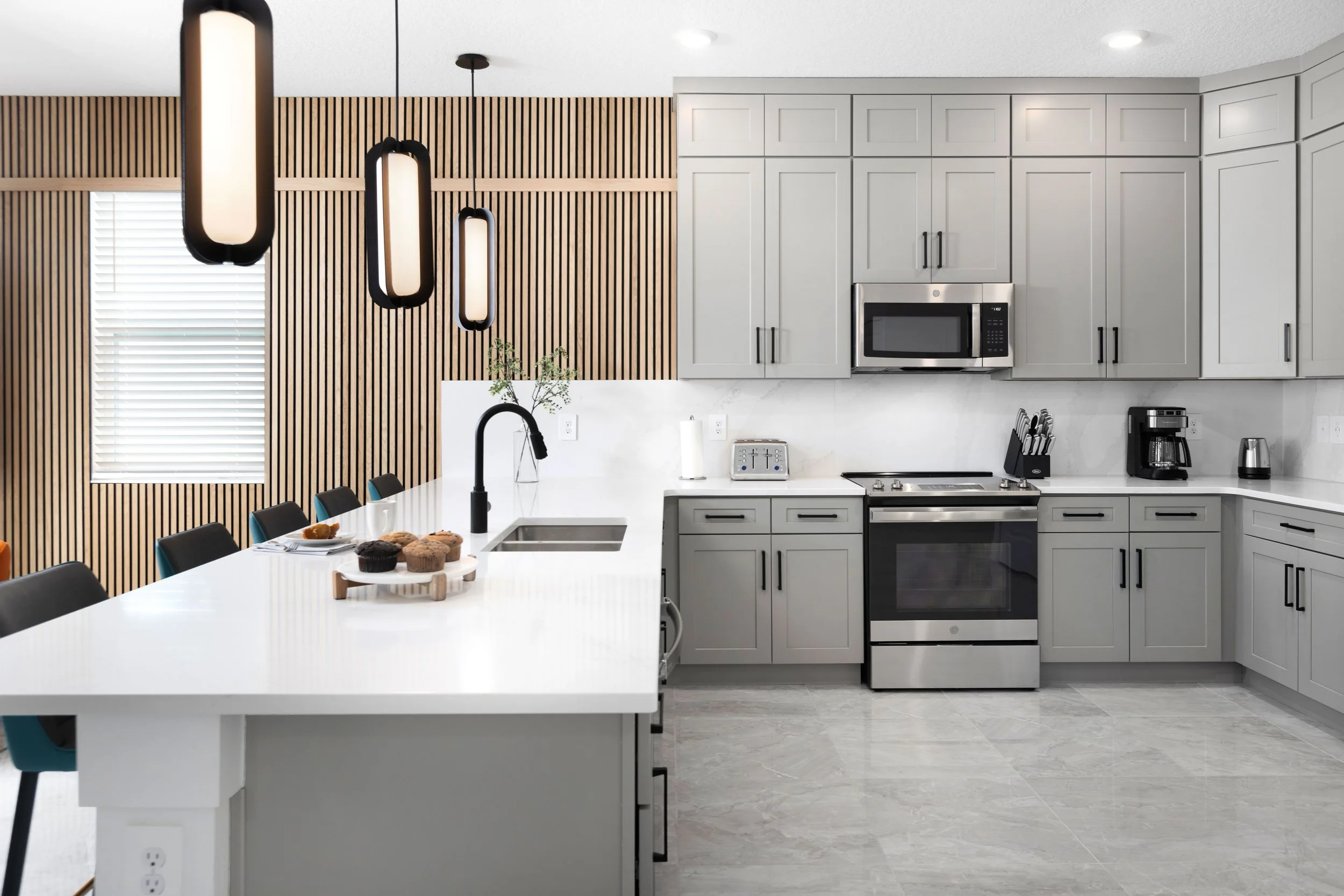
Shoot the full listing gallery clean. Every room, every exterior, the drone work, the video and 3D tour. This is the set that goes on the MLS and the portals, and it stays usable in March.
Let the seller put a small amount back up — the tree, the mantel, the front door — while the crew is still there. Twenty minutes for pieces already assembled.
Shoot a short bonus set. Six to ten frames, not a second gallery. The living room with the tree, the entry, a seasonal kitchen detail, an exterior.
That bonus set goes to social, the just-listed email, and an open house invitation. It never touches the MLS. The seller feels heard, the agent gets seasonal content that performs well in December, and the listing gallery stays clean.
Florida and Texas Specifics
Warm-climate markets have their own version of this problem.
Palms and lights. Wrapped palm trunks and lit palm crowns are unmistakably seasonal and unmistakably regional. They photograph well, but keep them out of the daytime exterior that serves as the hero image, where they will look odd in April.
Twilight exteriors carry lighting better than daytime shots do. A twilight frame is already about light — landscape uplighting, warm windows, a lit pool deck. Restrained white lighting on the roofline or entry can read as architectural six weeks later. Colored lights, projections, and anything animated do not survive that test.
Snowbird timing. Central Florida and the Gulf coast see a real influx of seasonal buyers from roughly November through March. That argues for listing in-season rather than waiting for spring, which makes clean, non-dated photography more valuable rather than less — those photos have to hold up across the whole seasonal buying window.
Model homes. Builders decorating models for the season, in Orlando or across the Austin and Dallas markets, should keep a clean set on file. Model interiors get reused in the sales center, brochures, and the community site, and seasonal images limit where they can run.
When the Seller Won't Take It Down
Sometimes the answer is no. It is their home, and there are reasons — a gathering that weekend, a physical limitation, a tree that took a day to assemble.
Work the problem rather than the person. Shoot the undecorated rooms first and get complete coverage. In decorated rooms, choose angles that minimize the decor — frame away from the tree, shoot the kitchen and primary suite thoroughly since those rarely have decorations, and find exterior angles where the yard display is out of frame. Ask for the smallest concessions specifically: the door wreath and the mantel take five minutes and appear in the most frames.
Then put the tradeoff in writing to the agent — the gallery is seasonal, a reshoot should be budgeted if the home is still active in January, and you will hold the slot. Agents who see that timeline written out often go back to the seller and get a different answer.
Ready to book? Get in touch or call us — we serve Orlando, Tampa Bay, and Central Texas.