Texas listings do not photograph the same way Florida listings do. The light is harsher, the lots are bigger, and the architecture asks different questions of a camera. Here is what changes when you shoot in Austin, San Antonio, and Dallas.
The Light Is the First Difference
Central Texas sun is high, hard, and relentless for most of the year. A Florida shoot often benefits from bright overcast; in Texas, cloudless skies are the default and shadows are sharp-edged. The practical consequences:
Front elevations need the right hour. A west-facing facade shot at 10 a.m. is a wall of shadow. The same house at 5 p.m. is glowing. Scheduling around sun orientation matters more here than almost anywhere else we work.
Contrast is extreme. The gap between a shaded porch and a sunlit driveway can exceed what a single exposure holds, which makes bracketing or flash non-negotiable for good exteriors.
Summer heat is a real scheduling factor. Afternoon shoots in July and August in San Antonio or Dallas are hard on equipment and hard on anyone staging a home. Mornings win.
Lot Size Changes the Shot List
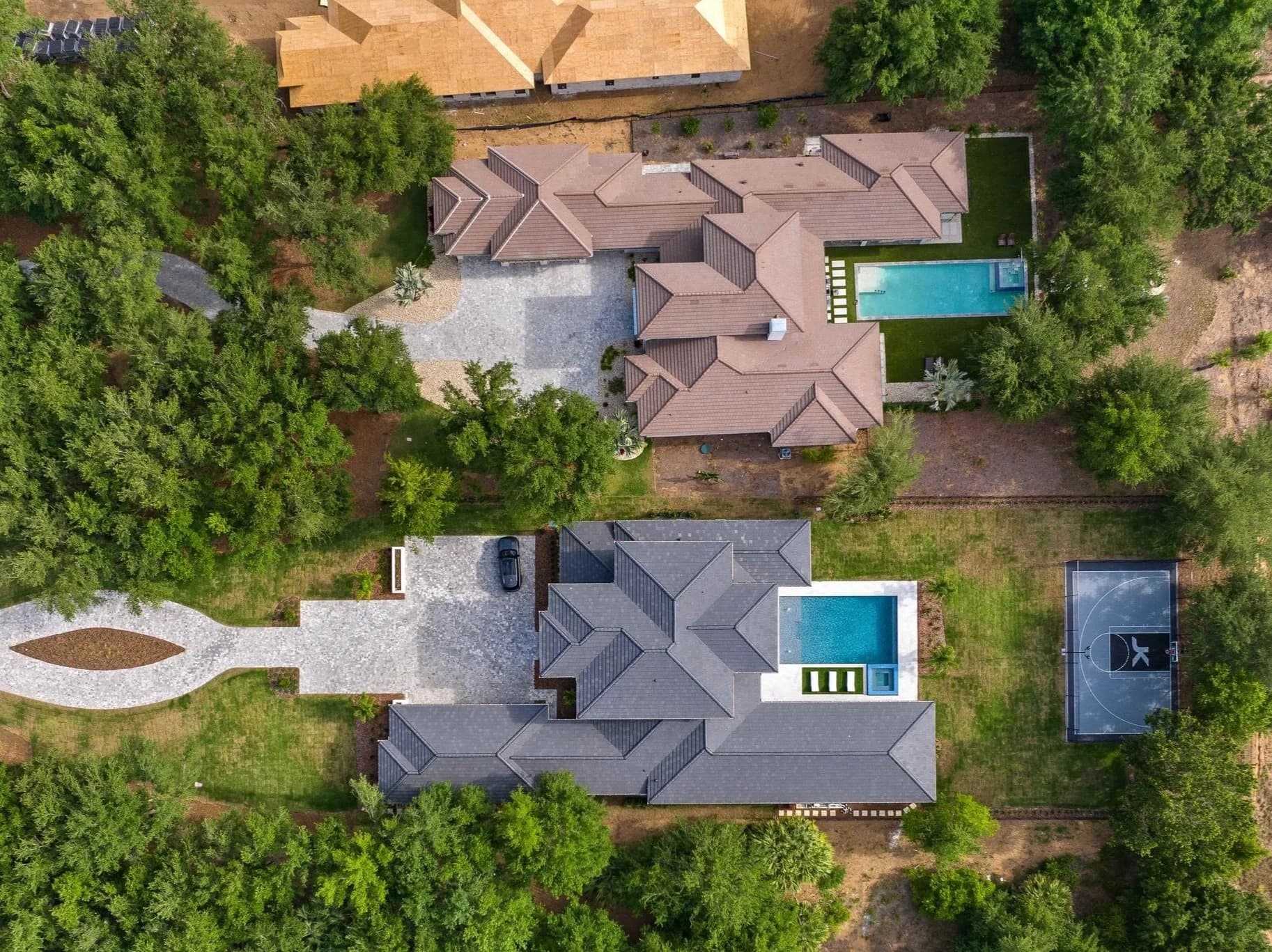
Suburban Austin and the areas outside San Antonio and Dallas include a lot of acreage: half-acre and one-acre lots, ranchettes, and true rural parcels with barns, shops, and outbuildings. Larger properties need a different gallery structure:
An establishing aerial that shows the full property boundary and how the house sits on the land.
Ground-level shots of each structure — shop, barn, guest house, covered parking — since these are frequently the reason a buyer chose that listing.
Access and approach photos. Gated entries, long drives, and road frontage are genuine value drivers on rural Texas listings.
Land features. Tree cover, water, pasture, and fencing all deserve dedicated frames.
A twelve-photo gallery that works for an 1,800-square-foot suburban home will badly undersell a five-acre property with a shop.
Architecture Buyers Expect to See
Central Texas has its own visual vocabulary, and buyers scan for it:
Limestone and stone facades, which need side light to show texture. Flat frontal light makes stone look like painted drywall.
Metal roofs, common on Hill Country and ranch-style builds, which reflect sky and blow out easily if exposure is not controlled.
Deep covered porches and outdoor living, which are central to how Texas homes are marketed and need interior-quality treatment, not a quick snapshot.
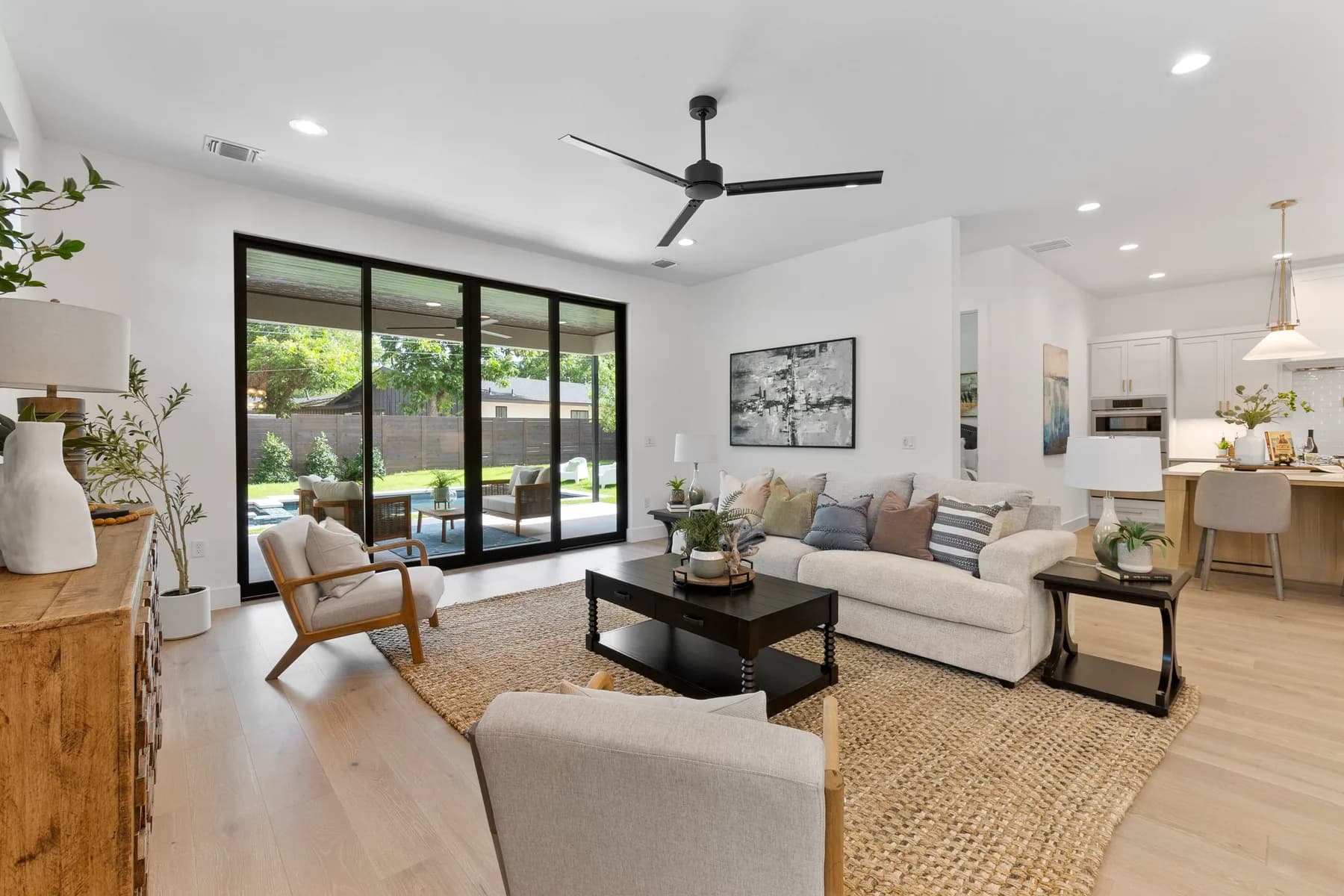
Open-concept great rooms with high ceilings, which reward vertical framing and careful lens choice — wide, but not so wide the room distorts.
Xeriscaped and native-plant landscaping, which photographs best in warmer, lower light.
Drone Rules Are Not Uniform
Every drone flight for a listing is commercial work and requires an FAA Part 107 certificated pilot, in Texas the same as in Florida. But the airspace picture differs by metro:
The Dallas–Fort Worth area is dense with controlled airspace between DFW, Love Field, Addison, and multiple regional fields. Many neighborhoods require LAANC authorization before takeoff.
Austin-Bergstrom shapes airspace across a wide arc of the metro east and south sides.
San Antonio has significant military airspace — Randolph, Lackland, and Kelly all affect what can be flown and where.
The practical takeaway for agents: ask your photographer whether they hold a current Part 107 and how they handle authorization. A pilot who cannot answer that quickly is a liability on your listing, not an asset.
What Does Not Change
For all the differences, the fundamentals travel:
Buyers still decide in seconds based on the lead photo.
Kitchens and primary bathrooms still carry disproportionate weight.
Twilight exteriors still outperform daytime exteriors as a hero image.
Floor plans and 3D tours still cut down on unqualified showings, and they matter even more when buyers are relocating from out of state.
Clutter still reads as clutter, and prep still beats editing.
Relocation Buyers Are the Common Thread
The strongest link between our Florida and Texas markets is the relocation buyer. In Orlando and Tampa it is often out-of-state retirees and second-home buyers; in Austin, San Antonio, and Dallas it is frequently job relocations and buyers moving in from higher-cost metros.
Both groups shop the same way. They shortlist remotely, they rely heavily on 3D tours and floor plans, and they will not fly in for a home that photographed poorly. That makes complete media — full gallery, aerials, floor plan, and a walkthrough or 3D tour — the single highest-leverage thing you can put on a listing in either state.
Booking in Central Texas
We shoot the Austin, San Antonio, and Dallas metros alongside our Florida markets, with the same deliverables and the same turnaround standards. If you are an agent or builder working across both regions, that consistency is worth something: one point of contact, one style, one set of expectations.
Ready to book? Get in touch or call us — we serve Orlando, Tampa Bay, and Central Texas.