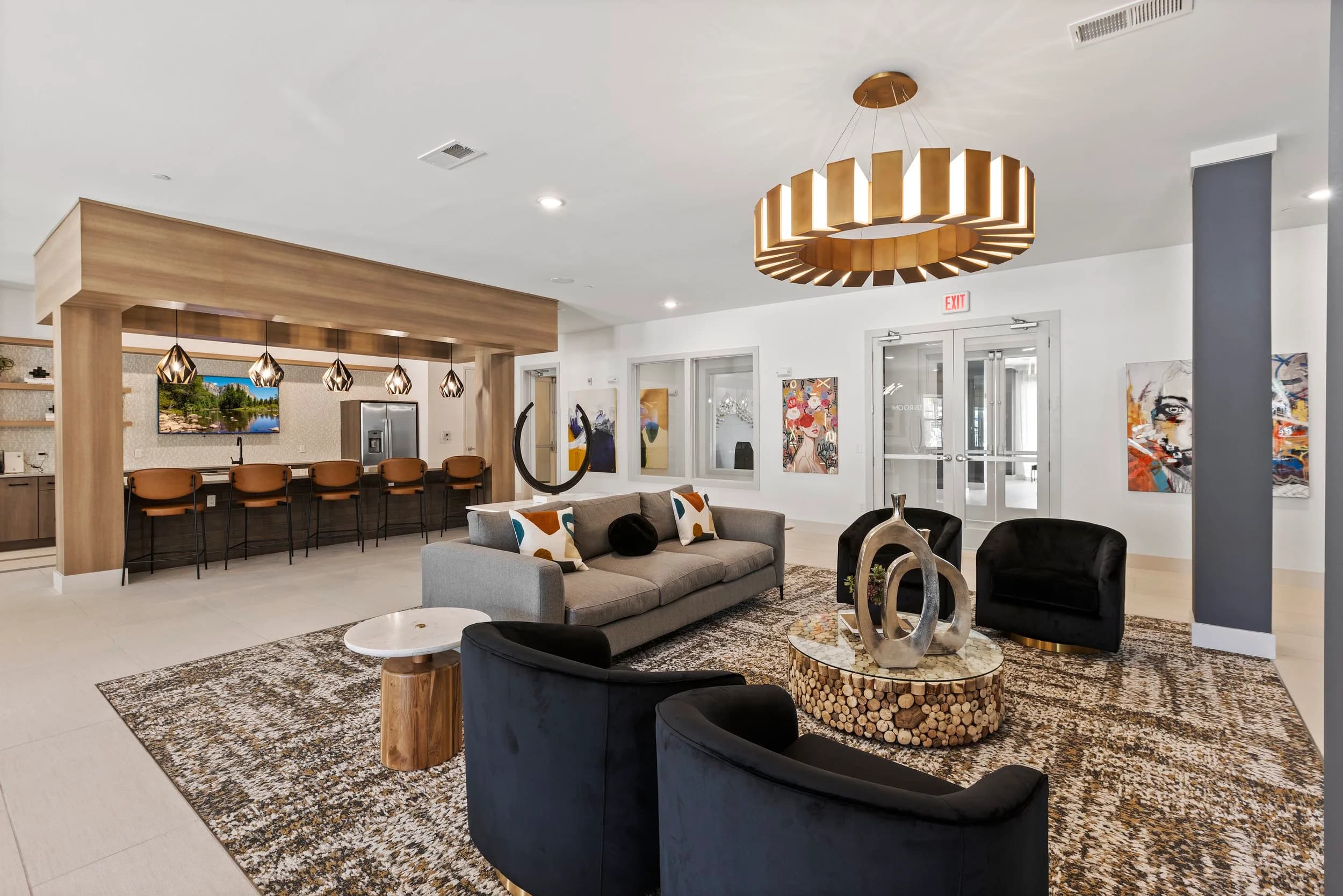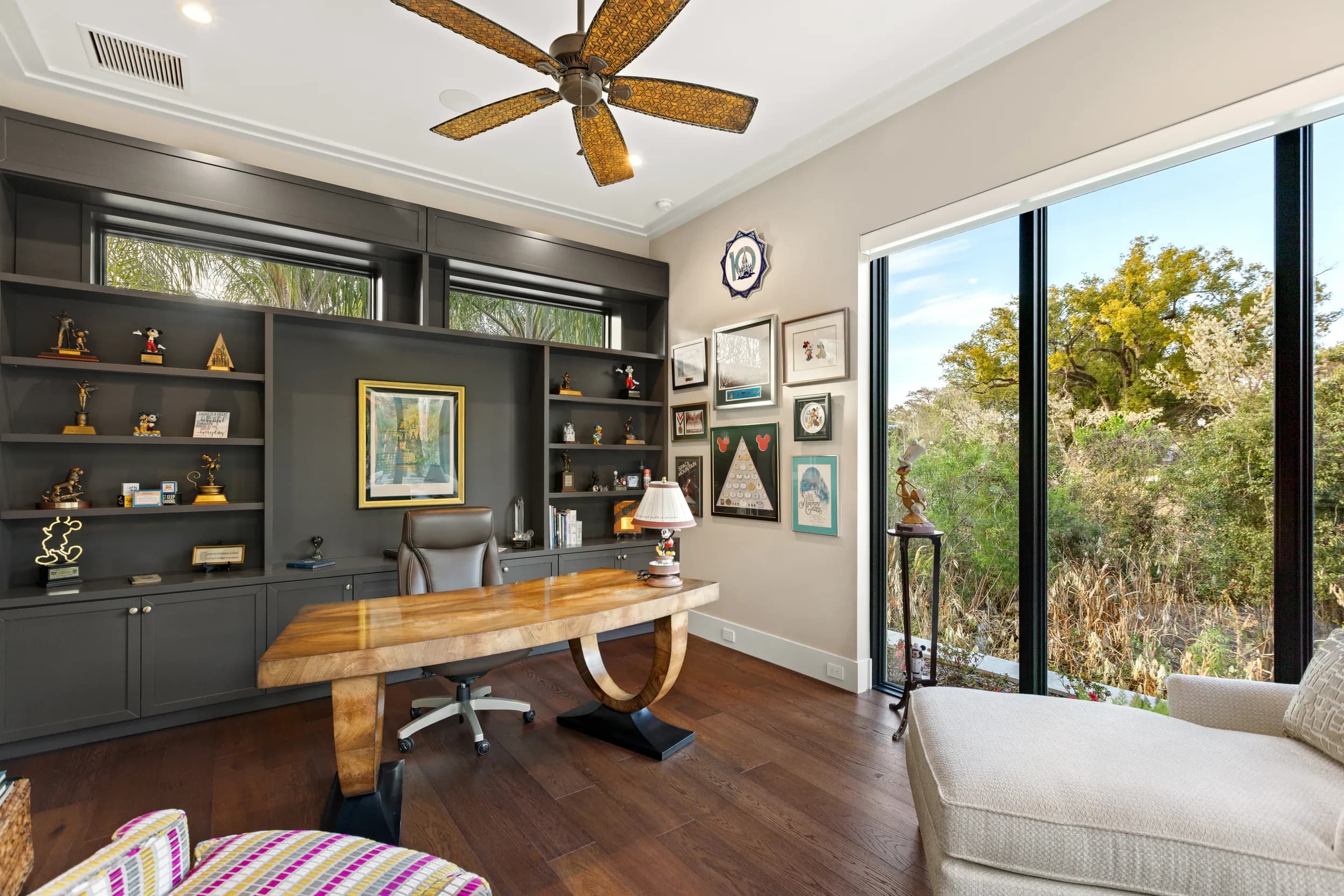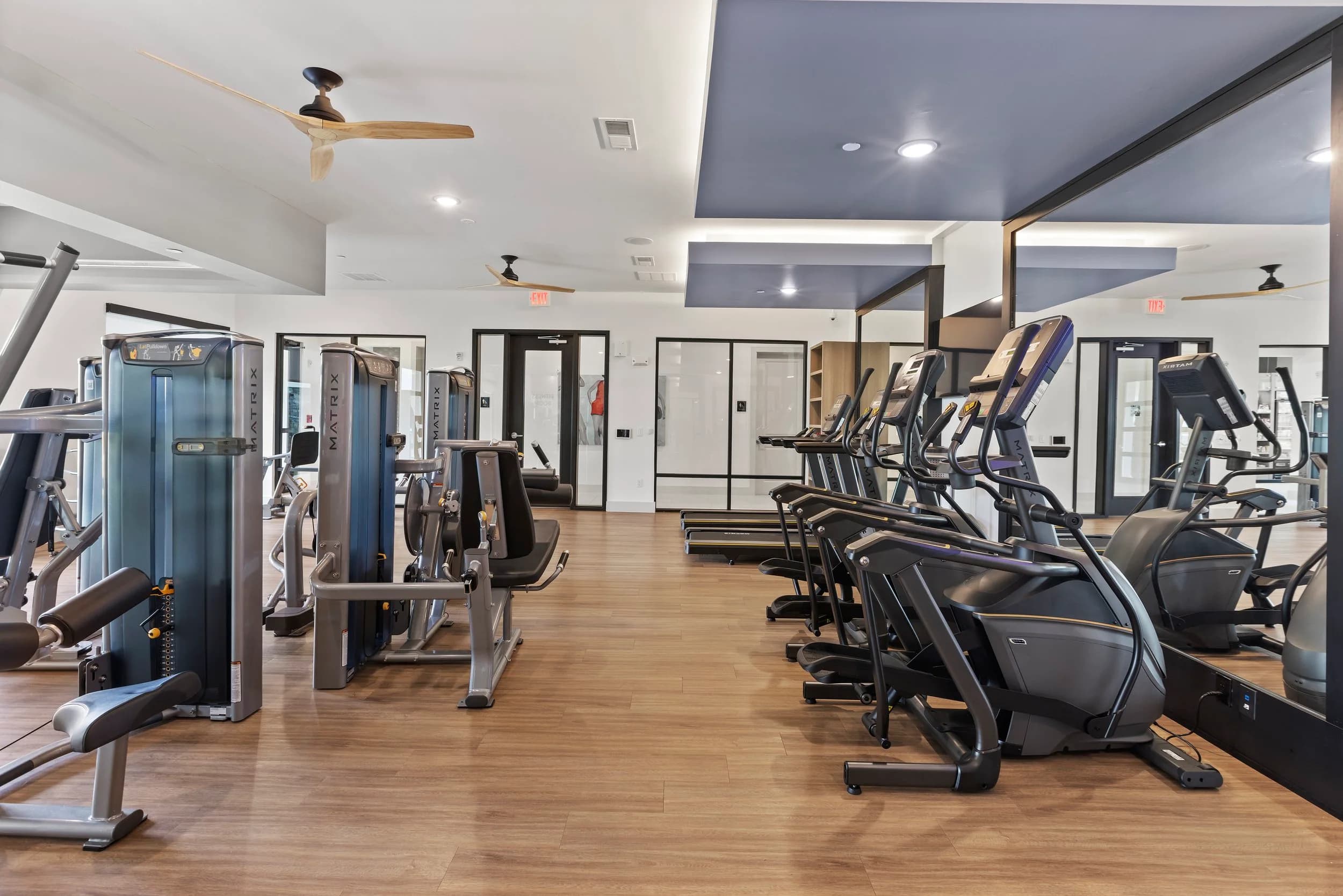
A boutique fitness studio, a salon suite, or a small retail bay is one of the harder assignments in commercial photography, and almost nobody expects that. The space is tight, the ceiling is low, half the walls are mirrored, and the thing the tenant is proudest of — the energy of a full class or a busy Saturday — is not visible in an empty room.
These spaces come up constantly in Orlando, Tampa Bay, and across Central Florida, and in Austin and San Antonio too. Sometimes the assignment is a lease listing for a broker; sometimes it is brand photography for the business inside. Those are two different galleries, and the most common mistake is shooting one and handing it over as the other.
A Small Commercial Space Is Harder Than a Large One
In a warehouse or a full-floor office, the photographer's problem is filling the frame with something interesting. In a small studio, the problem is having anywhere to stand. Most of these spaces are a single rectangle with one entrance, so the only wide composition available is from the doorway — and if the door opens into a corner, even that is compromised.
A few structural realities drive almost every decision:
- Low or exposed ceilings. Ductwork, track lighting, and sprinkler heads sit close to the lens and crowd the top of the frame.
- No establishing shot. There is no vantage point that shows the whole space honestly, so the gallery has to be built from overlapping partial views instead of one hero interior.
- Mixed light sources. Warm accent lighting, cool overheads, a glowing sign, and daylight through a storefront all land in the same frame and fight each other for white balance.
- Vertical distortion. Shooting wide from close range in a tight room is exactly the situation that makes walls appear to lean, which is a separate problem from simply using too wide a lens.
The fix is not a wider lens. It is more frames, each doing one job. A tight room photographed in six honest compositions reads better than the same room forced into three distorted ones — the same logic behind photographing small homes without distorting them, applied to a commercial tenant.
Mirrors, Glass, and Everything Reflective
Fitness studios and salons are built out of reflective surfaces. A full mirror wall is the defining feature of both, and it is also the single thing most likely to ruin a frame. Every camera position has to be checked against what the mirror is going to show — the photographer, the light stand, the open storage closet behind the shooting position, the parking lot through the front window.
Salons add a second layer of it: styling stations with individual mirrors, glass shelving, chrome fixtures, and polished floors, all at different angles. There is rarely one position that clears all of them at once, so the practical approach is to shoot in sections and accept that composition is dictated by the reflections rather than by the prettiest angle. Our guide to mirrors, reflections, and the photographer in the frame covers the technique; in a small tenant space the issue is unavoidable rather than occasional.
Equipment and Product Walls Read as Clutter
A rack of dumbbells, a wall of color tubes, a shelf of retail product, or a row of cardio machines is inventory to the operator and visual noise to a viewer. None of it should be removed — it is the business — but it does need to be ordered before the camera comes out.
What actually helps:
- Align equipment to the room's lines. Machines squared to the wall read as intentional; machines at slightly different angles read as abandoned.
- Consolidate cords, chargers, and power strips out of frame or behind equipment.
- Face product labels forward on one or two shelves rather than all of them.
- Clear the front desk to the two or three items that belong there.
- Move personal belongings, cleaning supplies, and open boxes to the back room.
Thirty minutes of this before the shoot changes the result more than any amount of editing afterward.
Leasing Assets and Brand Assets Are Two Galleries
A broker marketing the space wants it to read as a container: square footage, ceiling height, storefront visibility, restroom and back-of-house layout, parking, and signage position. The current tenant's branding is a distraction, and sometimes has to be minimized so the next tenant can picture their own business there.
The operator marketing their business wants the opposite — branding front and center, the atmosphere warm, the buildout celebrated, and images sized for a website, booking platform, and social profile. Those are different compositions, a different shot count, and often a different time of day.
When both are needed, it is worth saying so up front so the session is planned as two passes rather than one compromised set. The same split shows up in restaurant and retail space photography and in medical and dental office photography, where the leasing view and the customer-facing view rarely overlap.
Scheduling Around Classes, Clients, and Appointments
These businesses run on appointments, and the space is almost never empty while the doors are open. A studio with back-to-back classes may only have a clean twenty-minute window between them. A salon booked solid has no window at all until closing.
The practical options are to shoot before opening, after closing, or on a scheduled closed day. If people are going to appear in frame, written permission from everyone visible should be handled before the session. If the goal is genuine atmosphere with clients present, that is a separate kind of session and needs to be planned deliberately rather than squeezed between appointments. Scope and timing for either approach are confirmed at booking.
Small tenant spaces reward preparation more than almost any other commercial assignment. Decide first whether the images are for leasing or for the brand, clear the surfaces, and know when the room will actually be empty. Ready to book? Call or text (689) 600-2131 or get in touch.