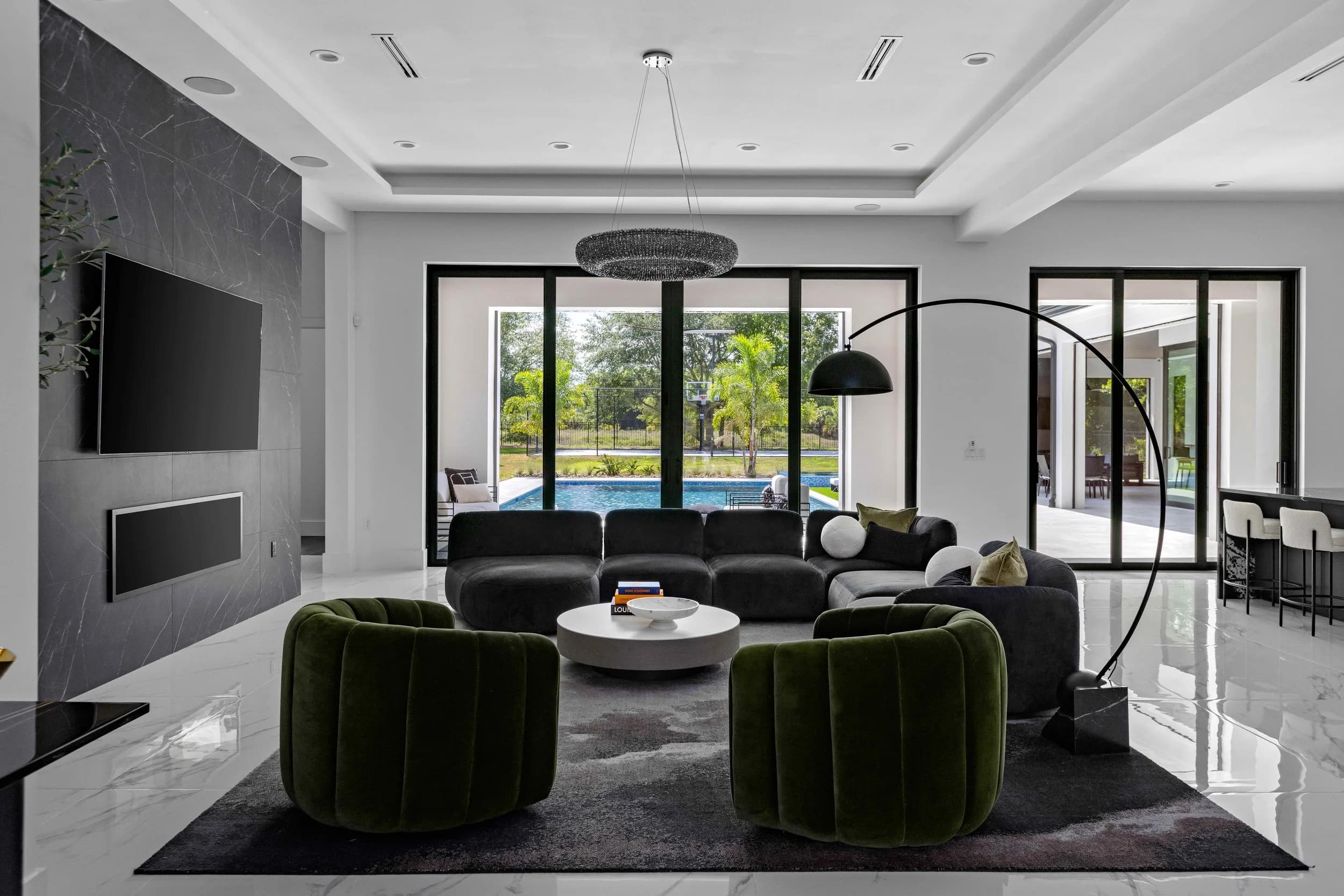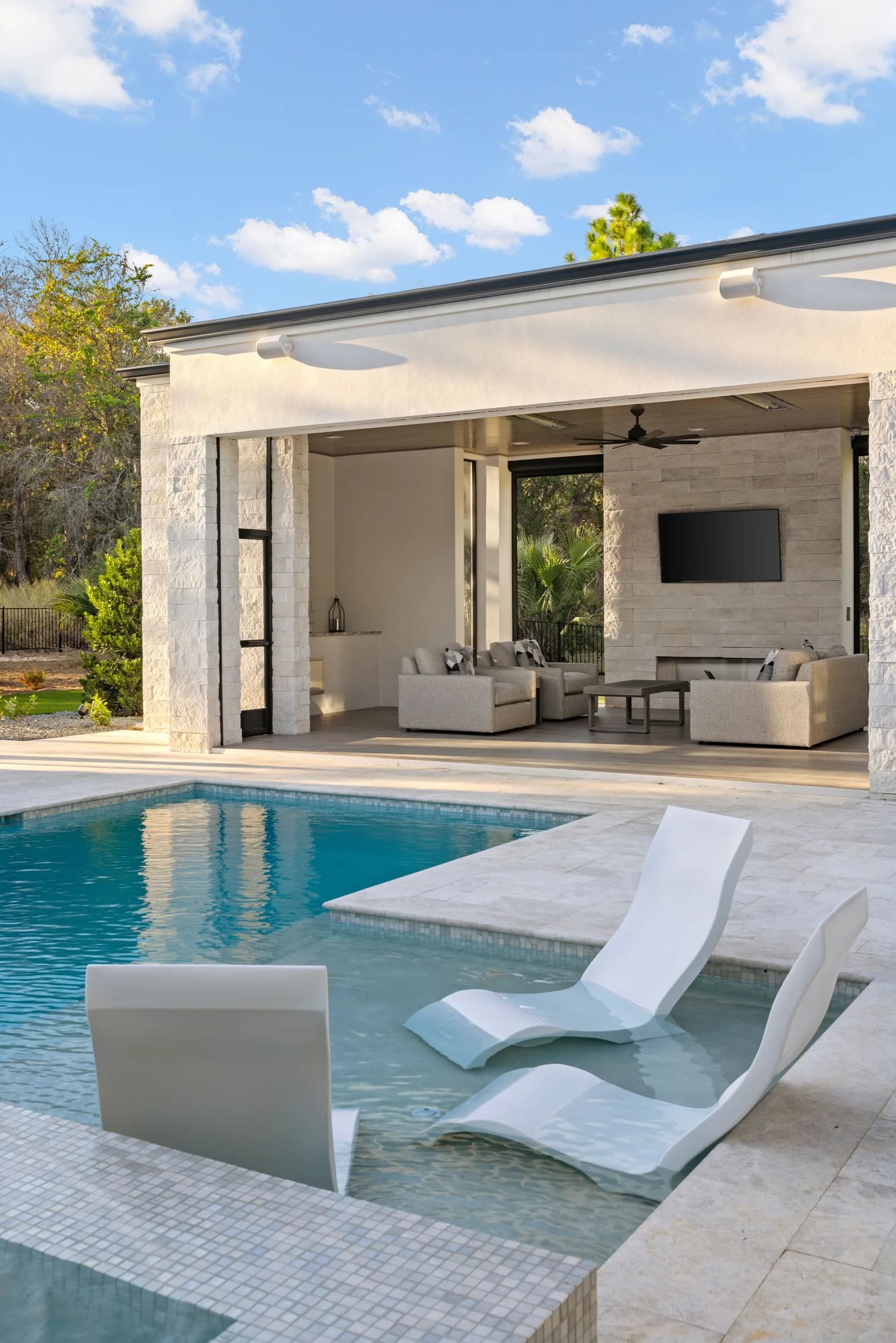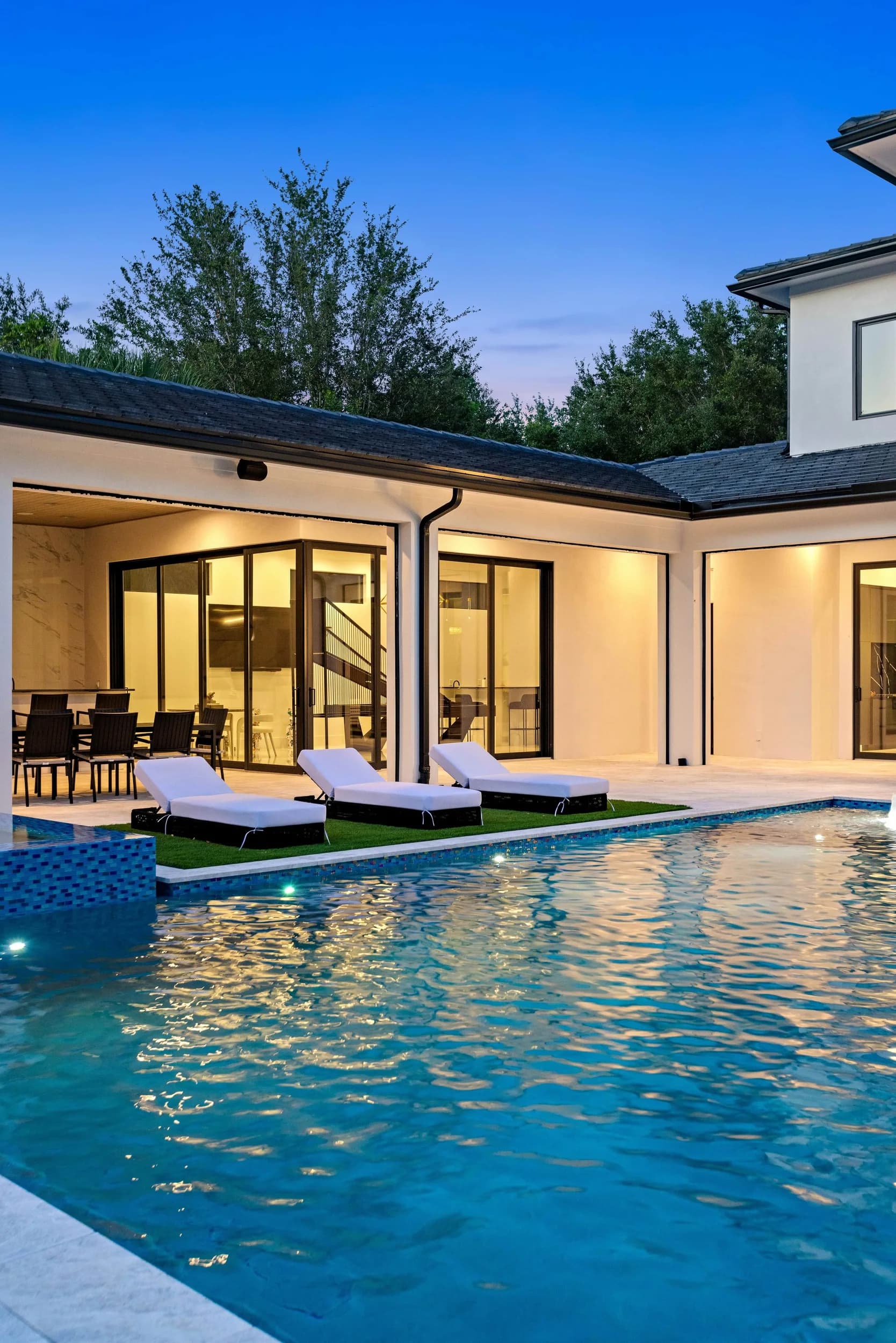
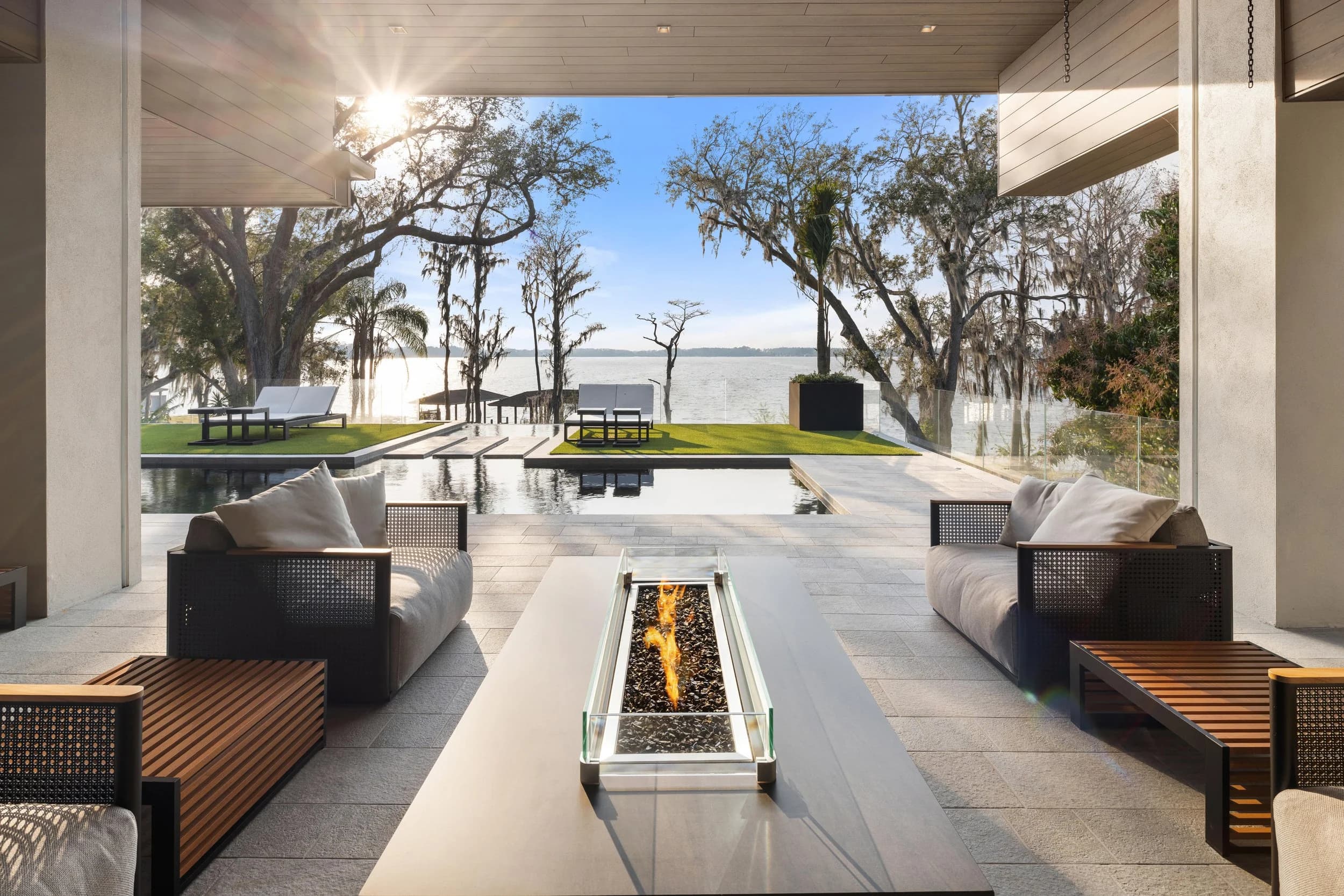
In Central Florida, the outdoor kitchen is not an amenity. For a large share of buyers it is the reason they are looking at the house — and it routinely gets two photos, both taken at noon, both showing a dark recess under a lanai roof.
A built-in summer kitchen is a $15,000 to $60,000 feature. It deserves more than a wide shot of the patio it happens to sit on.
Why These Spaces Photograph Badly by Default
Outdoor kitchens sit in the hardest lighting situation on the property: deep shade under a roof, with full Florida sun three feet away. The dynamic range between the grill hood and the pool deck is enormous.
Shot at midday with no plan, you get one of two failures — a correctly exposed backyard with a black hole where the kitchen is, or a visible kitchen with a blown-out white rectangle behind it. Neither shows the feature.
Four other things go wrong regularly:
- Screen enclosure moiré. Pointing a camera through screen at an angle produces an interference pattern that survives editing. This is the same problem screened lanais cause generally, just at closer range.
- Stainless reflections. A grill hood, a beverage fridge, and a sink all mirror the photographer, the tripod, and the pool.
- Grill grime. Every used grill looks used. Close enough to show the appliance is close enough to show the grease.
- No sense of what it connects to. A tight shot of a countertop and a grill could be anywhere. Buyers want to know it opens to the pool, faces the water, or is steps from the great room.
The Shots the Feature Actually Needs
Think in four frames rather than one.
- The context frame. Shows the kitchen in relation to the pool, lanai, and back of the house. This is the one that communicates how the space is used.
- The straight-on feature frame. The run of cabinetry, counter, and appliances, shot square and level so the buyer can count what is included — grill, side burner, sink, fridge, ice maker, hood.
- The detail frame. Counter material, backsplash tile, cabinet fronts. This is where quality shows. Buyers distinguish a builder-grade grill island from a stone-clad custom build almost entirely on texture.
- The living frame. Seating, bar stools, TV, ceiling fan, the view from where someone would actually sit. Sells the lifestyle rather than the equipment.
Fire features work the same way but need one addition — a frame with the fire lit. An unlit fire pit is a stone circle. A lit one is the photo that ends up on the flyer.
Timing Is Most of the Job
Light does more for these spaces than technique does.
- Late afternoon or early evening is the sweet spot. The sun is off the deck, the ambient level has dropped closer to the shaded kitchen, and the whole thing balances without a fight.
- Twilight is the hero frame. Under-counter lighting, a lit grill hood, a fire feature, and a lit pool at dusk make the single best image the property will produce. If the home has an outdoor kitchen and a pool, a twilight session is not an upsell — it is where the value is.
- Avoid 11 a.m. to 2 p.m. Overhead sun puts the roof line's shadow directly across the counter and makes the contrast problem as bad as it gets.
- Watch the season. Summer afternoon storms are reliable enough in Orlando and Tampa that an outdoor-heavy shoot should be scheduled morning or planned around the radar.
What the Seller Should Do Beforehand
Short list, big difference:
- Deep-clean the grill, including the grates and the drip tray, and wipe every stainless surface down. Fingerprints photograph.
- Clear the counters completely, then add back two or three items — a cutting board, a bowl of citrus, glassware. Empty reads unfinished; cluttered reads small.
- Confirm everything works. Light the fire feature, turn on the under-counter lights, run the fridge. A feature that cannot be switched on cannot be photographed on.
- Clean the screens and hose the deck. Pollen on a screen shows up as haze across the whole frame.
- Stage seating deliberately. Pull chairs out from the table and angle them. Pushed-in chairs read like a showroom.
If the property's outdoor space is the main event, mention that when booking — it changes the scheduled time of day, which is not something that can be fixed later. The broader pool and outdoor living approach applies here too, but the built-in kitchen needs its own frames inside it.
Bottom Line
An outdoor kitchen is one of the highest-value, highest-interest features on a Florida property and one of the worst-served by a standard midday exterior pass. Four frames, shot late in the day with the lights on and the fire lit, turn it from a background detail into a reason to book a showing.
Ready to book? Get in touch or call us — we serve Orlando, Tampa Bay, and Central Texas.