Every agent who has scanned a home with the Matterport app on an iPhone has had the same thought: this was free, it took twenty minutes, and it basically worked. So why pay for a professional scan?
It's a fair question, and the honest answer is that for some listings the phone scan is fine. For others it produces a tour that quietly undermines the listing. The difference comes down to four specific things, and none of them is "it looks a bit nicer."
What the Two Actually Do Differently
An iPhone's LiDAR sensor was designed to help the camera focus and to place furniture in augmented reality apps. Its useful range is a few meters. It measures depth in a relatively coarse grid, and the app fills the rest in from the camera.
A dedicated scanner like the Matterport Pro3 uses a lidar unit built for surveying, with usable range measured in tens of meters and far denser depth sampling, and it captures a full sphere of high-resolution imagery from each position.
That difference in range and density is the root of everything below.
The Four Differences That Cost You Something
- Dimensional accuracy. Phone scans drift. Small errors at each capture point accumulate across a house, and by the far bedroom the geometry can be off enough to matter. If an agent or a builder is quoting dimensions off a tour — for flooring, for furniture fit, for an out-of-state buyer making a decision — that drift becomes a liability. A professional scan holds accuracy across a whole home.
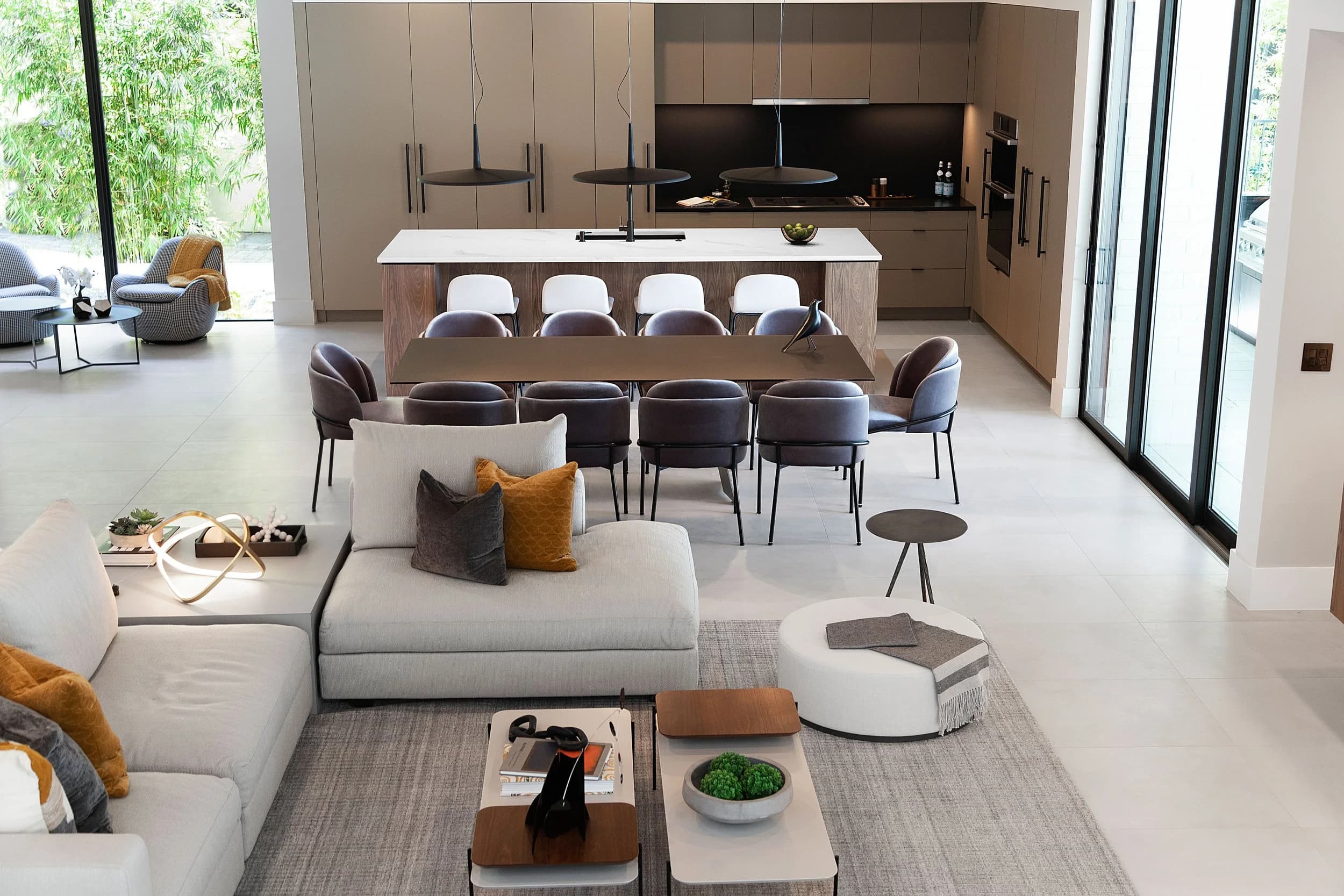
- Large and open spaces. This is the most visible failure. In a great room with a two-story ceiling, a long lanai, or an open-plan kitchen-living-dining, the phone runs out of range. Ceilings go soft, far walls warp, and the space that's supposed to sell the house looks wrong. This is exactly the floor plan most new construction in Central Florida and Texas uses.
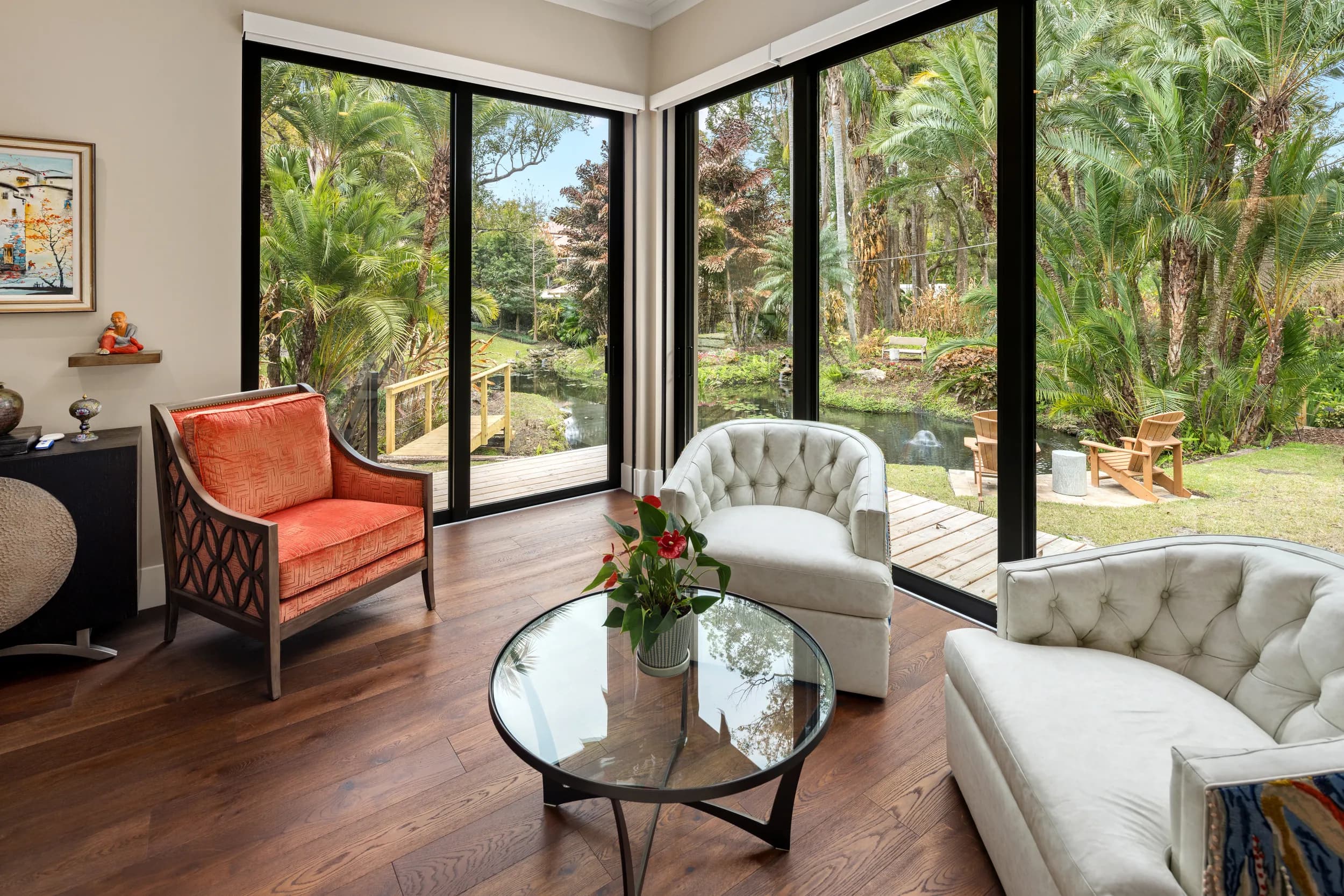
- Glass, mirrors, and dark surfaces. Both technologies struggle here, but the phone struggles more and has less data to recover with. Sliders onto a pool deck, mirrored closet doors, and glass railings are common failure points — and in Florida they're often the best feature in the room.
- Image quality inside the tour. A phone scan's still imagery is noticeably softer, especially in the mixed lighting of a real house. On a laptop screen the difference between a phone tour and a professional one is not subtle.
Floor Plans Are Where It Gets Expensive
The schematic floor plan generated from a scan is, for a lot of agents, the single most useful deliverable — it goes in the MLS, in the brochure, and into the buyer's decision.
A floor plan inherits every bit of drift in the underlying scan. A phone scan can produce a plan with walls slightly out of square, rooms a few inches off, and occasionally a doorway in not quite the right place. It looks plausible, which is the problem: nobody catches it, and it circulates.
If the floor plan is going to be published with dimensions on it, the scan underneath it needs to be accurate. That is the clearest single reason to use professional equipment.
When the Phone Scan Is Genuinely Fine
This isn't an argument that phone scans are useless. They're a reasonable choice when:
- The home is small and conventional — a condo, an apartment, a compact single-story with normal ceiling heights and defined rooms.
- The tour is supplementary, not a primary decision tool, and no one is measuring from it.
- It's for internal use — documenting a property for your own records, showing a colleague a layout, capturing a rental turnover.
- The price point genuinely doesn't support it. A modest rental listing doesn't need a survey-grade scan, and pretending otherwise is just upselling.
A Practical Rule
Use professional scanning when any of these are true:
- The home has ceilings above roughly ten feet or a great room over about twenty-five feet across.
- A floor plan with dimensions will be published.
- Out-of-state or relocating buyers are a meaningful part of the audience — common in Orlando, Tampa Bay, and the Texas metros, where a real share of buyers commit before they ever visit.
- There's significant glass, water view, or outdoor living space integrated with the interior.
- The listing is being marketed as luxury, in which case a soft tour contradicts the positioning.
Otherwise, the phone scan is a defensible choice — just make the decision deliberately rather than by default, and don't publish measurements you can't stand behind.
Ready to book? Get in touch or call us — we serve Orlando, Tampa Bay, and Central Texas.