FPV drone footage looks impressive in a highlight reel, which is why agents and builders increasingly ask for it by name. It is a genuinely different tool from a traditional camera drone, and it solves a different problem.
Two Different Aircraft Doing Two Different Jobs
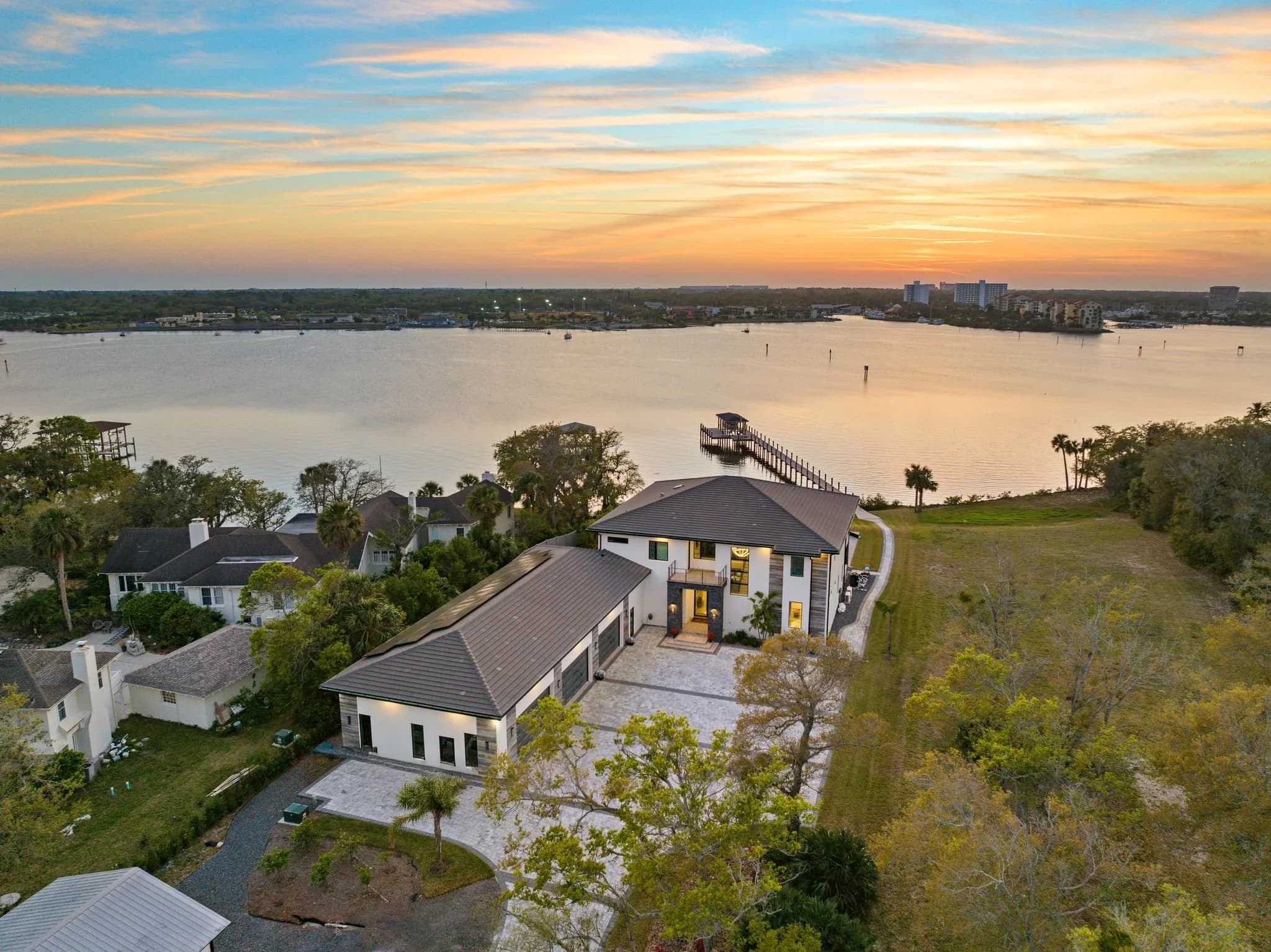
A traditional camera drone is built for stability: GPS position hold, obstacle sensors, a gimbal that isolates the camera from the aircraft, and speeds slow enough that the operator has time to think. It produces smooth orbits, slow reveals, straight pushes down a driveway, and static elevated frames, and it can hover while the operator composes.
An FPV drone is built for motion. The pilot flies through goggles, seeing the aircraft's own camera feed, usually with manual control and no GPS assist. Many builds have no gimbal, so stability comes from the pilot's hands and from post. The result is a continuous, momentum-driven shot: dropping off a roofline, flying the length of a pool deck a few feet off the water, or carrying one unbroken move from the front door through a great room and out the back slider.
The distinction that matters to a client is not brand or size. A traditional drone is a flying tripod. An FPV drone is a flying dolly with no rails and no undo.
What Each Costs in Time, Risk, and Reshoots
Cost differences show up mostly in labor and in tolerance for failure.
Setup and flight time. A traditional aerial package on a single-family listing in Orlando or Tampa Bay is a short block on site — the aircraft is stable and a missed frame is simply reflown. FPV requires a longer block for the same usable footage, because a single flow-through may take a dozen or more attempts.
Battery cycles. FPV drones fly aggressively and burn packs quickly, so one sequence can consume most of a kit's power.
Crew. Indoor or complex FPV work often needs a spotter alongside the pilot, to keep visual contact with the aircraft and manage people and pets in the flight path.
Post-production. FPV footage generally needs stabilization, rolling-shutter correction, distortion cleanup, and speed ramping, where gimbal footage arrives close to finished.
Risk. An FPV drone moving quickly near a structure, or indoors through a doorway, carries real risk to property and people. That has to be priced and managed, not ignored.
The reshoot problem deserves its own line. A traditional aerial can usually be repeated later — same house, same angle, similar light. An FPV flow-through often cannot. It depends on staging, on light through specific windows at a specific hour, on an empty house, and on a clean run through a tight space. Once the home is occupied or staged differently, that exact move is gone. Plan FPV as a one-time capture, and shoot coverage on the same visit as insurance.
When FPV Genuinely Adds Something
FPV earns its place when continuous motion communicates something a cut cannot.
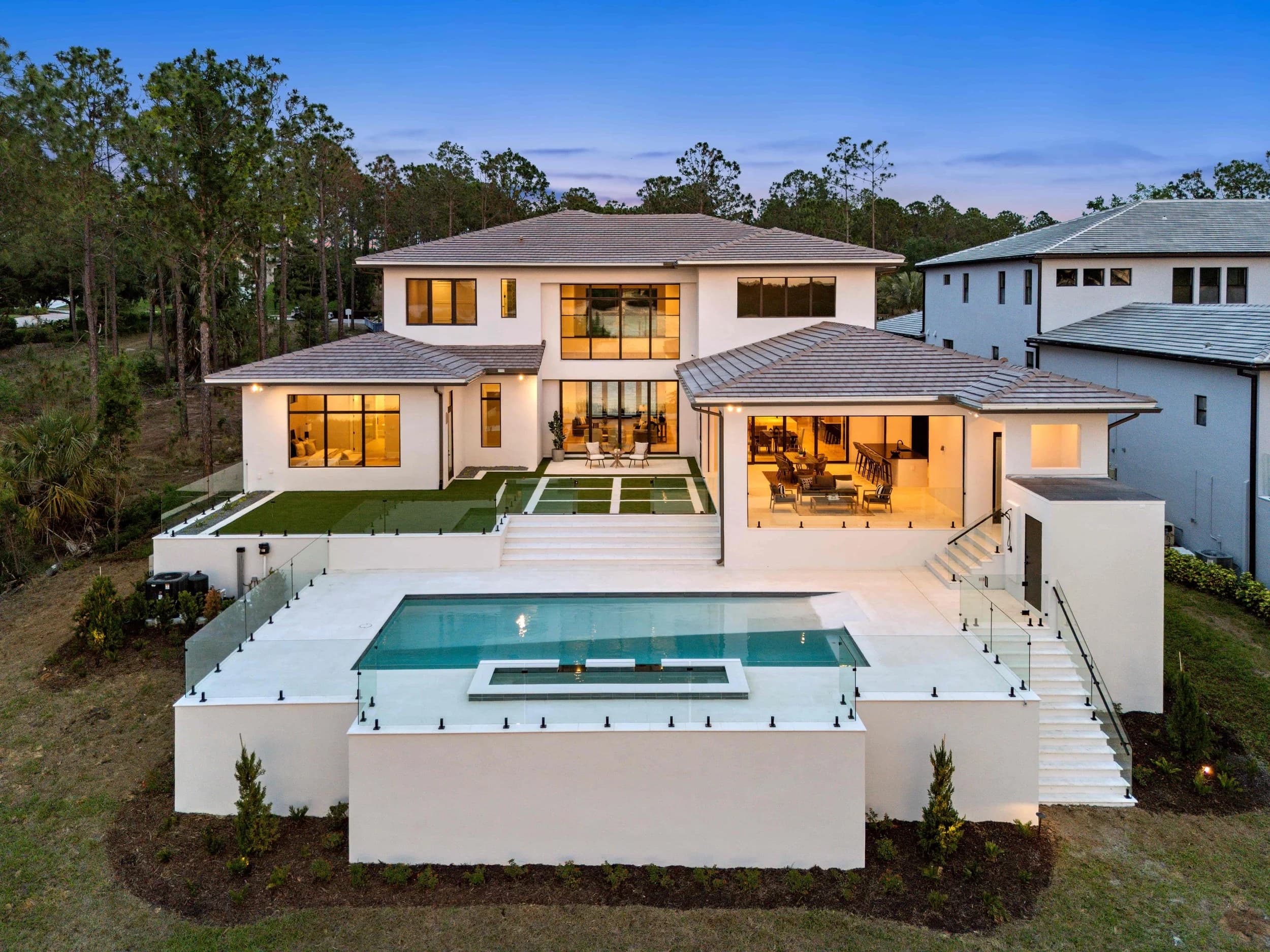
Luxury listings where flow is the selling point. A single unbroken move from the entry, through the living space, out to the pool, and up over the lake shows how the house connects to itself. Cutting between rooms cannot do that.
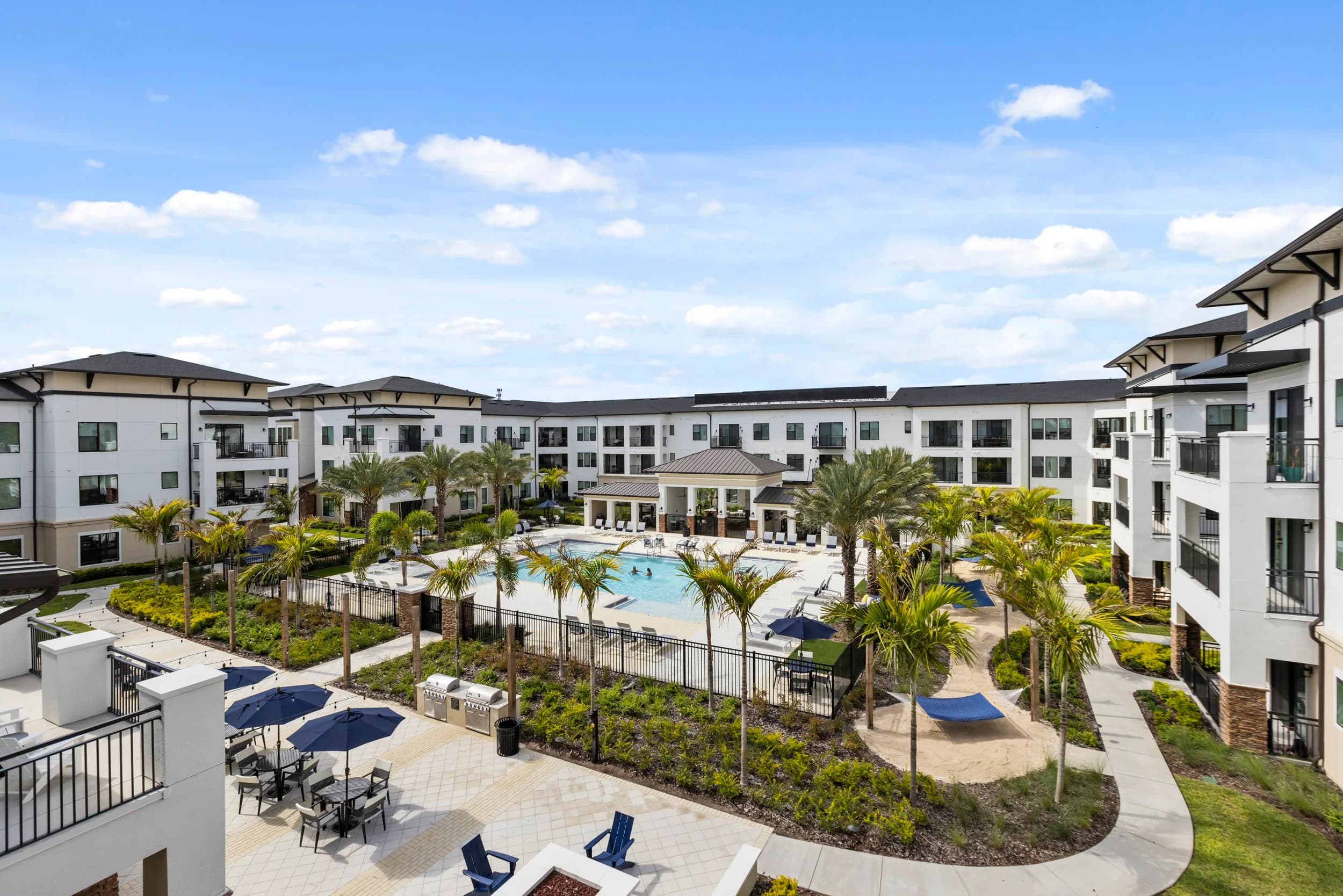
Community and brand films. Builders and apartment communities in Central Florida and Texas often need one piece that ties amenity center, model home, pool, and streetscape together. A continuous FPV move reads as a place rather than a set of assets.
Social hooks. The first two seconds of a vertical video decide whether it is watched. A fast descent or a dive across a pool deck stops the scroll where a slow orbit does not.
Estates, ranches, and mixed-use developments, where scale is hard to convey in stills.
When It Is a Gimmick
FPV works against the listing more often than agents expect.
On standard inventory. A three-bedroom in a suburban subdivision does not become more compelling because the camera dove at it. It just looks busy.
When the goal is comprehension. Buyers watching listing video are building a mental floor plan. Fast, momentum-heavy movement through rooms defeats that. They finish knowing the video was cool and not knowing where the primary bedroom is.
On tight or cluttered interiors. Small rooms make the motion feel frantic and put the aircraft near hazards for no payoff.
When there is nothing to reveal. The best FPV moves end on something — a view, a pool, a vista. Without that, it is motion for its own sake.
When the audience is remote or older. Some viewers find the movement disorienting, and if the video's job is to reassure, steadiness is the asset.
Safety, Insurance, and the Part 107 Requirement
Both aircraft share the same baseline rule. Any drone flight for commercial purposes in the United States, including real estate marketing, requires a remote pilot certified under the FAA's Part 107 rules, a registered aircraft, and compliance with airspace requirements. Much of the Orlando metro, the Tampa Bay area, and the Dallas and Austin corridors sits in controlled airspace where authorization is needed before flight. FPV adds its own considerations, since the pilot is flying through goggles rather than watching the aircraft, which is why a visual observer is standard practice. Rules change, so confirm current requirements with the FAA or a qualified operator, and ask any vendor to show a certificate and proof of insurance.
Flying indoors deserves a further conversation.
The owner should know and agree in writing. Flying a bladed aircraft through someone's home is not covered by a standard photography authorization.
Confirm the operator carries commercial aviation liability coverage for the flight being performed, and ask specifically about indoor operations, which some policies treat differently.
The house must be cleared. No pets, no children, nobody in the flight path, breakables moved, prop guards used where appropriate.
Plan the line first. The pilot should walk the route on foot, note every pinch point — doorways, ceiling fans, chandeliers — and confirm fans and HVAC are off.
Builders and property managers usually require a certificate of insurance on file before any flight on site.
The Practical Recommendation
Make traditional aerial the default and FPV the accent. Nearly every listing benefits from clean elevated establishing frames, a slow orbit, and a reveal that puts the home in its neighborhood. That footage is reliable, repeatable, and easy for buyers to read.
When the property justifies it, add one FPV sequence — usually a single flow-through or reveal — as the opening hook or the closing move. One FPV shot inside an otherwise steady video is memorable. A video made entirely of FPV shots is exhausting, and the buyer remembers the flying instead of the house.
Ready to book? Get in touch or call us — we serve Orlando, Tampa Bay, and Central Texas.