There is a rental segment in Central Florida that sits in the gap between an annual lease and a nightly booking, and most of it is marketed badly. Corporate housing and mid-term furnished rentals — thirty days to six months, fully furnished, usually booked sight unseen — serve traveling nurses, relocating executives, insurance-displaced families, and contractors on long assignments. Demand for it in Orlando, Tampa Bay, Austin, and San Antonio has been steady for years, and it keeps growing quietly while everyone argues about short-term rental rules.
The photography problem is that operators borrow a playbook from one of the neighbors. Some shoot the unit like an unfurnished lease listing and leave the renter unable to tell what is actually included. Others shoot it like a vacation rental, all lifestyle and lanai, and never answer the questions a person moving in for four months actually has. Mid-term is its own thing, and the gallery has to reflect that.
Who books a mid-term stay, and what they are checking
A nightly guest is buying an experience. An annual tenant is buying a home and will tour it first. A mid-term renter is buying a functional life for a fixed stretch of time, usually from several states away, usually without a tour. That changes what the gallery has to prove.
Mid-term renters look for:
- A real workspace. Not a laptop staged on a kitchen island — a desk, a chair that can be sat in all day, and an outlet within reach.
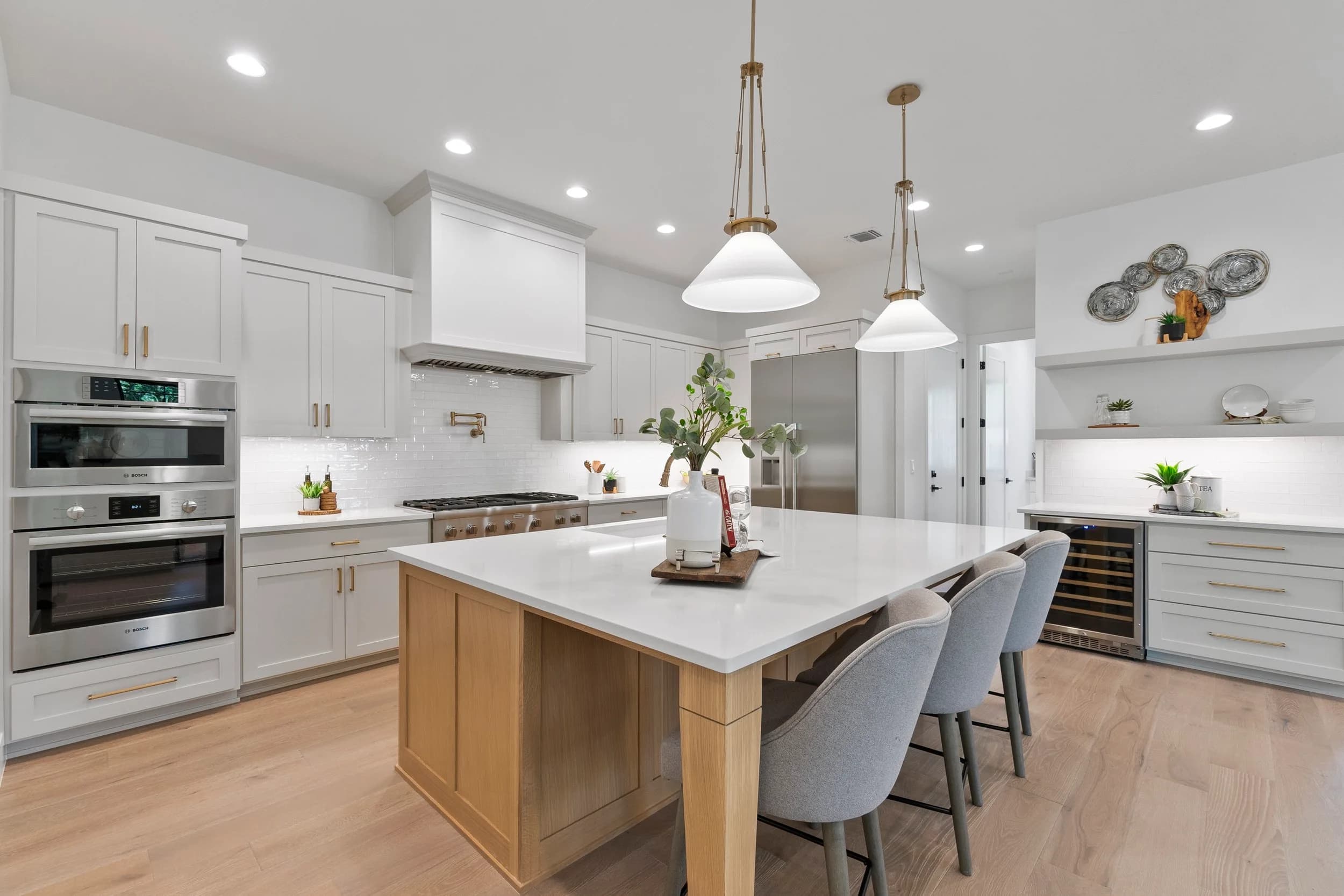
- Kitchen completeness. They will cook. They want to see a full-size refrigerator, a working range, and enough cookware and dishware that they will not spend their first evening at a big-box store.
- Laundry in the unit, or a very clear picture of where it is.
- Parking that matches the number of cars they are bringing.
- Sleeping arrangements described honestly, including whether a second bedroom is a real bedroom or a converted office.
Every one of those is a photograph, not a bullet in a description. A gallery that shows them settles the questions that otherwise turn into a long email thread and a lost booking.
The shot list a furnished mid-term unit needs
Start with the standard room coverage — living area, kitchen, each bedroom, each bathroom, exterior or entry — and then add the layer that makes this segment different.
- The workspace as its own frame, shot straight on so the desk depth and chair are readable.
- An open-cabinet or counter shot showing the cookware, dishes, and small appliances that come with the unit.
- Closet and storage shots. A four-month stay means real luggage and real hanging space. Empty closets photograph better than people expect and answer a genuine question.
- The laundry, the parking space, and the entry path, which are logistics, not decor, but carry weight.
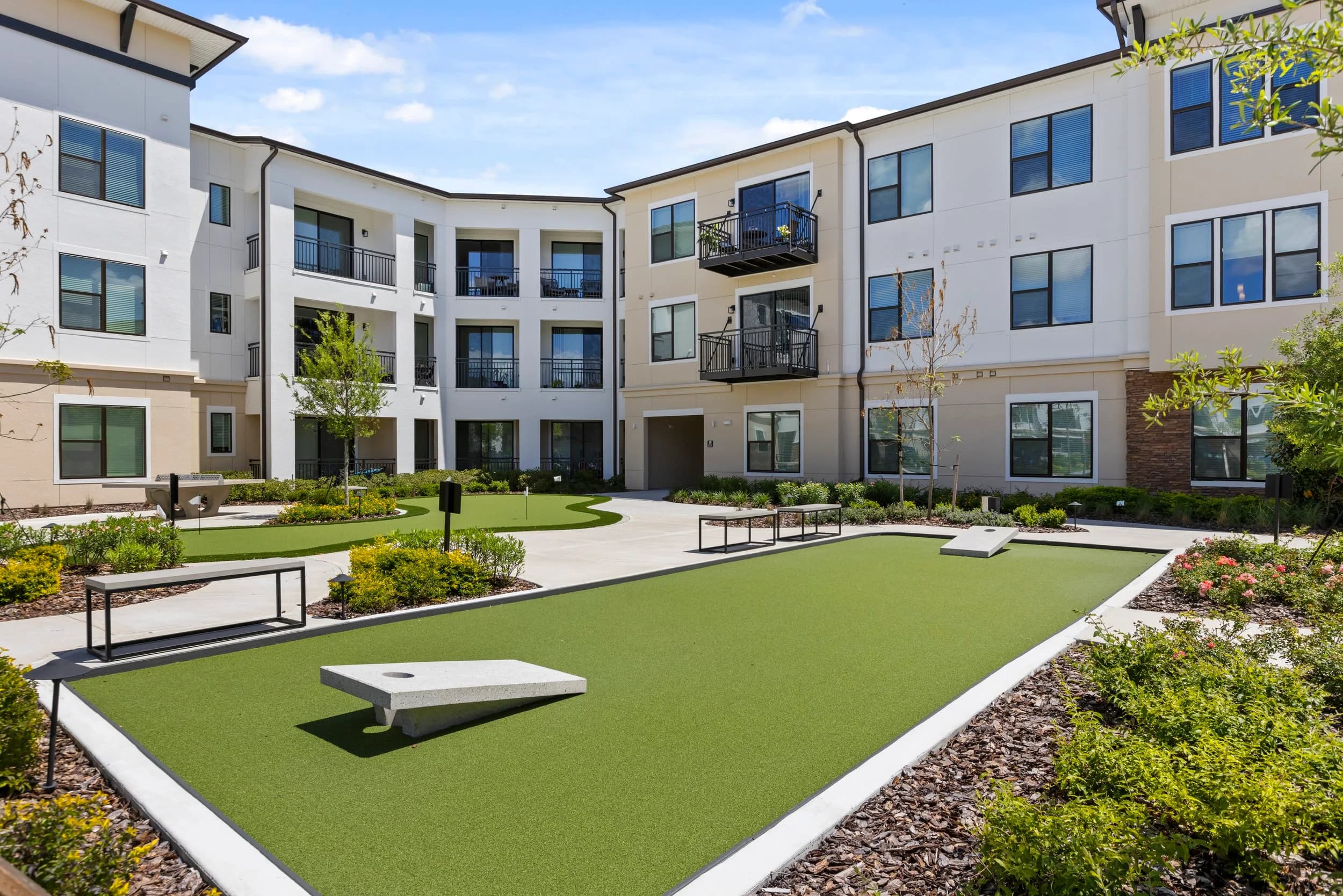
- Anything shared — a community gym, pool, mail room, or gate — photographed as a neighbor of the unit rather than the main event.
Detail shots earn their place here more than they do in a resale listing. When someone is deciding whether to live somewhere for a season based only on what is on screen, the small frames stop being decoration and start being evidence.
Consistency across a portfolio is the real deliverable
Most corporate housing operators do not own one unit. They own or manage a set of them, often in several buildings, sometimes furnished from the same three or four packages. When those units are photographed by different people over two years, the portfolio reads as a collection of unrelated listings, and a renter comparing two of your own units is really comparing two photographers.
The fix is a documented standard: the same room order, the same framing height, the same approach to window exposure, the same white balance discipline. Apply it once and every unit added later drops into a set that already looks deliberate. This is the same principle behind keeping a team's listings visually consistent, applied to inventory you control completely — which makes it far easier to actually enforce.
Where mid-term parts ways with the two neighbors
If you already market annual leases, you know the leasing gallery: clean, empty, architectural, and focused on the space itself. That approach is covered in our guide to photography for property managers, and it is the right approach for an unfurnished unit. It is the wrong one here, because the furniture and its condition are the product.
If you also run nightly rentals, you know the vacation-rental gallery, which leans on lifestyle, amenity stacking, and the promise of a good week. That approach, covered in our vacation rental photography guide, oversells for a mid-term audience. A traveling nurse is not booking a vacation. Aspirational framing reads as evasion when what the viewer wants is proof that the coffee maker exists.
The middle path is plain, generous, well-lit documentation with enough craft that the unit looks cared for. Honest, not flat.
Practical notes before the shoot
Furnished units photograph best fully reset — beds made to standard, counters cleared, remotes and manuals in a drawer rather than on a table. If a unit is occupied between bookings, build the shoot into the changeover rather than working around a tenant. Scheduling and delivery timing are confirmed at booking, since a twelve-unit set and a single unit are different projects.
One more thing worth deciding early: whether you want a 3D tour alongside stills. For sight-unseen bookings it can do real work, and the leasing-side case for it is laid out in our post on 3D tours for apartment and multifamily leasing. For a small portfolio of repeatedly booked units, the tour pays for itself across many renters rather than one.
If you manage furnished inventory in Central Florida or Central Texas and the galleries have grown in by accident, it is worth rebuilding them as a set. Ready to book? Call or text (689) 600-2131 or get in touch.