In a downtown high-rise, the unit is often the same floor plan as forty others in the building. What the buyer is paying for is the floor, the direction it faces, and what's outside the glass. The photography has to reflect that.
The View Is the Product
Downtown Orlando, downtown Tampa, and the St. Pete waterfront all have inventory where two units differ only in elevation and orientation. A tenth-floor unit facing a parking structure and a twenty-second-floor unit facing Lake Eola are the same square footage and very different assets.
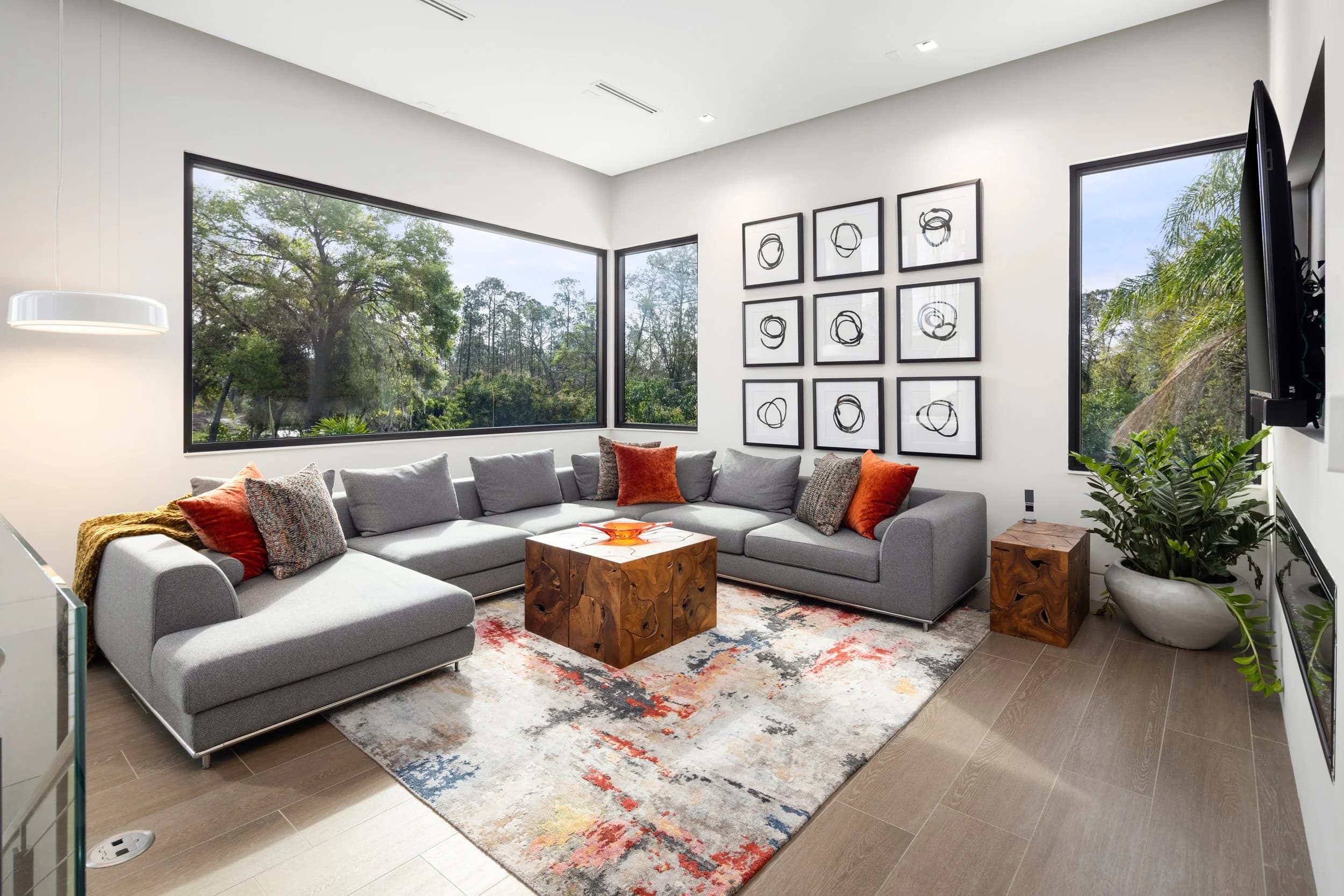
That reframes the shoot. On a suburban listing, windows are a light source and an afterthought. In a high-rise, the window is a primary subject, and every main-room frame should be composed with the view in it. A gallery showing a nicely lit living room behind a wall of white glass has photographed the least valuable version of the property. The view also deserves dedicated frames: the skyline or water through the glass, and the same view from the balcony with no glass in the way.
Exposing for the Glass Without Wrecking the Room
This is the central technical problem in condo photography. The difference in brightness between a lit interior and a sunlit exterior is far more than a single exposure can hold. Shoot for the room and the window goes white. Shoot for the window and the room goes black.
Two approaches solve it, and good work uses both:
Bracketing and blending. Multiple exposures of an identical frame, from one that holds the view outside to one that holds the shadows inside, merged in post. This needs a locked-off tripod and no movement in frame, which is why a wind-shaken palm outside or a ceiling fan left running creates problems.
Adding light to the interior. Flash or continuous light raises the room closer to exterior brightness, reducing how much blending is needed and producing cleaner color. It also keeps the interior looking like a room rather than a flat composite.
The failure mode to watch for is the halo — a bright fringe around window frames and furniture edges where the blend was pushed too far. It reads as fake even to people who can't name what they're seeing.
Reflections are the other constant. Interior lights, the photographer, and the tripod all show up in floor-to-ceiling glass. The fixes are angle, turning off what can be turned off, shooting from outside the reflection's path, and cleaning the glass first. Sliding screen doors should be slid fully aside wherever the frame allows; a screen across a view costs more clarity than most people expect.
Time of Day Is Set by Which Way the Unit Faces
In a house, exterior light dictates the schedule. In a high-rise, the unit's orientation does.
East-facing units photograph well in the morning, when the view is lit and the glass isn't taking direct sun. By late afternoon the view falls into shadow.
West-facing units are afternoon and dusk properties. A west-facing downtown Tampa or St. Pete unit at sunset is the single strongest image in its gallery, and it's worth building the appointment around.
North-facing units are the most forgiving and can be shot through most of the day.
South-facing units in Florida take strong direct sun much of the year, which means harsh shadows across floors and blown highlights. Earlier or later usually beats mid-day.
Twilight interiors — shot in the roughly twenty-minute window when the city lights are on and the sky still holds color — are the high-rise equivalent of a dusk exterior on a single-family home. They only work on units with a real view and they require being in the unit at exactly the right time, which means the rest of the shoot is scheduled backward from that window.
The Balcony Is a Room
Outdoor square footage matters more in a condo than almost anywhere else, because it's the only outdoor space the owner has. Photograph the balcony or terrace as a room, not as a detail:
From inside looking out, showing how the balcony connects to the living space.
From the balcony back toward the unit, which establishes its depth and shows the door and glass.
The view from the railing, which is what the owner will actually look at every day.
Any built-in feature — summer kitchen, gas connection, storage closet, or hurricane shutters.
Depth is hardest to convey and most important. A frame that includes furniture at real scale, or one shot from the corner rather than head-on, does it better than a wide shot from the doorway.
Small Rooms, and What Wide Angle Can and Can't Fix
Condo interiors are tight, and tight rooms tempt photographers into extreme wide angles that distort. A galley kitchen shot at 12mm looks cavernous online and disappointing in person, and buyers have learned to distrust it.
Better habits: shoot from a corner or a doorway rather than backing into a wall, keep the camera level so verticals stay straight, use a moderate wide angle rather than the widest available, and accept that some rooms — interior bathrooms especially — need two frames rather than one impossible one. A Matterport or 3D tour does more for a small floor plan than any single photograph, because it lets a buyer walk the actual dimensions instead of guessing.
Amenities, Storage, and Building Access
Buyers in a high-rise are buying the building as much as the unit. Lobby, pool deck, fitness center, club room, rooftop terrace, and conference space all belong in the marketing, along with the practical items: the assigned parking space and its level, the storage cage, guest parking, and the mailroom or package area.
Two things to settle before shoot day. First, common areas require building or HOA permission, and many buildings have written rules about photography in shared spaces, elevator use for equipment, and whether residents may appear in frame. That approval is worth getting in writing and scheduling around, since some buildings restrict shooting to specific hours.
Second, drone is usually off the table downtown. Dense urban cores near Orlando's and Tampa's airports sit in controlled airspace, Part 107 rules and airspace authorization apply, and many buildings prohibit flight from or over their property regardless. The substitute is elevation you already have: the unit's own windows and balcony, the building's rooftop amenity deck if access is granted, and ground-level public vantage points for the building exterior. In most cases those cover what an aerial would have.
Ready to book? Get in touch or call us — we serve Orlando, Tampa Bay, and Central Texas.