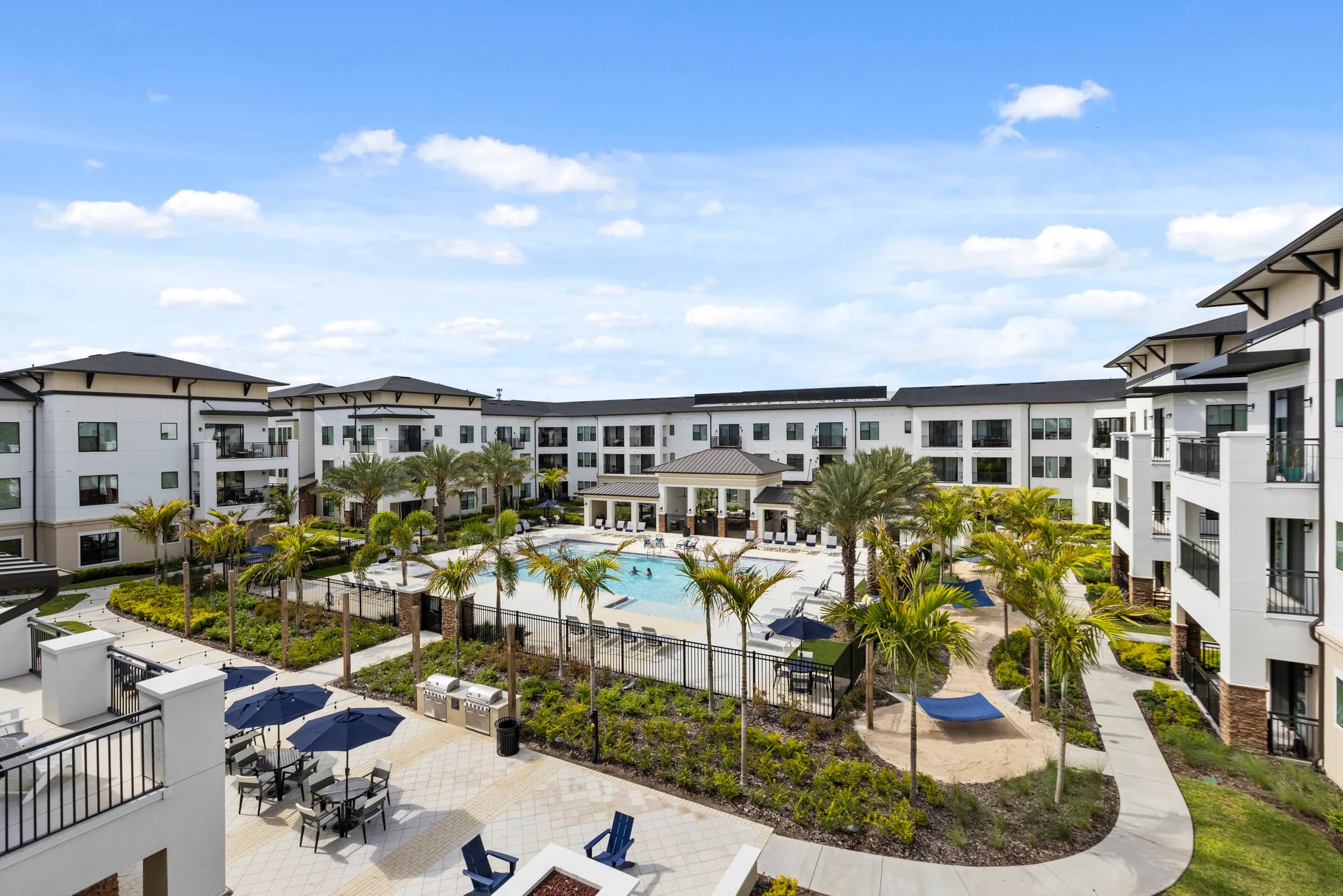
Not every home needs aerial photography — but when a listing does benefit from drone photos, the difference is immediately obvious. A sweeping aerial shot can communicate location, lot size, and surroundings in a single image that no ground-level photo can match.
So how do you know when to add drone coverage to your listing shoot? Here’s a practical guide.
Properties That Almost Always Benefit from Aerial Photography
Some property types are virtually always better marketed with drone photography:
Waterfront homes. Whether it’s a lakefront property in Central Florida, a Gulf-access home in Tampa Bay, or a canal lot in Orlando, aerial shots show the water relationship that makes the property unique. A ground-level photo of a dock is fine; an aerial shot showing the home, the dock, the water, and the surrounding neighborhood is compelling.
Golf course and preserve lots. Backing up to a golf course or conservation area is a major selling point — but it’s nearly invisible in ground-level photography. One aerial photo showing the green space behind the home tells the story instantly.
Large lots and acreage. When a home sits on half an acre or more, buyers need to understand the scope of the property. Aerial photography communicates lot size in a way that’s intuitive and immediate.
Luxury and estate-style homes. High-end listings benefit from showcasing architectural detail, landscaping, outdoor entertaining areas, and lot context simultaneously. Drone photography makes this possible.
When Drone Photography Adds Less Value
There are situations where drone coverage is optional or unlikely to move the needle:
Small urban or suburban lots where neighboring homes are just a few feet away — the aerial view won’t show much you can’t see at eye level
Tight condo buildings where the unit has no private outdoor space and the view from above is just a rooftop
Interior-focused listings where the property’s value lies almost entirely in finishes, renovation quality, and layout
That said, even for a modest home, a single wide aerial establishing shot that shows the neighborhood, proximity to parks, or nearby amenities can strengthen a listing.
New Construction Communities and Drone Photography
For home builders and developers, drone photography is often non-negotiable. Aerial footage is used to:
Show the community site map in context with surrounding roads and amenities
Capture construction progress at regular intervals for project documentation
Create compelling marketing imagery for the community’s sales center and website before homes are complete
JRP works with builders throughout Orlando, Tampa Bay, and Central Texas to document construction timelines and create marketing-ready aerial content at every stage of development.
Legal and Safety: Why FAA Part 107 Matters
Commercial drone photography in the United States requires pilots to hold an FAA Part 107 Remote Pilot Certificate. This isn’t just a formality — it ensures the pilot understands airspace restrictions, weather limits, and safety protocols.
When you hire JRP, you’re working with certified Part 107 pilots. That matters both for safety and for your liability: using drone imagery captured illegally could create issues for the listing and the brokerage. Always confirm your aerial photographer is properly certified.
How to Add Drone Coverage to Your Shoot
Adding aerial photography to a JRP listing shoot is straightforward — just mention it when you book. In most markets, we can combine ground-level photography, video, and drone coverage in a single visit, minimizing disruption for the seller and keeping turnaround times fast.
Ready to add drone coverage to your next listing? Get in touch or reach out to book — we serve Orlando, Tampa Bay, Central Florida, and the Austin/San Antonio/Dallas metro areas.